
Powder Coating Plant for MSMEs:
Complete Setup, Cost & Buying Guide
Get a Free Project Consultation & Quote
- Conveyorized Powder Coating Plants
- Manual & Batch Type Powder Coating Plants
- Specialized Powder Coating Plants for Industries
Conveyorised Powder Coating plants
- Conveyorized System
- Deep Type Pre Treatment Line
- Dip Type Pre Treatment Tanks
- Spray Pre Treatment Tanks
- Transporter Type Dip Pre Treatment Plant
Liquid Spray Painting Booths & Plant
- Down Draft Wet Type Spray Painting Booth
- Side Draft Closed Chamber Type Spray Painting Booth
- Side Draft Dry Type Liquid Painting Booth
- Conveyorized Powder Coating Booth
- Filter Cartridge Manual Powder Coating Booth
- Manual Powder Coating Booth For Control Panel
- Conveyorized Powder Curing Oven
- Manual Gas Fired Powder Curing Oven
- Batch Curing Oven
- Electric Powder Oven
- Industrial Oven for Powder Coating
- Micro Static 100
- Dual Static 100
- Opti-Static 100
- Autoguns & Reciprocator
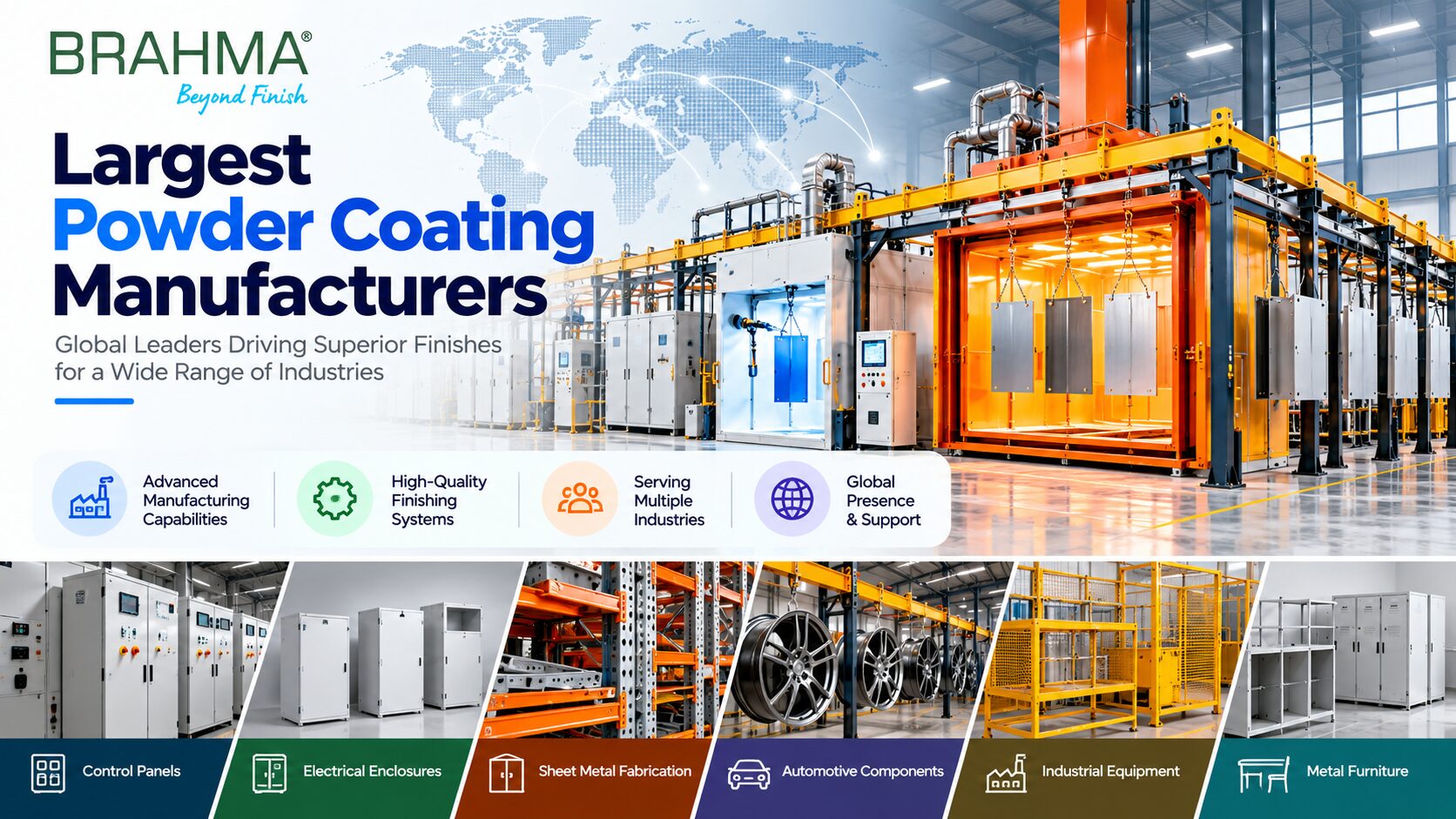
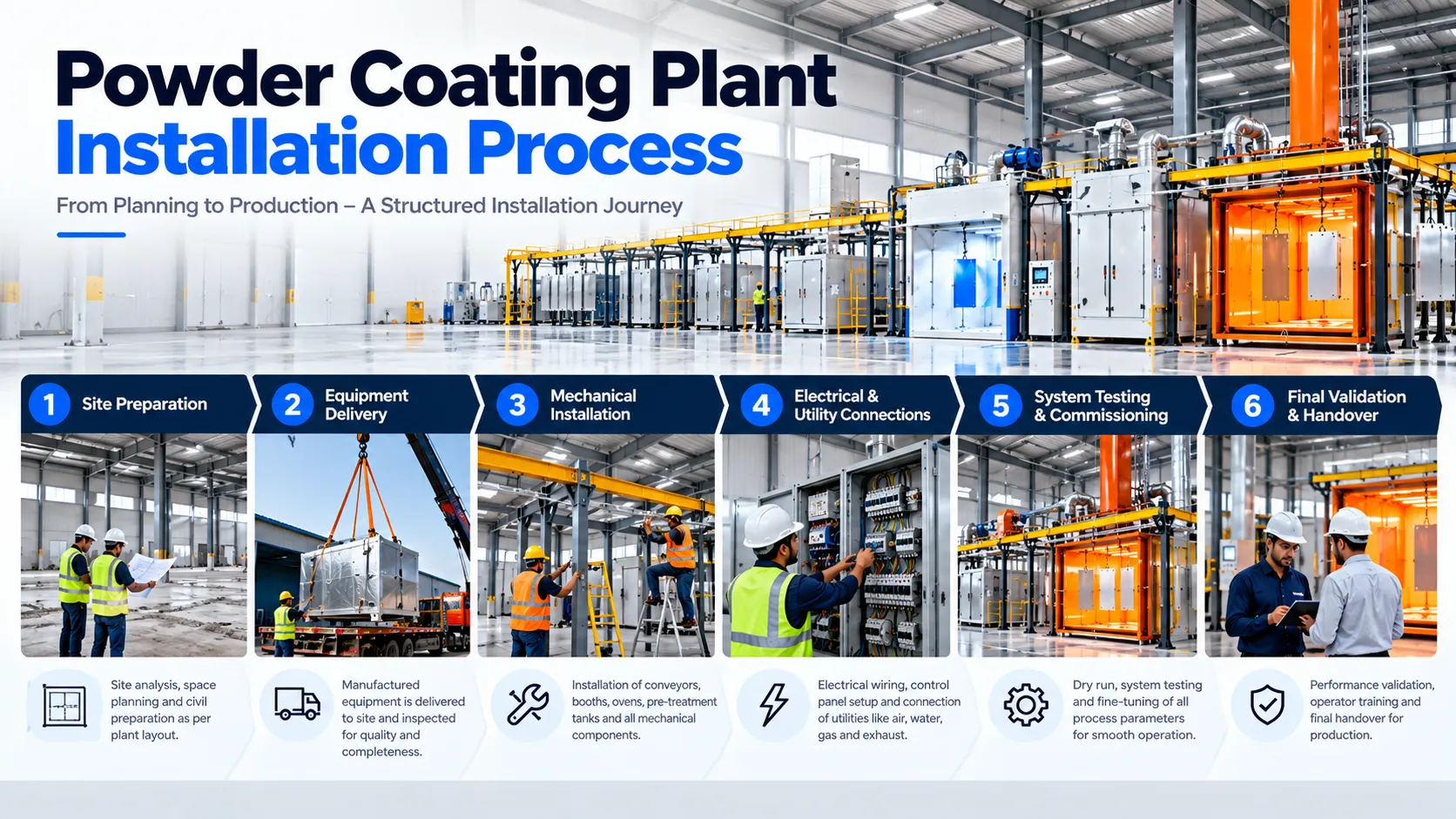
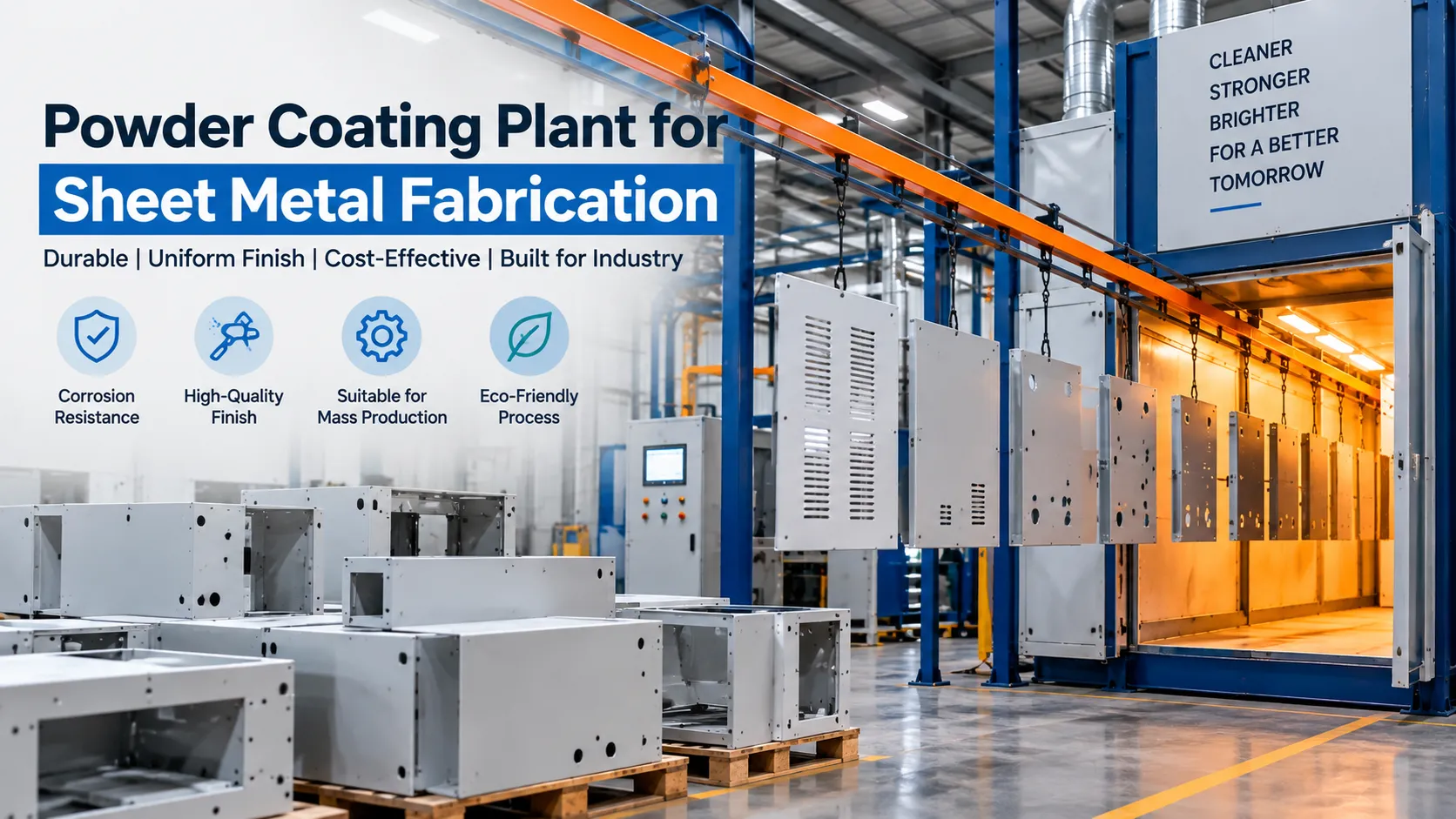
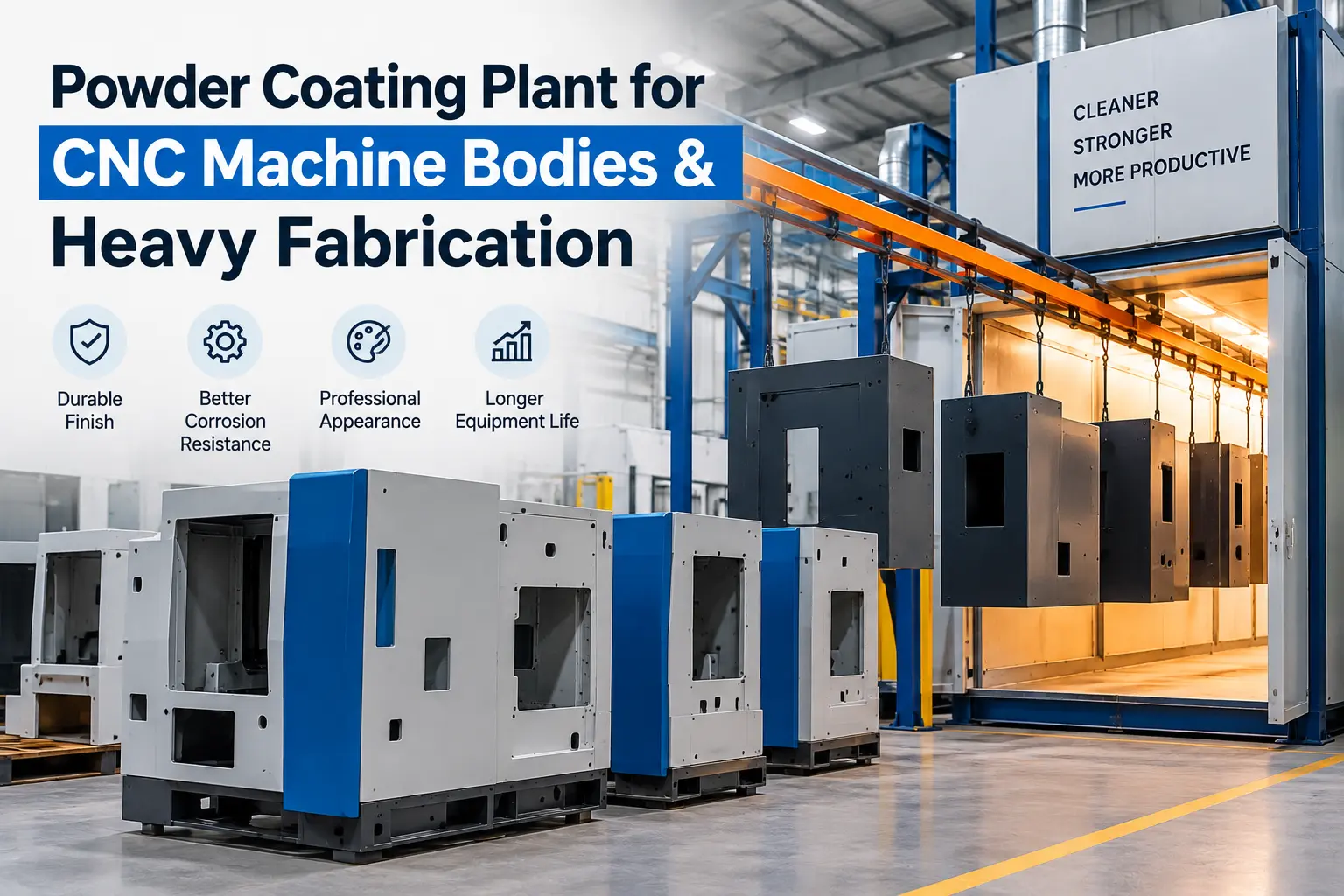

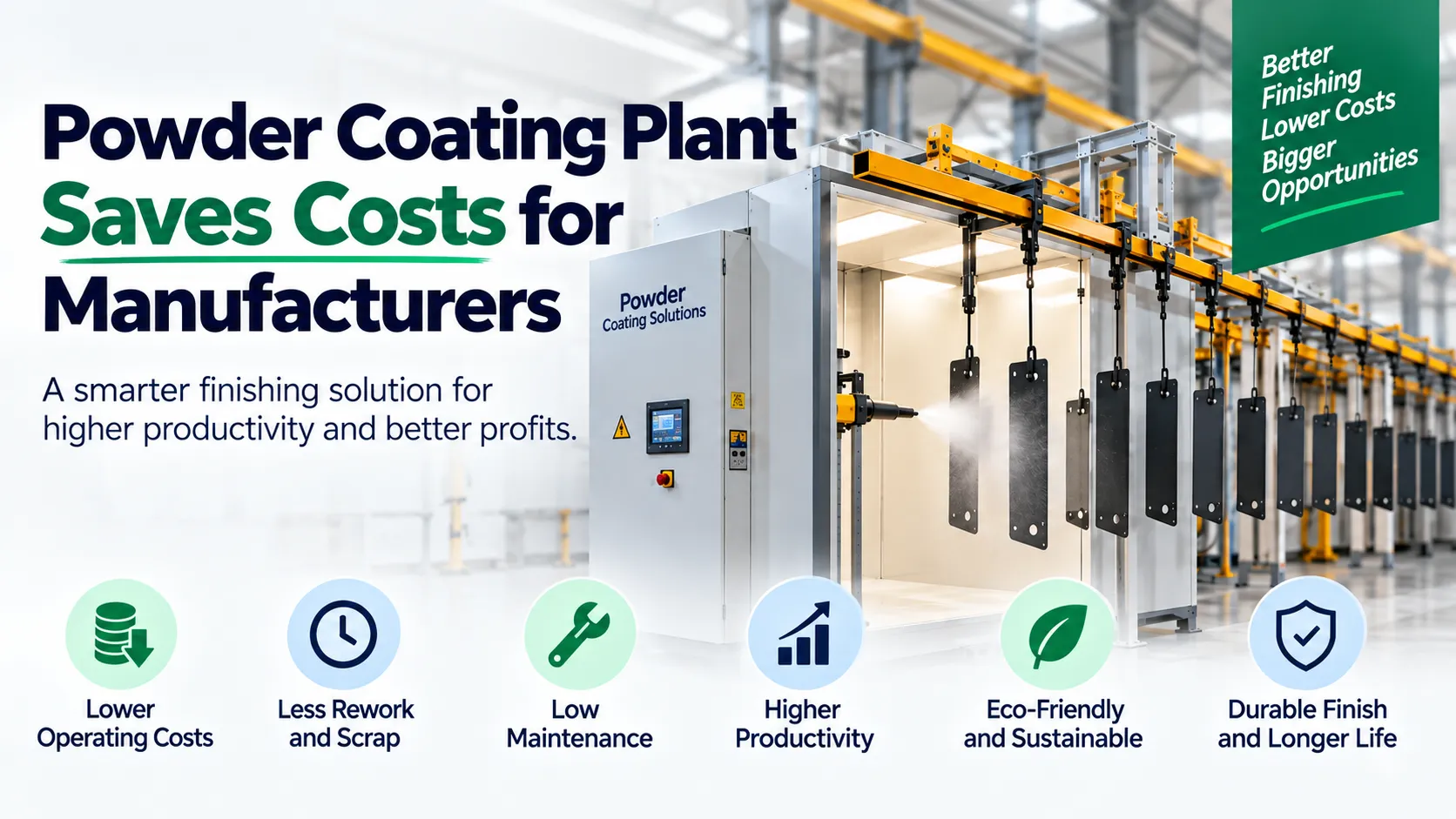
A powder coating plant for MSMEs is a finishing system designed for small and medium-sized manufacturers that need consistent, durable, and scalable coating of metal products. Depending on production volume, product dimensions, budget, and automation requirements, an MSME can choose a manual, batch, semi-automatic, or conveyorized powder coating plant. The right setup combines pretreatment, powder application, recovery, curing, material handling, and quality control into an efficient production process.
For many Indian MSMEs, powder coating is no longer just a finishing operation. It can directly influence product quality, production capacity, delivery time, operating costs, and customer satisfaction.
Manufacturers producing metal furniture, electrical enclosures, racks, cabinets, automotive components, aluminium sections, fabricated products, machinery parts, agricultural equipment, and industrial components may all require different coating configurations.
The challenge is choosing a plant that is large enough for today’s requirements without unnecessarily increasing capital and operating costs.
This guide explains how to plan a powder coating plant for an MSME, what equipment is required, how much investment to consider, how to compare manual and automated systems, and what to check before purchasing.
What Is the Best Powder Coating Plant for MSME?
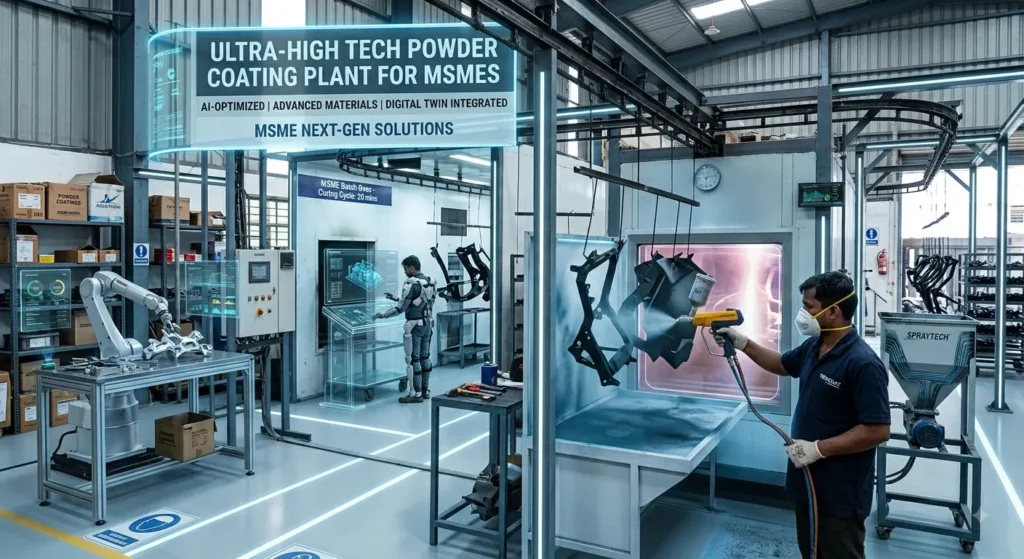
The best powder coating plant for an MSME depends on production volume, product size, product variation, available factory space, coating requirements, budget, and expected future growth.
- Low production: Manual or batch powder coating system
- Small-batch manufacturing: Batch powder coating plant
- Growing production: Semi-automatic system
- High-volume repetitive production: Conveyorized powder coating plant
- Frequent product changes: Flexible batch system
- Standardized products: Automatic spray and conveyorized system
- Expansion-focused business: Modular system designed for future upgrades
An MSME should not automatically choose the most automated system. The better approach is to calculate production requirements and select the lowest-cost system that can reliably achieve the required quality and throughput while allowing sensible future expansion.
What Is a Powder Coating Plant for MSMEs?
A powder coating plant is a combination of equipment and process stages used to prepare, coat, cure, and finish metal components using electrostatic powder coating technology.
A typical process is:
Metal Component → Pretreatment → Rinsing → Drying → Powder Application → Recovery → Curing → Cooling → Inspection
For a small workshop, these stages may be handled manually and in batches.
For a larger MSME, they can be integrated into a semi-automatic or fully conveyorized production line.
A typical plant may include:
- Pretreatment system
- Dry-off oven
- Powder coating booth
- Powder coating gun
- Automatic spray guns
- Powder recovery system
- Curing oven
- Conveyor
- Control panel
- Air filtration
- Loading and unloading stations
- Inspection area
The equipment configuration should be based on the products being coated rather than simply selecting a standard plant size.
Why Powder Coating Is Important for MSMEs
For an MSME, the finishing process can become a production bottleneck if it depends entirely on manual labor or external coating vendors.
An in-house powder coating plant can potentially provide greater control over:
Production
The manufacturer can schedule coating according to its own production requirements.
Quality
The coating process can be standardized and monitored internally.
Lead Time
Reducing dependence on external coating vendors can help shorten production cycles.
Rework
Better control over pretreatment, application, and curing can reduce avoidable coating defects.
Product Development
Manufacturers can test new products, colors, and finishes more easily.
Scalability
A properly designed plant can be expanded when production increases.
Powder coating is also widely used across industrial applications because of its durability and versatility. See the detailed guide on powder coating technologies and their benefits for a broader understanding of where the technology fits.
Powder Coating Plant for Small Business vs. Large Industrial Plant
An MSME does not necessarily require the same plant configuration as a large automotive or industrial manufacturer.
| Factor | Small Business | Growing MSME | Large Industrial Plant |
|---|---|---|---|
| Production | Low | Medium | High |
| Product variation | High | Medium–High | Often standardized |
| Automation | Manual | Semi/automatic | High |
| Conveyor | Optional | Often useful | Usually integrated |
| Booth | Manual | Manual/automatic | Automatic |
| Recovery | Basic/optional | Recommended | Advanced |
| Pretreatment | Batch/manual | Automated or batch | Continuous |
| Oven | Batch | Batch/continuous | Continuous |
| Initial investment | Lower | Medium | Higher |
| Flexibility | Very high | High | Depends on system |
| Expansion | Limited | Good | High |
The correct choice depends on the manufacturer’s business model.
A job-coating business may prioritize flexibility.
A furniture manufacturer producing thousands of identical components may prioritize throughput.
Types of Powder Coating Plants for MSMEs
1. Manual Powder Coating Plant
A manual system is generally suitable for low-volume operations.
The operator manually:
- Loads components
- Applies powder using a spray gun
- Moves components into the oven
- Cures the coating
- Unloads and inspects the product
Advantages
- Lower initial investment
- High flexibility
- Suitable for different product sizes
- Simple operation
- Suitable for small batches
Limitations
- Higher labor dependency
- Lower throughput
- Greater operator influence on finish
- More difficult to maintain production consistency at high volumes
2. Batch Powder Coating Plant
A batch system provides greater capacity while maintaining flexibility.
Products are processed in batches rather than continuously.
It can be suitable for MSMEs producing:
- Metal furniture
- Electrical cabinets
- Fabricated parts
- Machinery components
- Racks
- Shelving
- Small industrial components
Batch systems can be particularly useful where product dimensions and production requirements vary frequently.
3. Semi-Automatic Powder Coating Plant
A semi-automatic system combines manual and automated processes.
For example:
Manual Loading → Automated Pretreatment → Automatic Powder Application → Conveyorized Curing → Manual Inspection
This approach can provide a useful balance between investment and productivity.
For a growing MSME, semi-automation can be a practical way to improve production without immediately moving to a fully automated line.
4. Conveyorized Powder Coating Plant
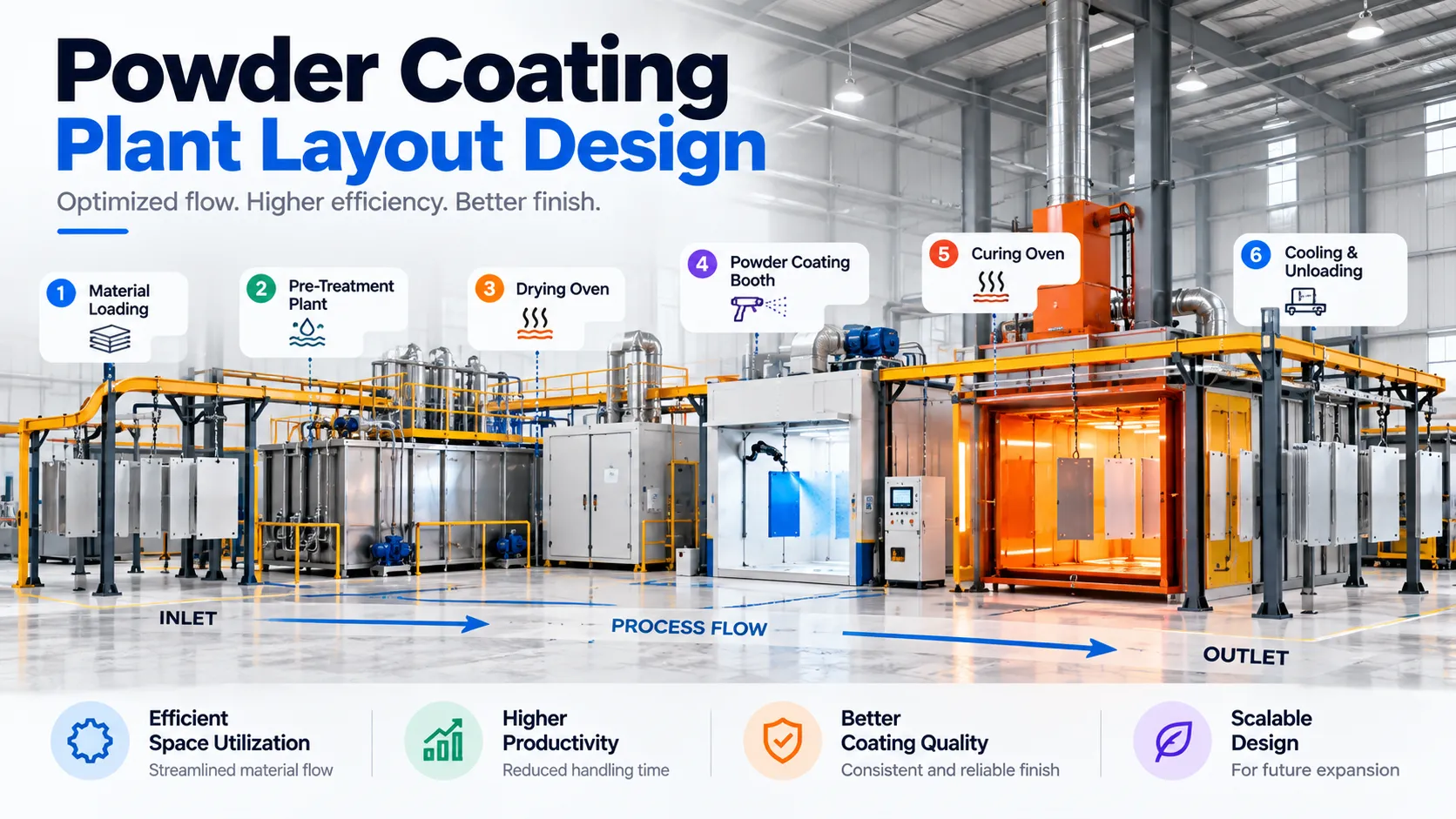
A conveyorized system continuously moves components through different stages.
A typical process is:
Loading → Pretreatment → Drying → Powder Booth → Curing Oven → Cooling → Unloading
Conveyorized plants are generally more appropriate for higher production volumes and repetitive product ranges.
If your production is moving toward continuous processing, review the complete guide to conveyorized powder coating plants before deciding on the conveyor, oven, booth, and pretreatment configuration.
Equipment Required for a Powder Coating Plant
The exact equipment required depends on the production process.
Core Equipment
A typical MSME plant may require:
| Equipment | Main Function |
|---|---|
| Pretreatment system | Cleans and prepares the metal |
| Drying oven | Removes moisture |
| Powder coating booth | Contains powder application |
| Powder coating gun | Applies powder |
| Recovery system | Collects overspray |
| Curing oven | Cures powder |
| Conveyor | Moves components |
| Control panel | Controls equipment |
| Air filtration | Manages airflow and filtration |
| Loading system | Loads components |
| Inspection area | Checks finished coating |
Not every MSME needs every component at the same automation level.
Powder Coating Plant Requirements
Before requesting quotations, define your production requirements.
1. Product Dimensions
Record:
- Maximum length
- Maximum width
- Maximum height
- Maximum weight
These dimensions influence the booth, oven, conveyor, pretreatment tanks, and loading system.
2. Production Volume
Calculate:
- Pieces per day
- Pieces per shift
- Shifts per day
- Working days per month
- Required future capacity
Do not design the plant based solely on current production if significant growth is expected.
3. Substrate
Identify whether you are coating:
- Mild steel
- Stainless steel
- Galvanized steel
- Aluminium
- Other compatible substrates
Pretreatment requirements can differ considerably between substrates.
4. Powder Specification
Define:
- Powder chemistry
- Color
- Gloss
- Texture
- Film thickness
- Required durability
- Chemical resistance
- Outdoor/indoor application
5. Factory Utilities
Evaluate:
- Electrical supply
- Gas availability
- Compressed air
- Water
- Drainage
- Ventilation
- Exhaust requirements
Powder Coating Plant Layout
A good layout is essential for productivity.
A basic material flow can look like:
Fabrication → Loading → Pretreatment → Drying → Powder Booth → Curing → Cooling → Inspection → Packing
The layout should minimize unnecessary movement.
Important Areas
An MSME should plan space for:
- Raw material entry
- Loading
- Pretreatment
- Powder application
- Oven
- Cooling
- Inspection
- Finished goods
- Powder storage
- Chemical storage
- Maintenance
- Utilities
The actual layout should be developed around the product dimensions and equipment configuration.
A poorly planned layout can create unnecessary handling, congestion, and production delays even when the equipment itself is technically capable.
Pretreatment System for MSME Powder Coating
Pretreatment is one of the most important stages of powder coating.
Its primary purpose is to:
- Remove oil and grease
- Remove dirt and contaminants
- Prepare the substrate
- Improve coating adhesion
- Improve corrosion resistance
Depending on the material and application, a pretreatment system may involve:
- Degreasing
- Water rinsing
- Surface conditioning
- Conversion treatment
- Final rinsing
- Drying
The appropriate chemistry should be determined based on the substrate and coating requirements.
Read the complete pretreatment systems guide before finalizing the pretreatment configuration.
Dip vs. Spray Pretreatment for MSMEs
MSMEs may consider either batch immersion systems or spray systems.
| Factor | Dip / Immersion | Spray |
|---|---|---|
| Small batches | Excellent | Good |
| Complex geometries | Excellent | Good |
| Continuous production | Limited | Excellent |
| Standardized components | Good | Excellent |
| Automation | Good | Excellent |
| Product flexibility | Excellent | Good |
| High-volume production | Moderate | Excellent |
For a more detailed technical comparison, see dip vs spray pretreatment.
Powder Coating Booth
The powder coating booth is where electrostatic powder application takes place.
A booth may include:
- Spray guns
- Filters
- Recovery system
- Airflow system
- Lighting
- Control system
- Easy-clean surfaces
Booth Size
The booth should accommodate the maximum product dimensions while allowing sufficient clearance for spraying and material movement.
Manual Booth
Suitable for:
- Low production
- Frequent product changes
- Small batches
- High product variation
Automatic Booth
More suitable for:
- Repetitive products
- Higher production
- Standardized components
- Conveyorized systems
MSMEs comparing equipment should also evaluate industrial powder coating booths based on recovery, cleaning requirements, production volume, and color-change frequency.
Powder Coating Machine and Gun
A powder coating gun applies electrostatically charged powder particles to the grounded metal component.
Important parameters include:
- Voltage
- Powder output
- Air pressure
- Spray pattern
- Transfer efficiency
- Gun configuration
For manual operations, the operator controls the application.
Automatic systems may use multiple spray guns and reciprocators to improve coverage and repeatability.
The gun should be selected according to:
- Product geometry
- Powder type
- Production speed
- Manual/automatic operation
- Required finish
Powder Recovery System
Powder recovery systems collect overspray from the booth.
Depending on the design, a system may use:
- Cartridge filters
- Cyclone separation
- Filter-based recovery
- Combination systems
A recovery system can help reduce powder waste and improve booth cleanliness.
However, recovered powder management is especially important where multiple colors are processed.
Cross-contamination can affect finish quality.
For MSMEs with frequent color changes, booth cleaning and recovery design should be considered before equipment selection.
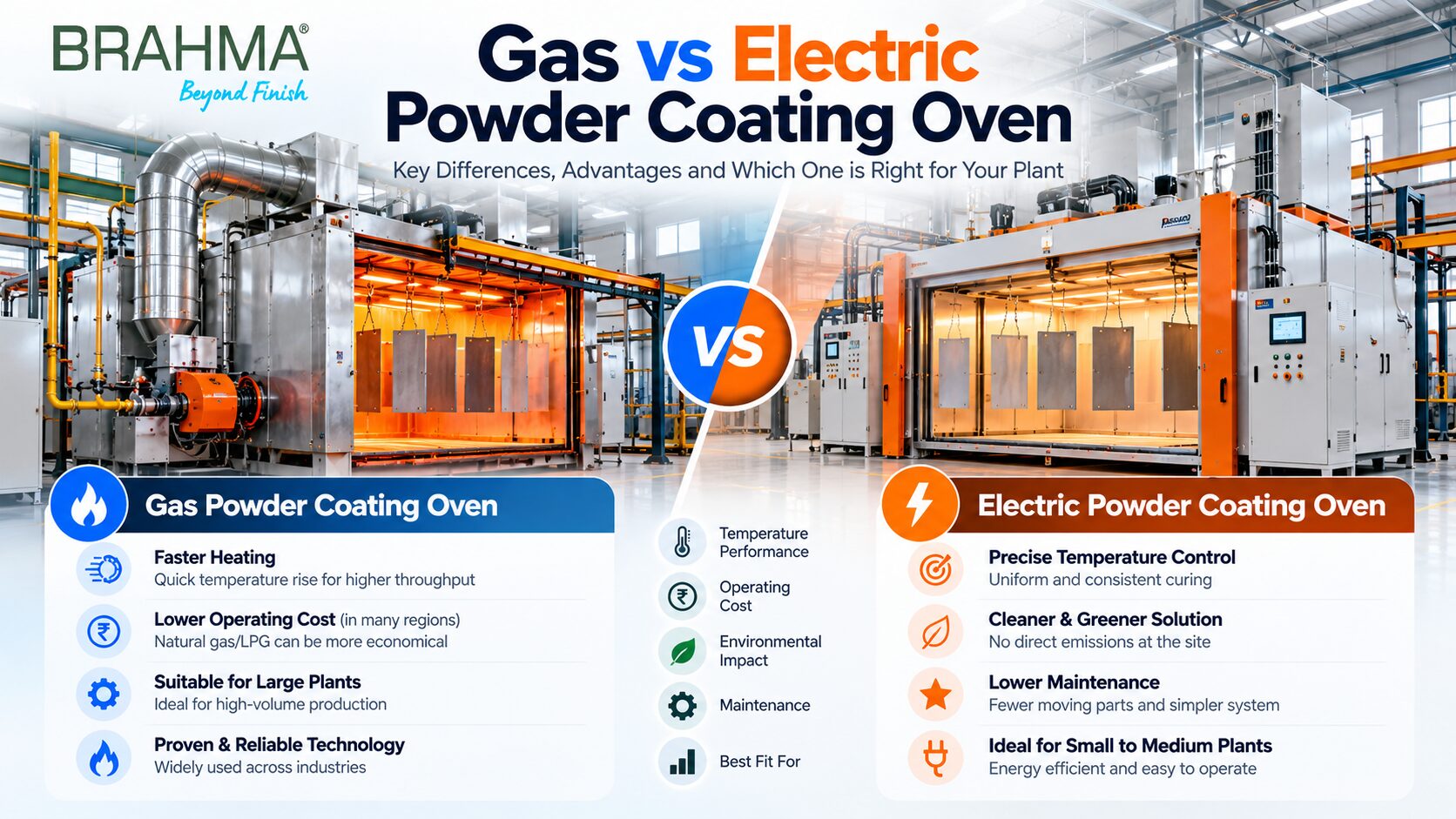
Powder Curing Oven
The curing oven converts the applied powder into a durable finished coating.
A curing oven should be designed according to:
- Maximum component size
- Component weight
- Production volume
- Powder manufacturer’s cure schedule
- Heating method
- Required temperature
- Conveyor speed
- Temperature uniformity
The displayed oven temperature alone does not necessarily tell you whether the component has achieved the required cure.
For specific applications, manufacturers should establish the curing profile according to the powder supplier’s technical documentation.
Batch vs Conveyorized Curing
Batch Oven
Suitable for:
- Small production
- Variable products
- Flexible manufacturing
- MSMEs with changing component sizes
Conveyorized Oven
Suitable for:
- Continuous production
- Standardized products
- Higher throughput
- Automated lines
The oven should be sized based on actual production requirements rather than simply maximizing chamber volume.
Conveyor System
A conveyor moves components between different production stages.
Common configurations include:
- Overhead conveyor
- Floor conveyor
- Continuous conveyor
- Batch handling
Overhead Conveyor
Useful when products can be safely suspended.
Advantages include:
- Efficient floor utilization
- Continuous movement
- Suitable for automated production
Floor Conveyor
Can be useful for:
- Heavy products
- Products difficult to hang
- Certain furniture and fabricated components
The correct system depends on product geometry, weight, production rate, and factory layout.
See the powder coating conveyor system guide for a detailed comparison of conveyor options.
Manual vs Automatic Powder Coating Plant
| Parameter | Manual | Semi-Automatic | Automatic/Conveyorized |
|---|---|---|---|
| Initial investment | Lower | Medium | Higher |
| Labor requirement | High | Medium | Lower |
| Production volume | Low | Medium | High |
| Flexibility | Excellent | Very good | Good |
| Repeatability | Operator dependent | Good | High |
| Color changes | Flexible | Good | Depends on booth |
| Product variety | Excellent | Very good | Moderate–Good |
| Expansion | Limited | Good | Excellent |
| Best suited for | Small workshops | Growing MSMEs | High-volume production |
The right solution should be based on cost per coated component, not only equipment price.
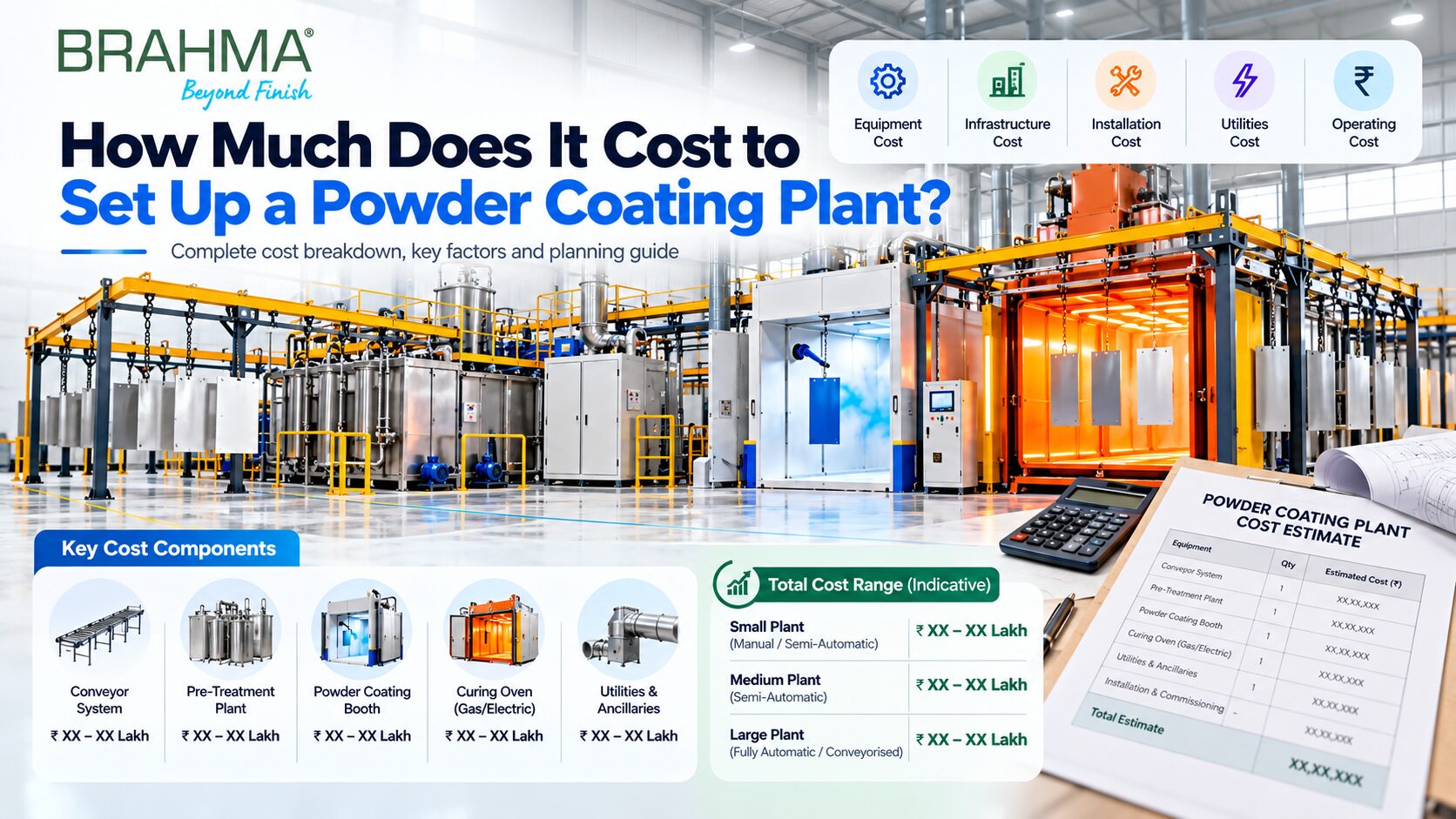
Powder Coating Plant Cost in India
One of the most important questions for an MSME is:
How much does a powder coating plant cost in India?
There is no single price because powder coating plants are engineered according to production requirements.
The investment can vary based on:
- Plant type
- Production capacity
- Product dimensions
- Pretreatment system
- Booth size
- Recovery system
- Oven dimensions
- Heating system
- Conveyor
- Automation
- Factory layout
- Installation
- Utilities
Indicative Investment Structure
Instead of treating the plant as one equipment purchase, MSMEs should divide the investment into:
| Investment Area | Typical Importance |
|---|---|
| Pretreatment | High |
| Powder booth | High |
| Recovery | Medium–High |
| Curing oven | High |
| Conveyor | Medium–High |
| Spray equipment | Medium |
| Automation | Medium–High |
| Utilities | Medium |
| Installation | Medium |
| Factory modifications | Variable |
A supplier should provide a detailed quotation rather than simply offering a generic small powder coating plant price.
Small Powder Coating Plant Price: What Influences It?
The price of a small-scale powder coating plant can change substantially based on the specifications.
For example, a compact batch system with manual application is fundamentally different from an automated conveyorized line.
The following factors can increase investment:
- Larger oven
- Higher production capacity
- Automatic spray guns
- Advanced powder recovery
- Continuous pretreatment
- Longer conveyor
- Higher automation
- Multiple-stage pretreatment
- Special heating requirements
Conversely, a flexible batch system may reduce initial investment for a smaller manufacturer.
The correct approach is to first define your production requirements and then obtain a customized quotation.
Powder Coating Plant Investment: What Should an MSME Budget For?
The initial equipment investment is only part of the project.
A complete project budget may include:
Capital Costs
- Powder coating equipment
- Pretreatment plant
- Booth
- Oven
- Conveyor
- Recovery
- Electrical work
- Installation
- Factory modifications
Operating Costs
- Powder
- Chemicals
- Electricity/fuel
- Compressed air
- Labor
- Filters
- Spare parts
- Maintenance
- Waste treatment
Indirect Costs
- Training
- Quality testing
- Production downtime during installation
- Utilities
- Insurance
- Safety equipment
For a detailed understanding of costs that may not appear in the initial quotation, see hidden costs in powder coating systems.
Is a Powder Coating Plant a Good Investment for an MSME?
The investment can make financial sense when the manufacturer has enough coating volume and can generate measurable benefits.
Potential benefits include:
- Reduced outsourcing
- Lower transportation costs
- Faster production
- Reduced delivery times
- Better quality control
- Higher production capacity
- Improved customer responsiveness
- Potentially lower coating cost per component
A basic investment analysis can compare:
Current Outsourcing Cost
versus
In-House Coating Cost + Plant Investment
For a more accurate calculation, include:
- Powder consumption
- Labor
- Energy
- Chemicals
- Maintenance
- Depreciation
- Rework
- Production volume
Do not calculate ROI using only the difference between vendor quotation and machine price.
How to Set Up a Powder Coating Plant
Step 1: Define Your Product
Document:
- Product type
- Material
- Dimensions
- Weight
- Geometry
- Required finish
Step 2: Calculate Production
Determine:
- Pieces/day
- Pieces/hour
- Shifts/day
- Peak production
- Future growth
Step 3: Select the Process
Determine whether you need:
- Manual
- Batch
- Semi-automatic
- Conveyorized
Step 4: Design Pretreatment
Choose the appropriate pretreatment process based on the substrate and coating specification.
Step 5: Select Booth and Recovery
Determine:
- Booth dimensions
- Number of spray guns
- Manual/automatic application
- Recovery method
- Color-change requirements
Step 6: Design the Oven
Calculate:
- Product dimensions
- Cure schedule
- Production speed
- Heating requirement
Step 7: Plan Material Handling
Select the conveyor and loading method.
Step 8: Finalize Factory Layout
Ensure logical product movement and adequate maintenance access.
Step 9: Calculate Utilities
Estimate:
- Electricity
- Gas/fuel
- Compressed air
- Water
- Exhaust
Step 10: Request a Detailed Quotation
The quotation should include equipment specifications, capacity, installation, commissioning, warranty, and after-sales support.
Powder Coating Plant Applications for MSMEs
Metal Furniture
MSMEs manufacturing:
- Chairs
- Tables
- Cabinets
- Racks
- Shelving
- Storage systems
can use powder coating for durable decorative finishes.
See the dedicated guide to a powder coating plant for metal furniture.
Aluminium Sections
Applications can include suitable:
- Architectural profiles
- Window and door sections
- Fabricated aluminium products
Read the guide to a powder coating plant for aluminium sections.
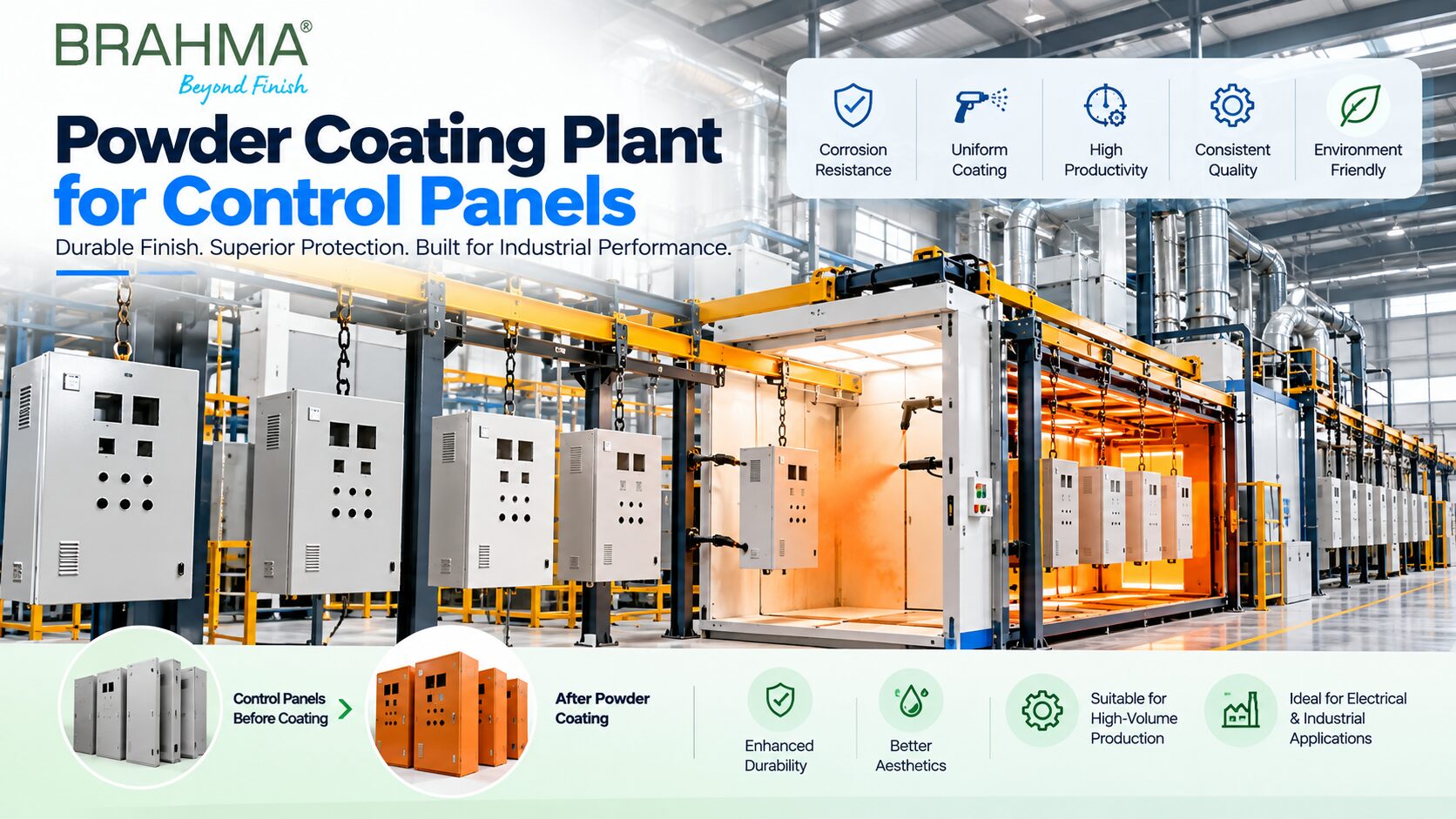
Electrical Enclosures
Powder coating is commonly considered for:
- Electrical panels
- Cabinets
- Enclosures
- Control boxes
Automotive Components
Suitable fabricated and metal components can be powder coated according to their technical requirements.
Industrial Fabrication
Applications may include:
- Machine frames
- Equipment housings
- Fabricated structures
- Industrial components
Powder Coating Plant for Small Business: When Should You Automate?
Automation becomes more attractive when:
- Production volume increases
- Product designs become standardized
- Labor becomes a bottleneck
- Quality variation increases
- Outsourcing becomes expensive
- Customer delivery requirements become tighter
- The company expects sustained growth
However, automation is not automatically better.
If your business handles many different products in small batches, a flexible manual or batch system may provide better economics.
Common Mistakes When Setting Up a Powder Coating Plant
1. Buying the Cheapest Plant
A low initial price may mean important components or services are excluded.
Always compare the complete scope of supply.
2. Ignoring Product Dimensions
A plant must accommodate the largest product—not merely the average product.
3. Underestimating Production Growth
A plant that is adequate today may become a bottleneck quickly.
4. Treating Pretreatment as an Optional Stage
Pretreatment has a major impact on adhesion and corrosion performance.
5. Ignoring Energy Costs
An inefficient oven can create significant long-term operating expenses.
6. Not Planning Color Changes
Frequent color changes can affect downtime and powder waste.
7. Poor Factory Layout
Equipment may fit physically but still create inefficient material movement.
8. Focusing Only on CAPEX
The cheapest plant is not always the lowest-cost plant over its operating life.
Powder Coating Plant Buying Checklist for MSMEs
Before purchasing, confirm the following:
Product
Product dimensions documented
Product weight documented
Substrate identified
Coating specification defined
Film thickness established
Production
Daily production calculated
Hourly production calculated
Future capacity considered
Number of shifts determined
Equipment
Pretreatment selected
Drying system selected
Booth size confirmed
Powder gun selected
Recovery system evaluated
Curing oven sized
Conveyor selected
Control system specified
Factory
Layout finalized
Electrical capacity checked
Gas/fuel availability checked
Compressed air planned
Water and drainage planned
Ventilation considered
Maintenance access provided
Supplier
Technical specifications provided
Installation included
Commissioning included
Operator training included
Warranty clarified
Spare parts available
After-sales service evaluated
Our powder coating plant buying checklist provides an additional framework for evaluating equipment before placing an order.
How Brahma Fabricon Can Help MSMEs
Brahma Fabricon provides industrial powder coating and surface-finishing solutions designed around the requirements of individual manufacturing operations.
For MSMEs, a plant can be planned according to:
- Product dimensions
- Production volume
- Substrate
- Coating requirements
- Factory space
- Available utilities
- Budget
- Automation requirements
- Future expansion
Potential solutions include:
- Small-scale powder coating plants
- Batch powder coating systems
- Automatic powder coating plants
- Conveyorized coating lines
- Powder coating booths
- Pretreatment plants
- Powder recovery systems
- Curing ovens
- Conveyor systems
- Turnkey coating plants
The objective should be to develop a system that provides the required quality, capacity, operating economics, and scalability rather than simply supplying individual machines.
If you are comparing suppliers, our guide to powder coating plant manufacturers in India can help you evaluate important selection criteria.
Final Takeaway
A powder coating plant for MSMEs can be an important manufacturing investment for businesses that want greater control over coating quality, production capacity, delivery schedules, and finishing costs.
But there is no universal “best” powder coating plant.
A small furniture manufacturer, an aluminium profile producer, an electrical enclosure manufacturer, and an industrial fabrication company can have completely different requirements.
The correct plant should therefore be designed around:
Product + Production Volume + Substrate + Coating Specification + Factory Space + Budget + Future Growth
For low-volume production, a manual or batch system may provide the best balance of flexibility and investment.
For growing MSMEs, semi-automatic systems can increase productivity without excessive automation.
For standardized, high-volume production, a conveyorized powder coating plant can provide greater throughput and process consistency.
Most importantly, evaluate the total cost of ownership, not just the purchase price. Pretreatment, powder consumption, energy, maintenance, labor, recovery, downtime, and quality-related costs can all influence the long-term economics of the plant.
Request a Powder Coating Plant Consultation
Planning a small-scale powder coating plant, MSME coating line, or complete industrial powder coating system?
Brahma Fabricon can evaluate your:
- Product dimensions
- Production capacity
- Substrate
- Coating requirements
- Factory space
- Automation needs
- Utility availability
- Budget and expansion plans
and recommend a plant configuration suited to your manufacturing requirements.
Request a Customized Powder Coating Plant Quotation
Get technical guidance, equipment specifications, plant-layout recommendations, and a project-specific quotation from Brahma Fabricon.
Why Choose Brahma Fabricon for Powder Coating Plant?
ISO 9001:2015 certified quality and reliability
Custom sizing and configuration to fit your factory layout in Vadodara or anywhere in India
Focus on efficiency: better paint utilization, reduced rework, and healthier workspace
Expert installation, operator training, and prompt after-sales support
Complementary to our powder coating systems for hybrid finishing lines
Locations We Serve
We proudly provide our services across major cities and key industrial hubs in Gujarat.
Major Cities in Gujarat
Ahmedabad, Surat, Vadodara, Rajkot, Bhavnagar, Jamnagar, Gandhinagar, Anand, Bharuch, Vapi, Valsad, Navsari, Morbi, Junagadh, Porbandar, Mehsana, Bhuj
Key Industrial Areas (GIDC)
Dahej GIDC, Saykha GIDC, Ankleshwar GIDC, Jhagadia GIDC, Panoli GIDC, Vapi GIDC, Hazira GIDC, Sachin GIDC, Nandesari GIDC, Makarpura GIDC, Savli GIDC, Sanand GIDC, Changodar GIDC, Odhav GIDC, Naroda GIDC, Halol GIDC, Kalol GIDC
What Our Clients Say


What is a powder coating plant for MSMEs?
A powder coating plant for MSMEs is a coating production system designed around the needs of small and medium-sized manufacturers. It may include pretreatment, powder application, recovery, curing, conveyor handling, and inspection.
How much does a powder coating plant cost in India?
There is no fixed price because the investment depends on production capacity, product dimensions, pretreatment, booth, oven, recovery, conveyor, automation, utilities, installation, and factory requirements.
What is the price of a small powder coating plant?
A small powder coating plant can vary considerably depending on whether it is manual, batch, semi-automatic, or conveyorized. A customized quotation based on actual production requirements is more useful than a generic price.
What equipment is required for a powder coating plant?
Common equipment includes a pretreatment system, drying oven, powder coating booth, powder coating gun, powder recovery system, curing oven, conveyor, control panel, and supporting utilities.
How much space is required for a small powder coating plant?
Space depends on product size, production volume, oven and booth dimensions, pretreatment configuration, conveyor layout, loading areas, utilities, and maintenance access.
Is powder coating profitable for MSMEs?
It can be financially beneficial when coating volume is sufficient to justify the investment and the manufacturer can reduce outsourcing, transportation, rework, or production delays.
Should a small business buy a manual or automatic powder coating plant?
A manual or batch plant can be suitable for low-volume and highly variable production. Automatic or conveyorized systems become more attractive when production is repetitive and high volume.
Is pretreatment necessary before powder coating?
Proper pretreatment is generally critical for achieving reliable coating adhesion and corrosion resistance. The process should be selected according to the substrate and required coating performance.
Can an MSME upgrade a powder coating plant later?
Yes. Where possible, MSMEs should consider modular plant designs that allow future additions or automation upgrades as production increases.
How do I choose a powder coating plant manufacturer?
Evaluate the manufacturer's engineering capabilities, product-specific design approach, equipment quality, installation and commissioning support, warranty, spare-parts availability, after-sales service, and ability to customize the system.
Get In Touch
Ready to upgrade your powder coating setup? Get a customized solution and quotation from Brahma Fabricon today.
Address: 332 Survey Block, Por-Kayavarohan Road, B/S D-Mart Ware House, Ankhi Village, Por, Vadodara, Gujarat – 391243,
Phone: 8320244173/9227534580
Email: powdercoatingplants@gmail.com