
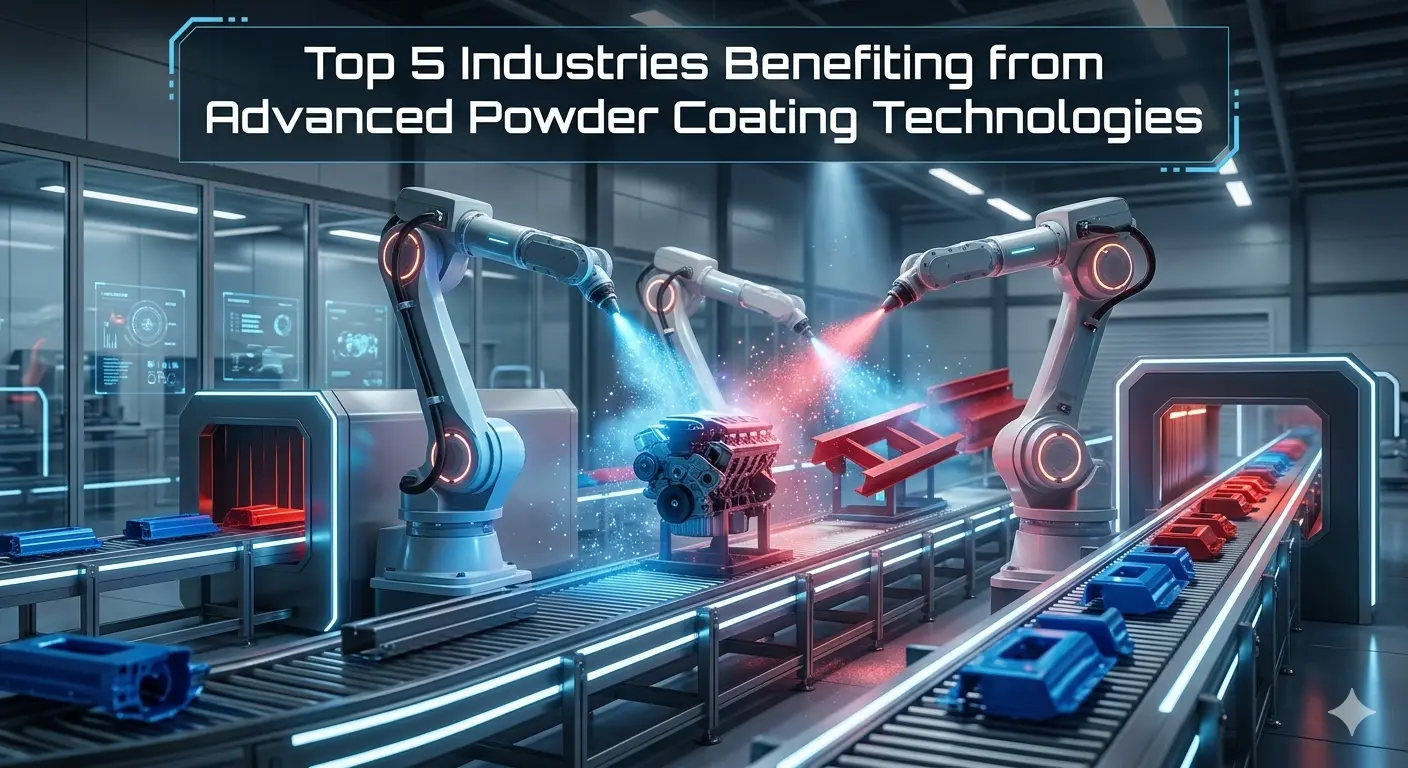
Advanced powder coating technologies are modern surface finishing processes that use electrostatically applied dry powder and heat curing to create durable, high-performance coatings. These technologies offer superior corrosion resistance, environmental sustainability, and cost efficiency, making them widely adopted across industries that demand long-lasting and high-quality finishes.
Quick Summary (Key Takeaways)
- Powder coating is solvent-free, eco-friendly, and highly durable
- Offers up to 98% material utilization, reducing waste
- Advanced technologies now include AI, automation, and Industry 4.0 integration
- Used across industries like automotive, construction, appliances, medical, and manufacturing
- Improves product lifespan, aesthetics, and cost efficiency
What is Advanced Powder Coating Technology?
Advanced powder coating goes beyond traditional coating methods by incorporating:
- Precision particle engineering (for smooth finishes)
- Automated electrostatic spraying systems
- AI-driven process optimization
- Laser curing and rapid coating systems
These innovations allow industries to achieve uniform coating, faster production cycles, and minimal waste.
Why Industries Are Shifting to Advanced Powder Coating
Key Benefits:
- Durability: Resistant to corrosion, scratches, and chemicals
- Environmental safety: No VOC emissions
- Cost savings: Less waste, faster curing
- Aesthetic flexibility: Wide range of colors and textures
- Efficiency: High transfer rates and automation
Top 5 Industries Benefiting from Advanced Powder Coating Technologies
1. Automotive Industry
The automotive sector is one of the biggest adopters of advanced powder coating.
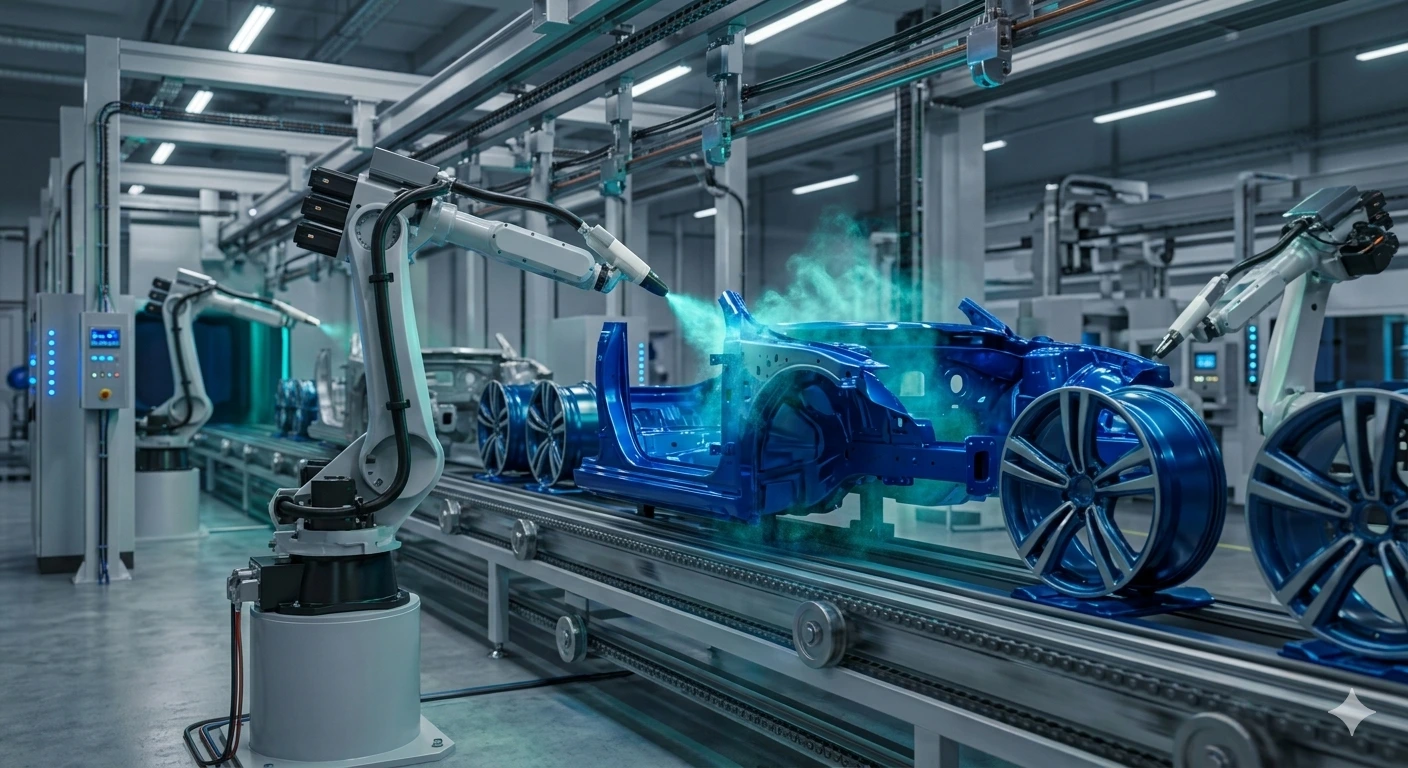
Applications:
- Wheels, brake calipers, and engine components
- Chassis and underbody parts
- Interior trims and accessories
Why it matters:
- Provides high resistance to heat, chemicals, and wear
- Enhances vehicle lifespan and safety
- Supports lightweight and electric vehicle components
Advanced coatings ensure uniform coverage even on complex geometries, improving both performance and aesthetics.
2. Construction & Architecture Industry
From skyscrapers to residential buildings, powder coating plays a vital role.
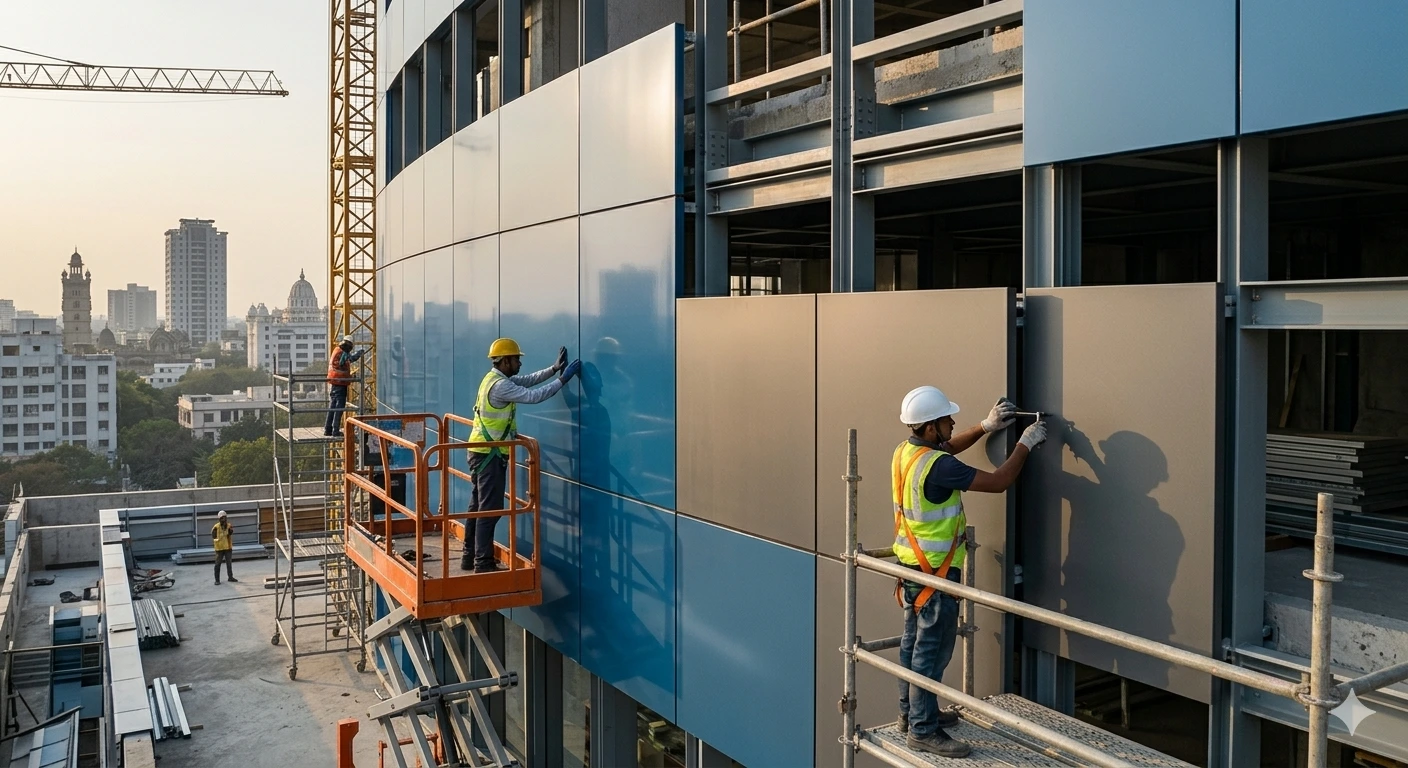
Applications:
- Aluminum windows and doors
- Structural steel
- Facades and railings
Benefits:
- Weather resistance (UV, rain, corrosion)
- Long-lasting finishes with minimal maintenance
- Custom design flexibility
Powder coating is ideal for outdoor structures because it forms a continuous protective barrier against environmental damage.
3. Appliances & Consumer Electronics
Modern appliances demand both durability and aesthetics.
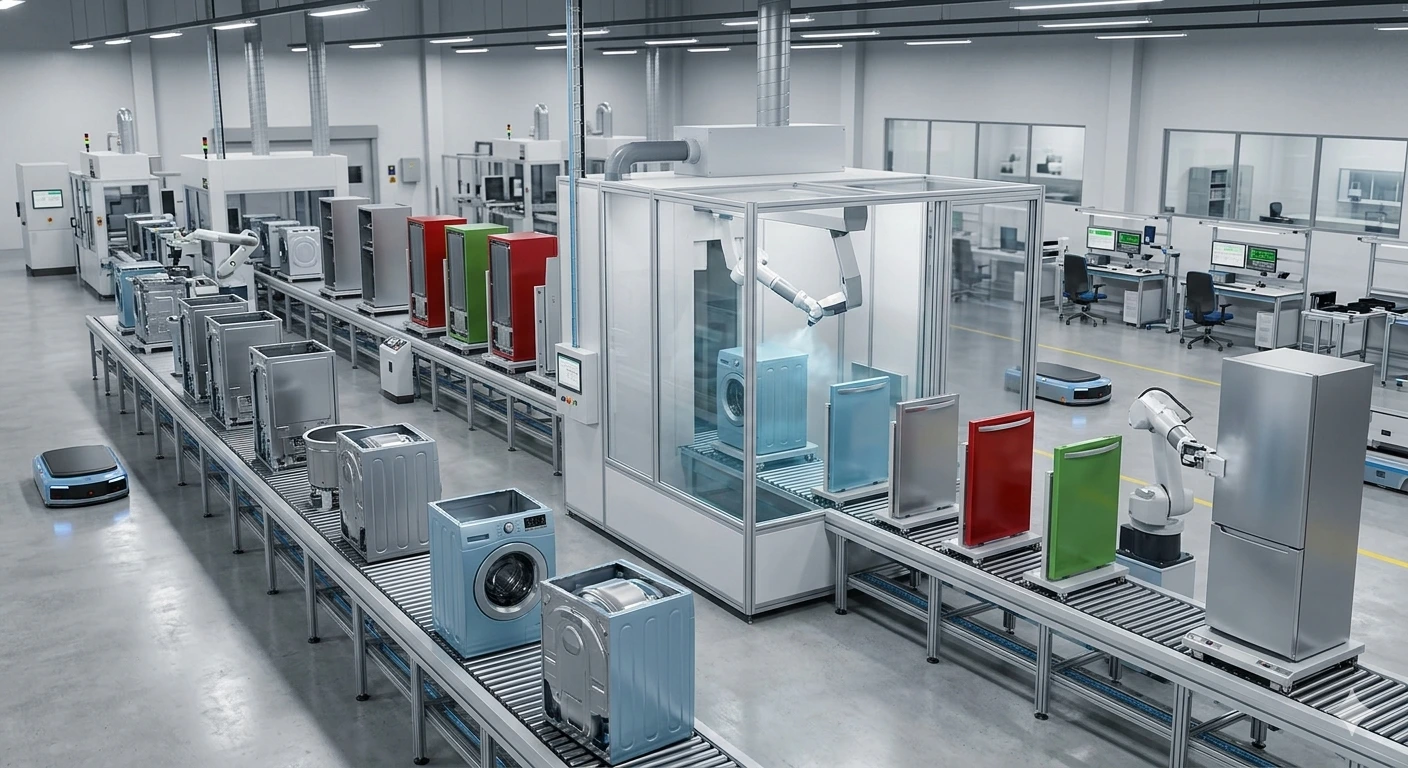
Applications:
- Refrigerators, washing machines, ovens
- Air conditioners and panels
- Electronic enclosures
Advantages:
- Smooth, premium finish
- Scratch and heat resistance
- Improved product lifespan
Companies prefer powder coating because it delivers consistent quality and visual appeal at scale, especially in mass production environments.
4. Industrial Equipment & Manufacturing
Heavy industries rely heavily on advanced coating technologies.
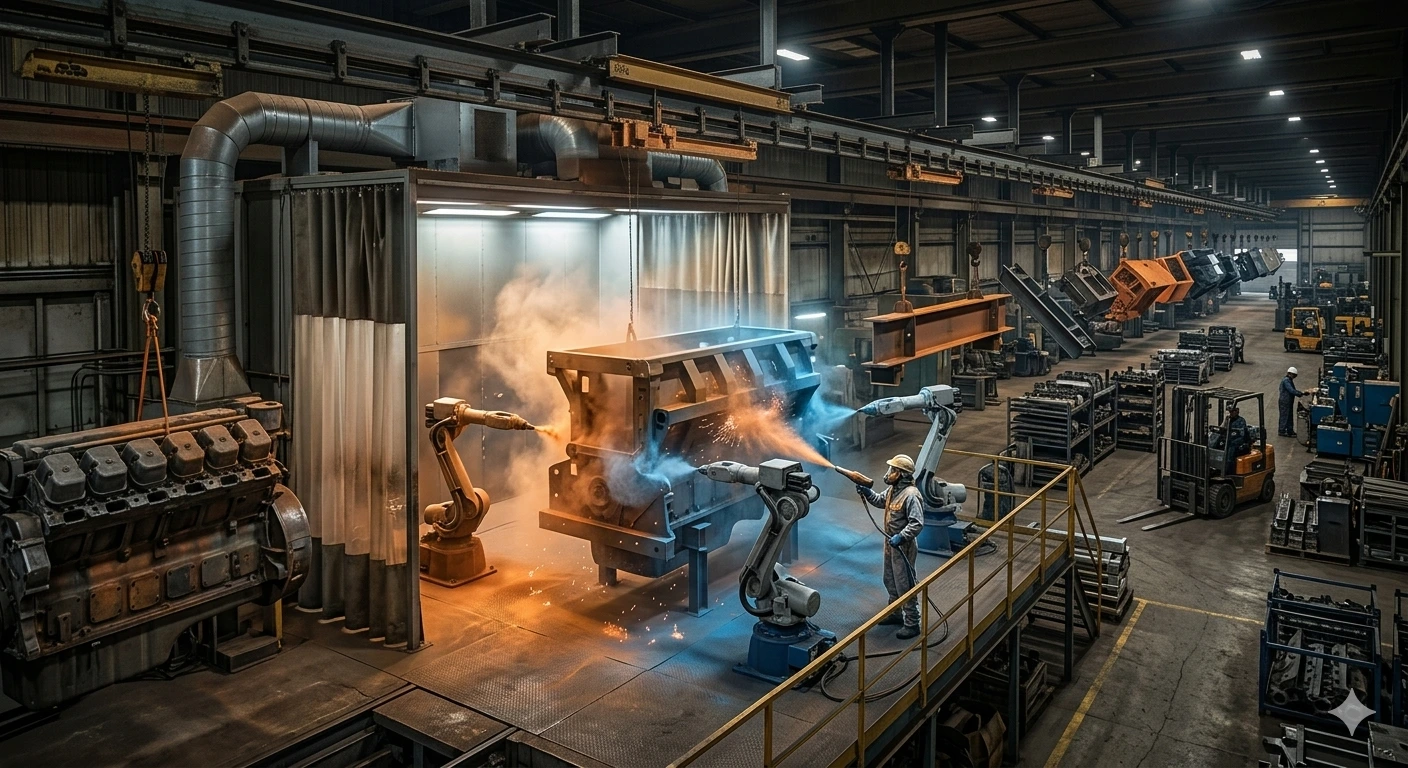
Applications:
- Machinery and tools
- Storage tanks and pipelines
- Agricultural equipment
Key Benefits:
- Corrosion protection in harsh environments
- Reduced maintenance costs
- Increased equipment durability
With Industry 4.0 integration, modern coating systems use real-time data and sensors to optimize coating quality and efficiency.
5. Medical & Healthcare Industry
Precision and hygiene are critical in this sector.
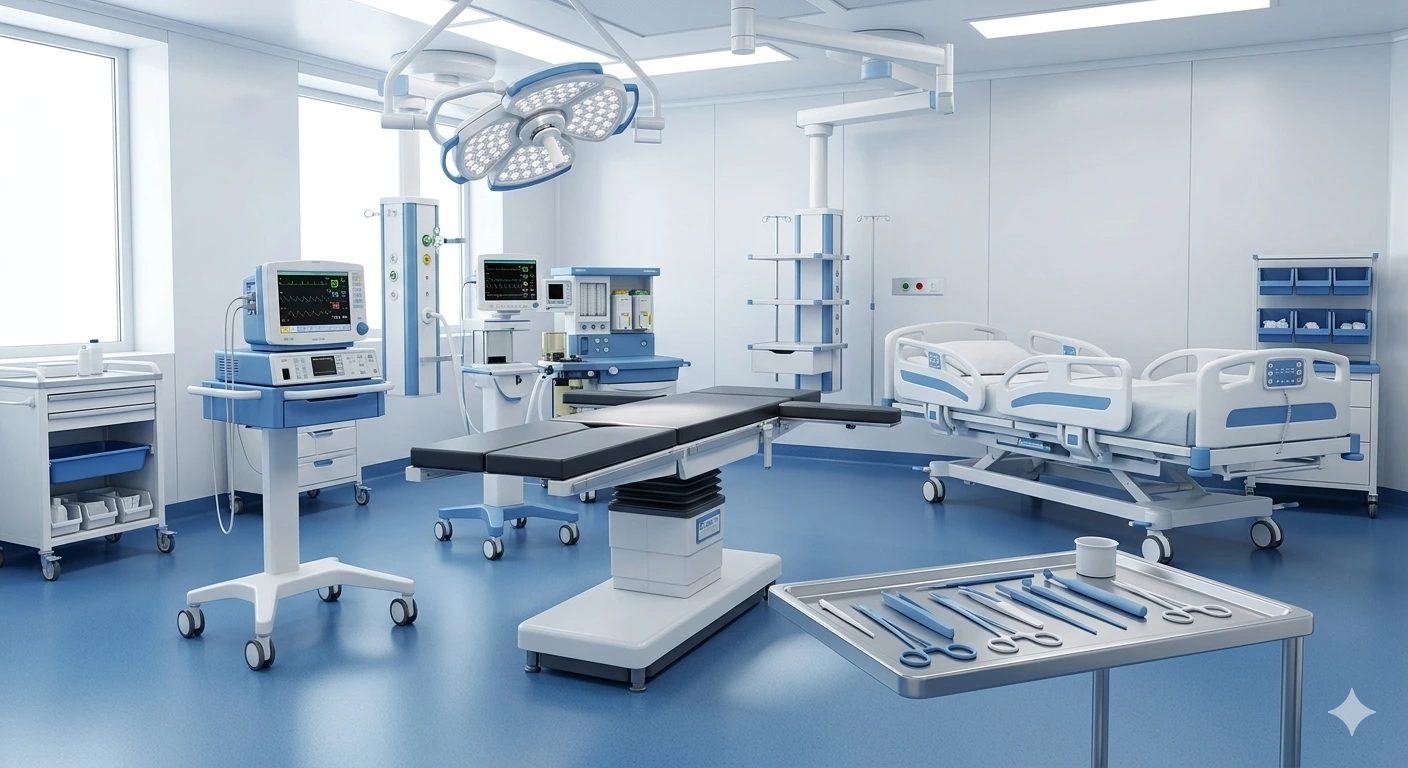
Applications:
- Surgical instruments
- Hospital furniture
- Medical devices
Why powder coating is preferred:
- Smooth, easy-to-clean surfaces
- Chemical and bacterial resistance
- Safe and non-toxic finishes
Advanced coatings ensure high precision and reliability, essential for medical-grade equipment.
Comparison: Powder Coating vs Traditional Liquid Coating
| Feature | Powder Coating | Liquid Coating |
|---|---|---|
| Environmental Impact | Eco-friendly (no VOCs) | Contains solvents |
| Durability | High resistance | Moderate |
| Waste | Minimal (recyclable) | High |
| Finish Quality | Smooth & uniform | Can drip or run |
| Cost Efficiency | Lower long-term cost | Higher maintenance cost |
How Advanced Powder Coating Works (Step-by-Step)
- Surface Preparation – Cleaning and pre-treatment
- Electrostatic Application – Powder is sprayed with charge
- Curing Process – Heated in oven to form a solid layer
- Inspection & Finishing – Quality check
Modern systems now use:
- Robotics
- AI monitoring
- Laser curing for faster cycles
Emerging Trends in Powder Coating Technology
1. Industry 4.0 Integration
Smart factories use sensors and automation for precision coating.
2. Ultra-Thin Coatings
New formulations allow thinner layers with better coverage.
3. Sustainable Coatings
Focus on reducing energy consumption and environmental impact
4. Laser-Based Curing
Faster processing and reduced production time
Common Challenges & Solutions
Challenge 1: Initial Setup Cost
Solution: Long-term ROI through reduced waste and maintenance
Challenge 2: Color Change Complexity
Solution: Advanced automated booths for quick switching
Challenge 3: Heat Sensitivity
Solution: Low-temperature curing powders
Expert Insights
Industry experts highlight that powder coating is no longer just a finishing process—it’s a strategic manufacturing advantage.
- Companies adopting advanced systems report:
- Up to 30–40% cost savings (industry estimates)
- Improved production efficiency
- Better product quality consistency
With AI and automation, powder coating is becoming a data-driven process, not just a mechanical one.
Here is a detailed guide of powder coating process: https://powdercoatingplant.co.in/powder-coating-process/
FAQs:
1. What industries use powder coating the most?
Automotive, construction, appliances, manufacturing, and medical industries are the top users due to durability and cost efficiency.
2. Why is powder coating better than paint?
It offers better durability, no VOC emissions, higher efficiency, and superior finish quality compared to liquid paint.
3. Is powder coating environmentally friendly?
Yes, it is solvent-free and produces minimal waste, making it eco-friendly.
4. What materials can be powder coated?
Primarily metals, but modern advancements allow coating on plastics and composites.
5. What is the lifespan of powder coating?
It can last 10–20 years depending on application and environment.
Conclusion
Advanced powder coating technologies are transforming industries by offering durability, sustainability, and efficiency in one solution. From automotive to healthcare, these innovations are enabling businesses to improve product quality while reducing costs and environmental impact.
As Industry 4.0 continues to evolve, powder coating will become even more intelligent, automated, and essential for modern manufacturing.