
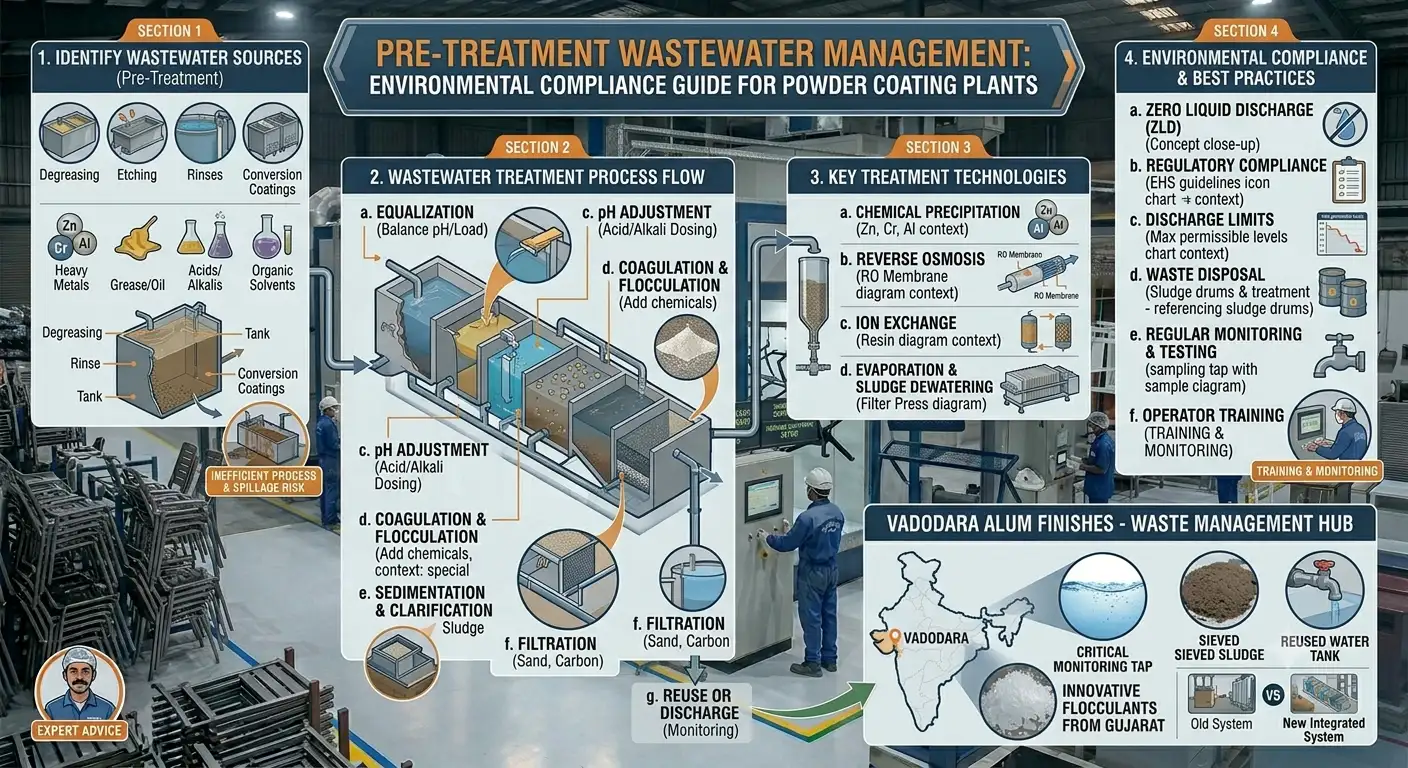
Pre-treatment wastewater management is the process of collecting, treating, monitoring, and safely disposing of wastewater generated during metal surface preparation before powder coating. A properly designed wastewater treatment system helps manufacturers comply with environmental regulations, reduce water consumption, minimize hazardous waste, and protect surrounding ecosystems while maintaining efficient production.
If your powder coating plant includes chemical pretreatment, wastewater management is not optional it’s essential for regulatory compliance and sustainable operations.
A compliant pre-treatment wastewater management system should include:
- Segregated wastewater collection
- Neutralization tanks
- Oil and grease separation
- Heavy metal removal
- Sludge management
- Effluent Treatment Plant (ETP)
- Water quality monitoring
- Safe waste disposal
- Water recycling where feasible
Investing in an efficient wastewater treatment system reduces environmental risks, avoids regulatory penalties, and lowers long-term operating costs.
What Is Pre-Treatment Wastewater Management?
Before powder coating, metal parts undergo chemical pretreatment to remove contaminants and improve coating adhesion.
This process generates wastewater containing:
- Oils
- Grease
- Cleaning chemicals
- Phosphates
- Metal particles
- Suspended solids
- Acids
- Alkalis
Pre-treatment wastewater management ensures this contaminated water is properly treated before discharge or reuse.
Without effective treatment, untreated effluent can damage the environment, violate regulations, and expose manufacturers to significant financial penalties.
Why Wastewater Management Is Critical
Environmental regulations have become increasingly stringent across manufacturing industries.
Proper wastewater treatment helps manufacturers:
- Protect natural water resources
- Prevent soil contamination
- Meet pollution control standards
- Improve workplace safety
- Reduce water consumption
- Lower environmental liabilities
- Enhance corporate sustainability goals
For companies supplying automotive, architectural, engineering, or export markets, environmental compliance is also an important customer requirement.
Sources of Wastewater in Powder Coating Plants
Several stages within a powder coating plant generate wastewater.
Degreasing
Removes machining oils, lubricants, and production residues.
Typical contaminants include:
- Oil
- Grease
- Surfactants
Rinsing
Multiple rinse stages generate significant wastewater volumes.
These streams may contain:
- Cleaning chemicals
- Suspended solids
- Residual detergents
Phosphating or Conversion Coating
Surface treatment chemicals improve coating adhesion.
Wastewater may contain:
- Phosphates
- Zinc
- Iron
- Nickel (depending on process chemistry)
Passivation
Final treatment stages produce wastewater containing various chemical compounds depending on the pretreatment system.
Equipment Cleaning
Periodic cleaning of tanks, spray nozzles, and pipelines also generates contaminated wastewater.
Common Pollutants Found in Pretreatment Wastewater
Understanding wastewater composition helps determine the appropriate treatment process.
| Pollutant | Source | Environmental Concern |
|---|---|---|
| Oil & Grease | Machining operations | Surface water contamination |
| Suspended Solids | Cleaning process | Sedimentation |
| Phosphates | Pretreatment chemicals | Eutrophication |
| Heavy Metals | Surface treatment | Toxicity |
| Acids | Pickling | Low pH |
| Alkalis | Degreasing | High pH |
| Detergents | Cleaning solutions | Water pollution |
Regular water analysis ensures treatment systems remain effective.
Wastewater Treatment Process
A typical pre-treatment wastewater management system consists of multiple treatment stages.
Step 1: Collection
Wastewater from different process stages is collected separately or combined based on plant design.
Step 2: Equalization
Equalization tanks balance wastewater flow and pollutant concentration.
Benefits include:
- Stable treatment performance
- Improved chemical dosing
- Better process control
Step 3: pH Neutralization
Acidic and alkaline wastewater must be neutralized before further treatment.
Automated dosing systems improve consistency.
Step 4: Coagulation & Flocculation
Chemicals are added to bind suspended particles together.
This improves solid-liquid separation.
Step 5: Clarification
Settling tanks separate sludge from treated water.
Clarified water moves to additional treatment stages.
Step 6: Filtration
Filtration removes remaining fine particles before discharge or recycling.
Common technologies include:
- Sand filters
- Activated carbon filters
- Cartridge filters
Step 7: Final Discharge or Reuse
Depending on water quality and local regulations, treated water may be:
- Safely discharged
- Reused in rinsing operations
- Recycled within the plant
Environmental Compliance Requirements
Every powder coating facility should comply with applicable environmental regulations governing wastewater discharge and hazardous waste handling.
Typical compliance requirements include:
- Monitoring wastewater quality
- Maintaining discharge records
- Proper sludge disposal
- Safe chemical storage
- Periodic environmental audits
- Employee training
- Equipment maintenance
Manufacturers should consult their local pollution control authority regarding applicable discharge limits and reporting requirements.
Best Practices for Pre-Treatment Wastewater Management
Minimize Water Consumption
Use counterflow rinsing and optimized spray systems to reduce fresh water demand.
Separate Waste Streams
Avoid mixing incompatible wastewater streams whenever possible.
Automate Chemical Dosing
Automated dosing improves treatment efficiency and reduces chemical consumption.
Monitor Water Quality
Regular testing helps identify issues before they become compliance problems.
Important parameters include:
- pH
- TDS
- COD
- BOD
- Oil & Grease
- Heavy Metals
Maintain Treatment Equipment
Routine inspection prevents equipment failure and ensures consistent compliance.
Train Plant Personnel
Operators should understand:
- Chemical handling
- Emergency procedures
- Waste segregation
- Environmental responsibilities
Sludge Handling and Waste Disposal
Wastewater treatment produces sludge containing concentrated contaminants.
Proper sludge management includes:
- Dewatering
- Safe storage
- Authorized transportation
- Disposal through approved waste handlers
Improper disposal may result in environmental contamination and regulatory action.
Maintain detailed records of sludge generation and disposal activities.
Water Recycling and Sustainability
Modern powder coating plants increasingly recycle treated water to reduce operating costs and environmental impact.
Benefits include:
- Lower freshwater consumption
- Reduced discharge volume
- Lower utility costs
- Improved sustainability performance
- Better ESG reporting
Water recycling is particularly valuable in regions facing water scarcity or high utility costs.
Common Compliance Mistakes
Many facilities encounter compliance issues due to avoidable mistakes.
Common problems include:
- Inadequate wastewater segregation
- Poor pH control
- Irregular maintenance
- Overflowing sludge tanks
- Lack of operator training
- Missing documentation
- Delayed equipment servicing
- Insufficient water quality monitoring
Regular internal audits help identify and correct these issues.
Benefits of an Efficient Wastewater Management System
A properly designed wastewater treatment system delivers both environmental and business benefits.
Regulatory Compliance
Reduces the risk of penalties and production interruptions.
Lower Operating Costs
Water recycling and optimized chemical usage reduce recurring expenses.
Improved Sustainability
Supports corporate environmental initiatives and customer expectations.
Better Product Quality
Stable pretreatment processes contribute to consistent coating performance.
Enhanced Brand Reputation
Demonstrates commitment to responsible manufacturing practices.
Why Manufacturers Choose Brahma Fabricon
Brahma Fabricon designs integrated pretreatment systems with wastewater management solutions tailored to industrial powder coating plants.
Our Capabilities
- Pretreatment plant
- Wastewater management integration
- Conveyorized powder coating systems
- Energy-efficient process engineering
- Water-saving pretreatment solutions
- Turnkey powder coating plants
Why Partner With Us?
- Customized engineering
- Compliance-focused system design
- Sustainable manufacturing solutions
- Reliable after-sales support
- Complete installation and commissioning
Our goal is to help manufacturers achieve both operational efficiency and environmental compliance.
Quick Answers
What is pre-treatment wastewater management?
It is the treatment and management of wastewater generated during metal cleaning and surface preparation before powder coating.
Why is wastewater treatment necessary in powder coating plants?
It prevents environmental pollution, supports regulatory compliance, enables water recycling, and protects public health.
What pollutants are commonly found in pretreatment wastewater?
Oil, grease, suspended solids, phosphates, heavy metals, detergents, acids, and alkalis.
Can treated wastewater be reused?
Yes. Many facilities recycle treated water for rinsing and other suitable process applications after ensuring it meets quality requirements.
Frequently Asked Questions
1. What is pre-treatment wastewater management?
It involves collecting, treating, monitoring, and disposing of wastewater generated during metal pretreatment.
2. Why is wastewater treatment important in powder coating plants?
It protects the environment, supports regulatory compliance, and reduces water consumption.
3. What contaminants are found in pretreatment wastewater?
Common contaminants include oils, grease, suspended solids, phosphates, heavy metals, detergents, acids, and alkalis.
4. What is an Effluent Treatment Plant (ETP)?
An ETP is a system designed to treat industrial wastewater before discharge or reuse.
5. Can wastewater be recycled?
Yes. Properly treated water can often be reused in appropriate process applications.
6. What happens to treatment sludge?
Sludge should be dewatered, stored safely, and disposed of through authorized waste management providers.
7. How often should wastewater be tested?
Testing frequency depends on plant operations and regulatory requirements but should be performed regularly as part of routine compliance monitoring.
8. Does wastewater treatment reduce operating costs?
Yes. Water recycling, optimized chemical usage, and efficient treatment systems can reduce long-term operating expenses.
9. How can manufacturers improve environmental compliance?
Implement preventive maintenance, monitor water quality, train personnel, and maintain proper documentation.
10. Can Brahma Fabricon help with wastewater management?
Yes. Brahma Fabricon provides integrated pretreatment and wastewater management solutions for powder coating plants.
Conclusion
Effective pre-treatment wastewater management is essential for every modern powder coating plant. Beyond meeting environmental regulations, a well-designed treatment system helps reduce water consumption, lower operating costs, improve sustainability, and ensure consistent production quality. By integrating efficient wastewater treatment with advanced pretreatment and powder coating technologies, manufacturers can build environmentally responsible facilities that remain competitive for years to come.
Ensure Your Powder Coating Plant Meets Environmental Standards
Whether you’re planning a new facility or upgrading an existing pretreatment line, Brahma Fabricon can help you implement efficient, compliance-focused wastewater management solutions.
Our experts provide:
- Environmental compliance audits
- Pretreatment system
- Wastewater treatment integration
- Water recycling recommendations
- Turnkey powder coating plant solutions
- Technical consultation and project quotations
Contact our engineering team today to schedule a compliance assessment and discover how to reduce environmental risks while improving operational efficiency.