Pre treatment wastewater management

Pre-Treatment Wastewater Management: Environmental Compliance Guide for Powder Coating Plants

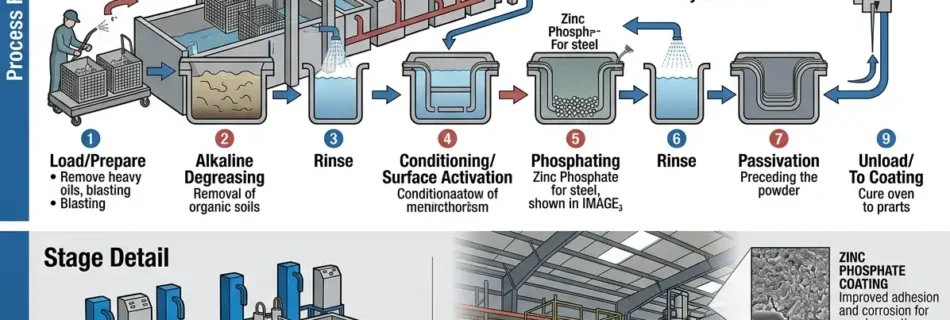
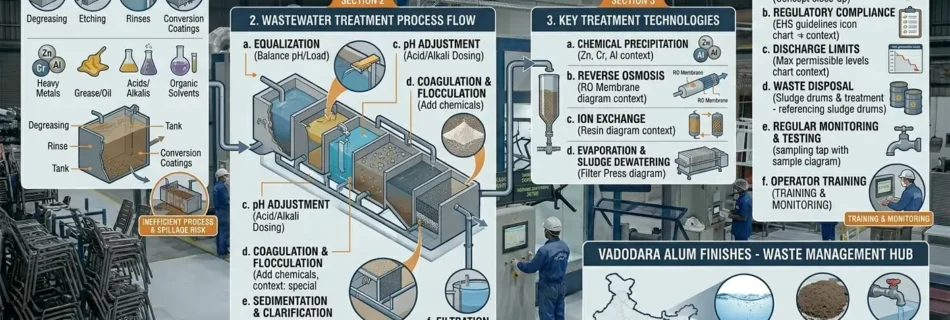
Pre-treatment wastewater management is the process of collecting, treating, monitoring, and safely disposing of wastewater generated during metal surface preparation before powder coating. A properly designed wastewater treatment system helps manufacturers comply with environmental regulations, reduce water consumption, minimize hazardous waste, and protect surrounding ecosystems while maintaining efficient production. If your powder coating plant includes chemical pretreatment, wastewater management is not optional it’s essential for regulatory compliance and sustainable operations. A compliant pre-treatment wastewater management system should include: Segregated wastewater collection Neutralization tanks Oil and grease separation Heavy metal removal Sludge management Effluent Treatment Plant (ETP) Water quality monitoring Safe waste disposal Water recycling where feasible Investing in an efficient wastewater treatment system reduces environmental risks, avoids regulatory penalties, and lowers long-term operating costs. What Is Pre-Treatment Wastewater Management? Before powder coating, metal parts undergo chemical pretreatment to remove contaminants and improve coating adhesion. This process generates wastewater containing: Oils Grease Cleaning chemicals Phosphates Metal particles Suspended solids Acids Alkalis Pre-treatment wastewater management ensures this contaminated water is properly treated before discharge or reuse. Without effective treatment, untreated effluent can damage the environment, violate regulations, and expose manufacturers to significant financial penalties. Why Wastewater Management Is Critical Environmental regulations have become increasingly stringent across manufacturing industries. Proper wastewater treatment helps manufacturers: Protect natural water resources Prevent soil contamination Meet pollution control standards Improve workplace safety Reduce water consumption Lower environmental liabilities Enhance corporate sustainability goals For companies supplying automotive, architectural, engineering, or export markets, environmental compliance is also an important customer requirement. Sources of Wastewater in Powder Coating Plants Several stages within a powder coating plant generate wastewater. Degreasing Removes machining oils, lubricants, and production residues. Typical contaminants include: Oil Grease Surfactants Rinsing Multiple rinse stages generate significant wastewater volumes. These streams may contain: Cleaning chemicals Suspended solids Residual detergents Phosphating or Conversion Coating Surface treatment chemicals improve coating adhesion. Wastewater may contain: Phosphates Zinc Iron Nickel (depending on process chemistry) Passivation Final treatment stages produce wastewater containing various chemical compounds depending on the pretreatment system. Equipment Cleaning Periodic cleaning of tanks, spray nozzles, and pipelines also generates contaminated wastewater. Common Pollutants Found in Pretreatment Wastewater Understanding wastewater composition helps determine the appropriate treatment process. Pollutant Source Environmental Concern Oil & Grease Machining operations Surface water contamination Suspended Solids Cleaning process Sedimentation Phosphates Pretreatment chemicals Eutrophication Heavy Metals Surface treatment Toxicity Acids Pickling Low pH Alkalis Degreasing High pH Detergents Cleaning solutions Water pollution Regular water analysis ensures treatment systems remain effective. Wastewater Treatment Process A typical pre-treatment wastewater management system consists of multiple treatment stages. Step 1: Collection Wastewater from different process stages is collected separately or combined based on plant design. Step 2: Equalization Equalization tanks balance wastewater flow and pollutant concentration. Benefits include: Stable treatment performance Improved chemical dosing Better process control Step 3: pH Neutralization Acidic and alkaline wastewater must be neutralized before further treatment. Automated dosing systems improve consistency. Step 4: Coagulation & Flocculation Chemicals are added to bind suspended particles together. This improves solid-liquid separation. Step 5: Clarification Settling tanks separate sludge from treated water. Clarified water moves to additional treatment stages. Step 6: Filtration Filtration removes remaining fine particles before discharge or recycling. Common technologies include: Sand filters Activated carbon filters Cartridge filters Step 7: Final Discharge or Reuse Depending on water quality and local regulations, treated water may be: Safely discharged Reused in rinsing operations Recycled within the plant Environmental Compliance Requirements Every powder coating facility should comply with applicable environmental regulations governing wastewater discharge and hazardous waste handling. Typical compliance requirements include: Monitoring wastewater quality Maintaining discharge records Proper sludge disposal Safe chemical storage Periodic environmental audits Employee training Equipment maintenance Manufacturers should consult their local pollution control authority regarding applicable discharge limits and reporting requirements. Best Practices for Pre-Treatment Wastewater Management Minimize Water Consumption Use counterflow rinsing and optimized spray systems to reduce fresh water demand. Separate Waste Streams Avoid mixing incompatible wastewater streams whenever possible. Automate Chemical Dosing Automated dosing improves treatment efficiency and reduces chemical consumption. Monitor Water Quality Regular testing helps identify issues before they become compliance problems. Important parameters include: pH TDS COD BOD Oil & Grease Heavy Metals Maintain Treatment Equipment Routine inspection prevents equipment failure and ensures consistent compliance. Train Plant Personnel Operators should understand: Chemical handling Emergency procedures Waste segregation Environmental responsibilities Sludge Handling and Waste Disposal Wastewater treatment produces sludge containing concentrated contaminants. Proper sludge management includes: Dewatering Safe storage Authorized transportation Disposal through approved waste handlers Improper disposal may result in environmental contamination and regulatory action. Maintain detailed records of sludge generation and disposal activities. Water Recycling and Sustainability Modern powder coating plants increasingly recycle treated water to reduce operating costs and environmental impact. Benefits include: Lower freshwater consumption Reduced discharge volume Lower utility costs Improved sustainability performance Better ESG reporting Water recycling is particularly valuable in regions facing water scarcity or high utility costs. Common Compliance Mistakes Many facilities encounter compliance issues due to avoidable mistakes. Common problems include: Inadequate wastewater segregation Poor pH control Irregular maintenance Overflowing sludge tanks Lack of operator training Missing documentation Delayed equipment servicing Insufficient water quality monitoring Regular internal audits help identify and correct these issues. Benefits of an Efficient Wastewater Management System A properly designed wastewater treatment system delivers both environmental and business benefits. Regulatory Compliance Reduces the risk of penalties and production interruptions. Lower Operating Costs Water recycling and optimized chemical usage reduce recurring expenses. Improved Sustainability Supports corporate environmental initiatives and customer expectations. Better Product Quality Stable pretreatment processes contribute to consistent coating performance. Enhanced Brand Reputation Demonstrates commitment to responsible manufacturing practices. Why Manufacturers Choose Brahma Fabricon Brahma Fabricon designs integrated pretreatment systems with wastewater management solutions tailored to industrial powder coating plants. Our Capabilities Pretreatment plant Wastewater management integration Conveyorized powder coating systems Energy-efficient process engineering Water-saving pretreatment solutions Turnkey powder coating plants Why Partner With Us? Customized engineering Compliance-focused system design Sustainable manufacturing solutions Reliable after-sales support Complete installation and commissioning Our goal is to help manufacturers …
CNC machine powder coating

CNC Machine & Heavy Fabrication Coating: Complete Powder Coating Guide for Rust & Wear Protection

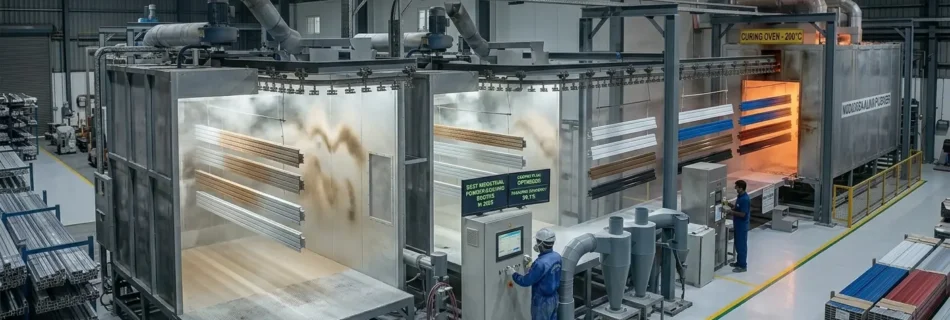
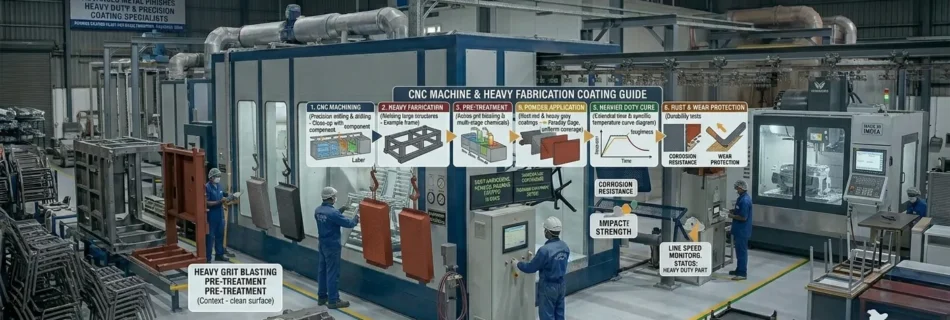
CNC machine powder coating is a durable surface finishing process that protects fabricated metal parts, machine components, and industrial equipment from corrosion, abrasion, chemicals, and environmental damage. Using electrostatically applied powder cured at high temperatures, manufacturers achieve a long-lasting, attractive finish that extends equipment life while reducing maintenance costs. What Is CNC Machine Powder Coating? CNC machine powder coating is an industrial finishing process used to apply a durable protective coating to machined components, fabricated structures, welded assemblies, sheet metal parts, and heavy engineering products. Unlike traditional liquid paint, powder coating creates a thicker, harder, and more uniform finish that resists: Rust Corrosion Abrasion Impact Chemicals Moisture UV exposure For manufacturers of CNC-machined parts and fabricated equipment, powder coating improves both product durability and visual appeal. Why Heavy Fabrication Components Need Powder Coating Heavy fabrication products often operate in demanding environments where exposure to moisture, chemicals, dust, and mechanical wear can reduce service life. Powder coating provides an additional protective barrier that helps maintain structural integrity and surface quality over many years. Key Benefits Corrosion Protection Industrial equipment is frequently exposed to: Rain Humidity Coastal conditions Industrial chemicals Powder coating minimizes oxidation and rust formation. Wear Resistance Machine frames, fabrication assemblies, and industrial equipment experience continuous mechanical contact. Powder coating improves resistance to scratches, abrasion, and impact. Chemical Resistance Industrial environments expose components to: Oils Coolants Cleaning chemicals Solvents Modern powder coatings provide excellent chemical resistance for long-term protection. Enhanced Appearance Manufacturers can offer finishes such as: Matte Gloss Semi-gloss Textured Metallic Wrinkle finish These finishes improve both product aesthetics and perceived quality. CNC Machine Parts Commonly Powder Coated Powder coating is suitable for a wide range of fabricated and machined components. CNC Machine Components Machine frames Base structures Control cabinets Sheet metal covers Guard panels Tool storage units Heavy Fabrication Products Steel structures Welded assemblies Conveyor frames Material handling equipment Industrial racks Fabricated enclosures OEM Equipment Generator frames Compressor housings Agricultural machinery Construction equipment Electrical panels Industrial cabinets Powder Coating Process for Heavy Fabrication Step 1: Surface Preparation Proper surface preparation ensures excellent coating adhesion. Typical pretreatment stages include: Degreasing Rust removal Phosphating Water rinsing Drying For fabricated structures, abrasive blasting may also be used before chemical pretreatment. Step 2: Drying All moisture must be removed before powder application. Residual moisture can lead to coating defects. Step 3: Electrostatic Powder Application Electrostatic spray guns apply powder uniformly to the metal surface. Modern powder coating booths improve transfer efficiency while minimizing overspray. Step 4: Curing Components enter a curing oven where the powder melts and chemically cross-links. Typical curing conditions: Temperature: 180–220°C Time: 15–25 minutes This creates a strong, durable finish. Step 5: Inspection Finished components undergo: Coating thickness measurement Adhesion testing Gloss testing Visual inspection Impact resistance testing Powder Coating vs Liquid Paint Feature Powder Coating Liquid Paint Corrosion Resistance Excellent Good Scratch Resistance Excellent Moderate Impact Resistance High Medium Chemical Resistance High Moderate Finish Uniformity Excellent Good VOC Emissions Very Low Higher Material Utilization High (with recovery) Lower Service Life Long Moderate For industrial machinery and fabricated steel products, powder coating generally provides a more durable and cost-effective finish. Benefits of Powder Coating for Industrial Equipment Longer Equipment Life A protective coating reduces corrosion-related failures and extends the operational life of fabricated components. Reduced Maintenance Powder-coated surfaces require less frequent repainting and maintenance. Improved Product Quality Consistent finishes enhance product appearance and customer satisfaction. Better Environmental Performance Powder coating contains minimal volatile organic compounds (VOCs) and allows recovery of unused powder. Cost Savings Although the initial investment may be higher than traditional painting, powder coating reduces lifecycle maintenance and replacement costs. Choosing the Right Powder Coating Plant for Heavy Fabrication Selecting the correct powder coating system depends on several factors. Product Size Large fabricated structures require appropriately sized booths and curing ovens. Production Volume High-volume operations benefit from conveyorized powder coating lines. Coating Requirements Different applications may require specific powder formulations and curing cycles. Automation Level Automatic systems improve consistency and productivity while reducing labor requirements. Future Expansion Scalable systems support increasing production demands. Industry Applications Powder coating is widely used across multiple industries. CNC Machine Manufacturers Protect machine bases, covers, and fabricated assemblies. Heavy Engineering Coat fabricated steel structures and industrial equipment. Material Handling Equipment Enhance durability of conveyors, racks, and lifting systems. Construction Machinery Protect frames and structural components. Agricultural Equipment Improve resistance to harsh outdoor environments. Electrical Equipment Provide durable finishes for control panels, cabinets, and enclosures. Quality Standards & Testing High-quality powder-coated components should be evaluated using recognized testing methods. Typical quality checks include: Dry film thickness measurement Adhesion test Impact resistance test Salt spray resistance Gloss level measurement Cure confirmation Visual inspection Following consistent quality procedures helps ensure reliable long-term performance. Why Manufacturers Choose Brahma Fabricon Brahma Fabricon designs advanced powder coating plants for CNC machine manufacturers and heavy fabrication industries. Our Solutions Include Automatic powder coating plants Conveyorized powder coating lines Powder coating booths Pretreatment systems Curing ovens Powder recovery systems Turnkey finishing solutions Why Partner With Us? Customized plant layouts Energy-efficient equipment High powder recovery systems Robust engineering Reliable after-sales support Complete installation and commissioning services Our systems are designed to improve coating quality, reduce operating costs, and increase production efficiency for demanding industrial applications. Quick Answers: Why is powder coating used on CNC machine components? Powder coating provides superior corrosion protection, impact resistance, and durability compared to conventional liquid paint. What industries use powder coating for heavy fabrication? Heavy engineering, automotive, agriculture, construction, material handling, electrical equipment, and OEM manufacturing. Is powder coating suitable for fabricated steel? Yes. Proper surface preparation combined with high-quality powder coating offers excellent long-term protection for fabricated steel components. What equipment is required for powder coating heavy fabrication? A complete system typically includes a pretreatment plant, drying oven, powder coating booth, electrostatic spray equipment, curing oven, powder recovery system, and material handling conveyor. Frequently Asked Questions 1. What is CNC machine powder coating? It is an electrostatic powder coating process used to protect CNC …

Hidden Costs in Powder Coating Systems

Hidden Costs in Powder Coating Systems: Operating, Maintenance & Consumable Expenses

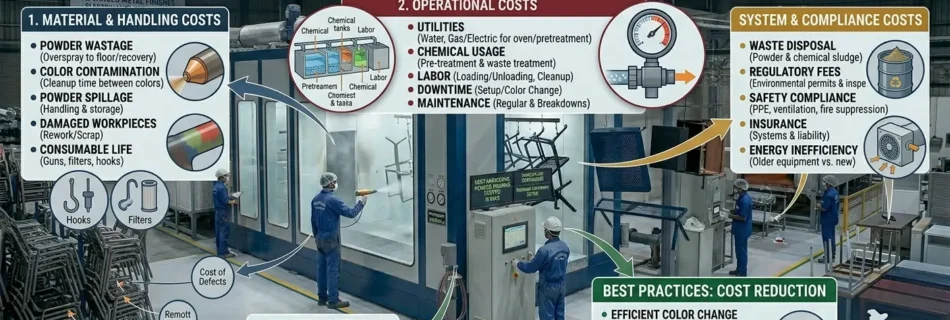
The true cost of a powder coating system extends far beyond the initial purchase price. Operating costs, maintenance, energy consumption, powder loss, spare parts, labor, and consumable expenses significantly impact the total cost of ownership (TCO). Understanding these hidden expenses helps manufacturers select efficient powder coating systems that deliver better long-term profitability. When investing in a powder coating plant, many buyers focus primarily on the equipment price. While the upfront investment is important, it represents only a portion of the overall expense. Over the lifespan of a powder coating system, operating costs, maintenance, consumables, utilities, and production efficiency often have a much greater impact on profitability. A system with a lower purchase price may end up costing significantly more over five to ten years if it consumes excessive energy, wastes powder, or requires frequent maintenance. This guide explains the hidden costs associated with powder coating systems and provides practical strategies to reduce your total cost of ownership. Why Purchase Price Doesn’t Tell the Whole Story A powder coating plant is a long-term investment. The initial purchase price may account for only a fraction of the total expenditure during its operational life. Manufacturers should evaluate costs such as: Electricity consumption Fuel usage Powder losses Conveyor maintenance Filter replacement Spare parts Preventive servicing Equipment downtime Labor requirements Production efficiency Selecting equipment based only on the lowest quotation can lead to higher operational expenses year after year. What Is Total Cost of Ownership (TCO)? Total Cost of Ownership (TCO) is the complete cost of purchasing, operating, maintaining, and supporting a powder coating system throughout its lifecycle. Typical TCO Components Cost Category Description Initial Investment Equipment purchase and installation Operating Costs Daily production expenses Maintenance Costs Scheduled and unscheduled servicing Consumables Filters, nozzles, hoses, seals, powder Energy Costs Electricity, LPG, PNG, diesel or gas Labor Costs Operators, supervisors and maintenance staff Downtime Lost production during breakdowns Replacement Parts Motors, bearings, sensors, pumps and controls Evaluating TCO provides a clearer picture of long-term profitability than comparing purchase prices alone. Hidden Operating Costs of Powder Coating Systems Energy Consumption Curing ovens, pretreatment systems, compressors, and conveyor drives consume significant amounts of energy. Older or poorly insulated systems often have: Higher electricity usage Increased fuel consumption Longer heating times Greater heat losses Energy-efficient ovens and optimized burner systems can substantially reduce utility bills. Powder Loss Powder that is not recovered represents a direct financial loss. Without an efficient recovery system: More fresh powder is required Material costs increase Waste disposal expenses rise High-efficiency recovery systems help improve transfer efficiency and reduce operating costs. Air Compressor Costs Electrostatic spray equipment depends on compressed air. Leaks, poor maintenance, or undersized compressors increase electricity consumption and reduce coating performance. Maintenance Costs You Should Budget For Preventive maintenance is essential to ensure consistent performance and avoid expensive breakdowns. Routine Maintenance Includes Cleaning powder booths Inspecting spray guns Lubricating conveyor components Calibrating control systems Servicing burners Checking electrical connections Skipping routine maintenance often leads to costly repairs and unexpected downtime. Typical Maintenance Cost Drivers Conveyor wear Burner servicing Motor replacement PLC diagnostics Powder pump servicing Sensor replacement Investing in preventive maintenance reduces lifecycle costs and extends equipment life. Consumable Expenses Explained Consumables are recurring items that require periodic replacement. Common Consumables Cartridge filters Powder hoses Spray gun nozzles Venturi pumps Seals and gaskets Air filters Bearings Conveyor chain lubricants While individual items may seem inexpensive, their cumulative cost over several years can be substantial. Selecting durable, high-quality components often lowers long-term expenses.   Energy Consumption and Utility Costs Energy is one of the largest contributors to powder coating operating costs. Major Energy Consumers: Curing Oven Typically the highest energy-consuming component. Drying Oven Consumes additional fuel and electricity after pretreatment. Pretreatment System Heating tanks and water circulation increase utility expenses. Air Compressors Compressed air systems often account for a significant share of electricity usage. Conveyor Drives Continuous operation contributes to daily power consumption. Ways to Reduce Energy Costs: Improve oven insulation Install variable frequency drives (VFDs) Optimize curing cycles Recover waste heat Schedule preventive burner maintenance Labor Costs and Productivity Labor expenses are another hidden cost that affects profitability. Manual systems require: More operators Increased supervision Higher handling effort Additional quality inspections Automatic powder coating systems reduce manual intervention while improving consistency and throughput. Higher automation often results in lower cost per coated part over time. Powder Recovery and Material Waste Powder utilization has a direct impact on production cost. Recovery Rate Comparison Recovery System Approximate Recovery Rate No Recovery 50–60% Basic Filter Booth 70–80% Cartridge Recovery System 85–92% Cyclone Recovery System 95–98% Even small improvements in recovery efficiency can translate into significant annual savings for high-volume manufacturers. Downtime and Production Losses Unexpected equipment failures create hidden expenses that are often overlooked. Downtime affects: Delivery schedules Labor utilization Customer satisfaction Production planning Revenue Common causes include: Conveyor breakdowns Burner failures Spray gun issues PLC faults Filter blockages Reliable equipment combined with preventive maintenance minimizes these risks. Low-Cost System vs High-Efficiency System Factor Low-Cost System High-Efficiency System Initial Investment Lower Higher Energy Consumption Higher Lower Powder Recovery Moderate Excellent Maintenance Frequency Higher Lower Downtime More Frequent Less Frequent Productivity Moderate High Operating Cost Higher Lower Long-Term ROI Moderate Excellent Although premium systems require a larger initial investment, they frequently deliver lower operating costs and faster payback over their service life. How to Reduce Powder Coating Operating Costs Manufacturers can significantly improve profitability by focusing on operational efficiency. Improve Powder Transfer Efficiency Optimize spray settings and maintain equipment regularly. Invest in Better Recovery Systems Cyclone and cartridge recovery systems reduce powder waste. Schedule Preventive Maintenance Prevent small issues from becoming costly failures. Upgrade to Energy-Efficient Equipment Modern ovens and burners reduce fuel consumption. Train Operators Well-trained operators minimize rework and material waste. Monitor Production Data Track powder usage, energy consumption, and downtime to identify opportunities for improvement. Why Manufacturers Choose Brahma Fabricon Brahma Fabricon designs powder coating systems with long-term operating efficiency in mind. Our solutions focus on reducing the total cost of ownership …

Pre-Treatment Systems for Powder Coating

Pre-Treatment Systems for Powder Coating: Complete Technical Guide

Pre-treatment systems for powder coating form the essential foundation for achieving durable, high-quality finishes. Proper surface preparation and a reliable pre-treatment plant ensure excellent adhesion, corrosion resistance, and long-term performance of the powder coating. Brahma Fabricon, a leading ISO 9001:2015 certified manufacturer based in Vadodara, Gujarat, specializes in designing and supplying complete powder coating plants, including advanced pre-treatment systems. With extensive experience in turnkey installations across India, we have helped numerous manufacturers achieve consistent, high-performance results. This comprehensive technical guide provides a deep dive into pre-treatment processes, system types, implementation strategies, and practical recommendations. Quick Answer Primary goal: Remove contaminants and apply conversion coatings for optimal powder adhesion and corrosion protection. Most common system: 3-5 stage chemical pre-treatment lines. Best for steel: Iron or zinc phosphate systems. Best for aluminum & multi-metal: Zirconium or advanced chrome-free options. Key outcome: Dramatically improved finish quality and product longevity. Why Pre-Treatment is Critical in Powder Coating Effective pre-treatment systems powder coating remove oils, rust, scale, and other contaminants while creating a receptive surface for the powder. Without it, coatings can suffer from poor adhesion, blistering, or premature failure. At Brahma Fabricon, we engineer pre-treatment plants that integrate seamlessly with powder coating booths and curing ovens, delivering reliable performance tailored to Indian manufacturing conditions. Types of Surface Preparation Methods Surface preparation combines mechanical and chemical approaches: Mechanical Pre-Treatment Shot blasting or abrasive media blasting for heavy rust and scale removal. Ideal for creating surface profile on challenging substrates. Chemical Pre-Treatment Alkaline degreasing for oils and greases. Acid treatments for oxides and rust. Conversion coating stages (phosphate or zirconium). Brahma Fabricon offers both manual and automated solutions to match your production scale. Stages in a Professional Pre-Treatment Plant A well-designed pre-treatment plant typically follows multi-stage processes: 3-Stage Systems: Suitable for standard applications (cleaner → phosphate → rinse/seal). 5-7 Stage Systems: Preferred for high-corrosion environments, including dedicated rinsing and sealing stages. Common Conversion Coatings: Iron Phosphate: Cost-effective for general use. Zinc Phosphate: Excellent corrosion resistance. Zirconium-based: Eco-friendly, multi-substrate compatible. Pre-Treatment Solutions for Different Substrates Mild Steel: Robust degreasing + phosphating. Aluminum Extrusions: De-oxidation followed by specialized conversion coatings. Galvanized & Other Metals: Customized chemistry to preserve base material. Brahma Fabricon has successfully installed pre-treatment systems for aluminum sections, automotive components, and heavy fabrication projects. Designing & Implementing Pre-Treatment Plants Brahma Fabricon’s pre-treatment plants feature: Durable tanks (MS/SS with proper lining). Efficient spray or immersion configurations. Energy-efficient heating and circulation systems. Wastewater management for environmental compliance. Integration with conveyorized or batch powder coating lines. We customize every plant based on part sizes, production volume, and specific performance requirements. Comparison Table: Pre-Treatment Options System Type Corrosion Resistance Cost Level Eco-Friendliness Ideal Applications 3-Stage Iron Phosphate Good Low Moderate General Manufacturing 5-Stage Zinc Phosphate Excellent Medium Lower Outdoor/Heavy Duty Zirconium Conversion Very Good Medium High Multi-Metal & Modern Lines Mechanical + Chemical Excellent Variable High Complex or Heavy Parts Common Challenges and Expert Solutions Inconsistent results → Automated controls and regular monitoring. Environmental compliance → Closed-loop systems and chrome-free chemistries. High energy use → Brahma Fabricon’s efficient designs reduce operational costs. Looking for a reliable pre-treatment system or complete powder coating plant? Contact Brahma Fabricon for expert consultation and custom specifications. Guide: Ultimate Guide to Pre Treatment for Powder Coating in India FAQ Section What are pre-treatment systems for powder coating? They are multi-stage cleaning and conversion processes that prepare metal surfaces for powder application, ensuring strong adhesion and corrosion protection. Which pre-treatment is best for aluminum? Zirconium or specialized non-chrome conversion coatings combined with de-oxidation deliver excellent results. How many stages are needed in a pre-treatment plant? 3 stages for basic needs; 5–7 stages for high-performance industrial applications. Can pre-treatment plants be manual or automatic? Both options are available. Brahma Fabricon supplies manual, semi-automatic, and fully conveyorized systems. What is the difference between iron and zinc phosphate? Iron phosphate is economical for milder conditions; zinc phosphate offers superior corrosion resistance for demanding environments. How important is rinsing in the pre-treatment process? Critical – proper rinsing prevents contamination of subsequent stages and ensures coating quality. Do you need mechanical blasting with chemical pre-treatment? It depends on the initial condition of parts. Heavy contamination benefits from blasting followed by chemical treatment. What makes a good pre-treatment plant supplier? Proven manufacturing expertise, customization, after-sales support, and ISO certification – qualities Brahma Fabricon delivers. How does proper pre-treatment affect powder coating costs? It reduces rejects, powder usage, and maintenance, delivering strong ROI. Where can I buy quality pre-treatment systems in India? Brahma Fabricon in Vadodara offers complete pre-treatment plants, equipment, and turnkey solutions. Conclusion Pre-treatment systems for powder coating combined with expert surface preparation are fundamental to achieving superior finishes. Brahma Fabricon’s engineered pre-treatment plants help manufacturers across India deliver reliable, high-quality powder coated products efficiently. Invest in the right pre-treatment solution today to elevate your production standards. Contact Brahma Fabricon for technical consultation, plant layouts, or customized pre-treatment system quotes tailored to your requirements.

Powder Coating Plant for Metal Furniture

Powder Coating Plant for Metal Furniture India: Complete Guide for Manufacturers

A powder coating plant for metal furniture is a complete finishing system used to apply durable, attractive, and corrosion-resistant powder coatings to steel furniture, office furniture, storage systems, chairs, tables, cabinets, lockers, and industrial furniture products. A modern powder coating line includes pretreatment systems, powder coating booths, electrostatic spray equipment, curing ovens, and conveyorized handling systems to achieve high-quality finishes at high production volumes. What Is a Powder Coating Plant for Metal Furniture? A powder coating plant for metal furniture is a specialized finishing line designed to coat steel and metal furniture products with a protective powder layer. The process uses electrostatically charged powder particles that adhere to the metal surface before being cured in a high-temperature oven. This finishing technology is widely used by manufacturers of: Office furniture School furniture Hospital furniture Industrial storage systems Steel cupboards Lockers Modular furniture Filing cabinets Workstations Display racks Compared to traditional liquid painting, powder coating provides superior durability, appearance, and environmental performance. Why Powder Coating Is Essential for Metal Furniture Furniture products are exposed to daily wear and tear. Without proper surface protection, metal furniture can suffer from: Rust and corrosion Scratches and abrasion Chemical exposure UV degradation Color fading A high-quality metal furniture powder coating plant helps manufacturers deliver products that maintain appearance and performance for years. Key Benefits Superior Durability Powder-coated furniture withstands daily usage better than painted furniture. Better Corrosion Resistance Especially important for: Industrial furniture Outdoor furniture Institutional furniture Attractive Finish Options Manufacturers can offer: Matte finishes Gloss finishes Textured coatings Metallic effects Wrinkle finishes Environmentally Friendly Process Powder coating contains virtually no VOC emissions and allows powder recovery for reuse. Components of a Powder Coating Plant for Furniture A complete powder coating system consists of several integrated components. Pretreatment System Surface preparation is critical for coating adhesion. Typical pretreatment stages include: Degreasing Water rinsing Phosphating Passivation Final rinse A properly designed pretreatment system significantly improves coating performance. Drying Oven Removes moisture after pretreatment. Any remaining moisture can negatively affect coating quality. Powder Coating Booth The powder coating booth is where electrostatic powder application occurs. Functions include: Controlled coating environment Overspray collection Powder recovery Electrostatic Powder Coating Equipment Electrostatic spray guns ensure: Uniform coverage Better transfer efficiency Reduced powder wastage Conveyorized Powder Coating Line The conveyor system automatically transports furniture components through each stage of production. Benefits include: Higher productivity Consistent quality Reduced labor dependency Powder Coating Oven The curing oven melts and cures the powder coating. Typical curing conditions: Temperature: 180°C–220°C Time: 15–25 minutes The result is a strong, durable finish. Powder Coating Process for Metal Furniture Manufacturing Step 1: Surface Cleaning Oil, dirt, and contaminants are removed. Step 2: Pretreatment Chemical treatment improves coating adhesion and corrosion resistance. Step 3: Drying Parts are completely dried before coating. Step 4: Electrostatic Powder Application Powder particles are sprayed onto furniture components. Step 5: Powder Recovery Unused powder is collected and recycled. Step 6: Curing Furniture components pass through the powder coating oven. Step 7: Inspection and Packaging Finished products undergo quality inspection before shipment. Types of Powder Coating Plants for Furniture Manufacturing Manual Powder Coating Plant Suitable for: Small workshops Job coaters Low-volume production Advantages Lower investment Flexible operation Semi-Automatic Powder Coating Plant Suitable for medium-sized manufacturers. Provides: Better productivity Improved consistency Automatic Powder Coating Plant The preferred solution for large furniture manufacturers. Benefits Higher throughput Reduced labor cost Consistent finish quality Better powder utilization Automatic Powder Coating Line for Furniture Modern furniture factories increasingly prefer automatic powder coating lines. Why? Continuous Production Conveyorized systems enable uninterrupted workflow. Lower Operating Costs Automation reduces manpower requirements. Better Finish Quality Automated systems ensure uniform coating thickness. Faster Production Cycles Manufacturers can process larger volumes efficiently. Powder Coating vs Paint for Metal Furniture Feature Powder Coating Liquid Paint Durability Excellent Moderate Corrosion Resistance Excellent Good Scratch Resistance Excellent Moderate VOC Emissions Very Low Higher Powder Recovery Yes No Long-Term Cost Lower Higher Finish Consistency Excellent Moderate For most steel furniture manufacturing operations, powder coating offers better long-term value. Benefits of a Conveyorized Powder Coating Line A conveyorized powder coating line is ideal for high-volume furniture production. Key Advantages Higher Output Continuous movement eliminates bottlenecks. Improved Quality Consistent coating application reduces defects. Better Labor Efficiency Automation minimizes manual handling. Scalability Easy to expand production capacity as demand grows. Powder Coating Plant Cost in India One of the most frequently asked questions is: What Is the Cost of a Powder Coating Plant for Metal Furniture? Pricing depends on: Production capacity Automation level Pretreatment design Oven size Conveyor system Powder recovery technology Indicative Investment Range Plant Type Approximate Cost Manual Plant ₹10 Lakhs – ₹30 Lakhs Semi-Automatic Plant ₹30 Lakhs – ₹80 Lakhs Automatic Powder Coating Plant ₹80 Lakhs – ₹3 Crore+ Turnkey Furniture Coating Line Custom Quotation Actual project costs vary based on production requirements and customization needs. How to Choose the Right Powder Coating Equipment for Metal Furniture Before investing, evaluate the following: Production Capacity Assess current and future demand. Product Dimensions Furniture size affects booth, oven, and conveyor design. Powder Consumption Efficient recovery systems reduce operating costs. Available Factory Space Plant layout must fit existing facility constraints. Automation Requirements Determine the level of labor reduction and productivity improvement desired. Future Expansion Plans Choose a scalable solution to accommodate business growth. Industries Using Furniture Powder Coating Plants Office Furniture Manufacturing Desks Cabinets Workstations Educational Furniture School desks Laboratory furniture Healthcare Furniture Hospital beds Medical storage units Industrial Furniture Tool cabinets Storage racks Workbenches Retail Fixtures Display racks Shelving systems Why Manufacturers Choose Brahma Fabricon Brahma Fabricon is a trusted powder coating plant manufacturer in India offering complete powder coating solutions for metal furniture manufacturers. Our Solutions Powder coating plants Automatic powder coating lines Powder coating booths Powder coating ovens Pretreatment systems Conveyorized powder coating lines Turnkey powder coating projects Why Partner With Us? Customized Engineering Every furniture factory has unique production requirements. Energy-Efficient Systems Reduce operating costs and improve profitability. Reliable After-Sales Support Technical assistance throughout the plant lifecycle. Turnkey Execution …

electric powder coating oven

Electric Powder Coating Oven: Complete Buying Guide for India in 2026

Best overall: Energy efficient electric powder coating oven from reputed Indian manufacturers (₹1–6 lakhs). Best for small business: Small electric powder coating oven (₹1–2.5 lakhs). Powder coating oven price in India: ₹1,00,000 to ₹9,50,000+ depending on size and features. Top choice: Automatic electric powder coating oven for consistent curing of metal parts. Key advantage: Clean operation, precise temperature control (180–220°C), and compliance with environmental norms. An electric powder coating oven is essential equipment for curing powder-coated surfaces to achieve durable, high-quality finishes. Whether you’re a small fabricator or running an industrial powder coating setup, choosing the right powder coating oven impacts efficiency, costs, and output quality. This comprehensive guide covers everything about electric powder coating oven, powder coating curing oven, industrial electric powder coating oven, pricing, manufacturers, and setup in India. What is an Electric Powder Coating Oven? An electric powder coating oven, also known as a powder coating baking oven or electric curing oven, is a specialized industrial oven designed to cure powder coatings on metal surfaces. The process involves heating the coated parts to 180–200°C, allowing the powder to melt, flow, and form a uniform, protective layer. Unlike traditional liquid painting, powder coating with a proper curing oven delivers superior durability, corrosion resistance, and a flawless finish. Electric powder ovens are preferred in urban areas and for businesses prioritizing clean operation and ease of use. How Electric Powder Coating Ovens Work The working principle is straightforward yet precise: Loading: Powder-coated parts are placed inside the oven chamber. Heating: Electric heaters (often with forced air circulation) raise the temperature uniformly. Curing: The powder melts and cross-links at the target temperature for 10–20 minutes. Cooling: Parts are removed after controlled cooling for optimal hardness. Modern automatic electric powder coating oven models include digital controllers, PID temperature regulation, and uniform airflow systems to prevent hot spots. Long-tail benefit: An energy efficient electric powder coating oven minimizes electricity consumption while delivering consistent results for powder coating oven for metal parts. Electric vs Gas Powder Coating Ovens: Key Differences Electric Powder Coating Oven advantages: Cleaner operation with zero combustion emissions. Precise temperature control ideal for sensitive parts. Easier installation – no gas piping required. Better for small to medium setups and indoor locations. Gas-fired alternatives: Lower running costs for very large volumes but higher maintenance and emissions. In India, electric curing oven models are gaining popularity due to stricter pollution norms and unreliable gas supply in many regions. For powder coating oven India buyers, electric options often provide better long-term ROI for SMEs. Feature Electric Powder Coating Oven Gas Powder Coating Oven Operating Cost Higher electricity, predictable Lower fuel cost for large volumes Installation Simple, no piping Requires gas infrastructure Emissions Near zero Combustion byproducts Temperature Control Excellent precision Good, but less uniform Best For Small business, urban, clean rooms High-volume industrial Maintenance Low Higher (burners, exhaust) Types of Electric Powder Coating Ovens Available in India Small Electric Powder Coating Oven: Compact models (e.g., 1x1x1.6m) perfect for electric powder coating oven for small business. Ideal for wheels, brackets, and prototypes. Industrial Electric Powder Coating Oven: Larger chambers for batch production of gates, automotive parts, and appliances. Automatic Electric Powder Coating Oven: PLC-controlled with conveyor integration for high throughput. Commercial Electric Powder Coating Oven: Heavy-duty for job coaters and fabricators. Look for powder coating oven machine with rockwool insulation, SS or MS construction, and safety features. Key Features to Look For in 2026 Models When searching for best electric powder coating oven in India: Temperature range: Up to 250°C with ±2–5°C accuracy. Uniform airflow: Side or top circulation fans. Insulation: High-density to reduce heat loss. Controls: Digital PID, timers, over-temperature protection. Power: 3-phase 415V, energy-saving heaters. Safety: Explosion relief panels, emergency stops. Energy efficient electric powder coating oven features like variable frequency drives and optimized heaters can cut power bills by 20–30%. Powder Coating Oven Price in India 2026 Electric powder coating oven price varies widely: Small electric powder coating oven: ₹1,00,000 – ₹2,50,000. Medium industrial models: ₹2,25,000 – ₹5,50,000. Large automatic systems: ₹5,00,000 – ₹9,50,000+. Powder coating oven setup cost in India (full plant including booth): ₹8 lakhs to ₹50 lakhs+ for complete lines. Factor in civil works, electrical connections, and pretreatment. Buy electric powder coating oven from trusted sources for warranties (1–2 years typical). Prices are competitive in hubs like Gujarat, Maharashtra, and Tamil Nadu. Best Electric Powder Coating Oven for Small Business For startups and electric powder coating oven for small business, prioritize compact, low-maintenance models. A small electric powder coating oven allows quick curing cycles and easy scaling. Many powder coating oven manufacturer offer customizable sizes perfect for workshops in Vadodara, Ahmedabad, or Coimbatore. Real-world example: A Gujarat-based fabricator using a 4x4x6 ft electric model reported 30% faster turnaround and reduced rejection rates. Top Electric Powder Coating Oven Manufacturers and Suppliers in India Leading electric powder coating oven manufacturer and powder coating oven supplier in India: Companies in Gujarat, Thane, Vasai, Pune, Chennai, and Noida. Look for ISO-certified makers offering electric powder coating oven supplier services with installation support. Electric powder coating oven manufacturer in India often provide turnkey solutions including powder booths and guns. Electric Powder Coating Oven India market is supported by “Make in India” initiatives, ensuring quality and after-sales service. Powder Coating Oven Setup Cost and Installation Guide Powder coating oven setup cost in India breakdown: Oven: 40–60% of budget. Electrical: ₹50,000–2 lakhs. Foundation & ventilation: Additional costs. Steps for installation: Site preparation, leveling, electrical connection, testing temperature uniformity, and trial runs. Partner with experienced powder coating oven manufacturer for seamless setup. Energy Efficiency and Operating Costs Energy efficient electric powder coating oven models use advanced insulation and controls to lower consumption. Operating costs depend on size and usage – expect ₹5–15 per cycle for medium ovens. Compare with gas for your specific volume. Tips: Regular maintenance, proper loading density, and preheating optimization. Applications of Electric Powder Coating Ovens Widely used for: Automotive and EV components. Architectural metalwork (gates, railings). Agricultural equipment. Furniture, appliances, and solar …

Industrial Powder Coating Booths

Best Industrial Powder Coating Booths in 2026

Industrial powder coating booths are specialized enclosures designed to apply powder coatings efficiently while recovering overspray and maintaining a clean finishing environment. The best industrial powder coating booths in 2026 combine high powder recovery rates, fast color change capabilities, energy efficiency, advanced filtration systems, and automation features that help manufacturers reduce operating costs while improving coating quality. Best Industrial Powder Coating Booths in 2026 Best Overall: Automatic Powder Coating Booth with Cyclone Recovery Best for High Production: Conveyorized Automatic Powder Coating Booth Best Color Change Performance: Quick Color Change Cartridge Booth Best Budget Option: Manual Cartridge Filter Powder Coating Booth Best for Aluminium Profiles: Automatic Powder Coating Booth with Recovery System Best for Automotive Components: Multi-Gun Automatic Powder Coating Spray Booth What Are Industrial Powder Coating Booths? Industrial powder coating booths are controlled enclosures used for electrostatic powder application and overspray collection. Often referred to as a powder booth or powder spray booth, they differ from many other industrial coating booths because they are designed specifically to contain dry powder and integrate with filtration or powder-recovery systems. These systems are commonly used for: Aluminium profiles Automotive components Steel furniture Electrical enclosures Industrial machinery Architectural products A modern powder coating booth with recovery system not only applies powder efficiently but also recovers unused powder for reuse, reducing waste and operational costs. Why Choosing the Right Powder Coating Booth Matters Many manufacturers focus only on the purchase price. However, long-term performance depends on: Powder utilization efficiency Recovery rate Color change speed Maintenance requirements Energy consumption Production capacity The right industrial powder coating booth can reduce powder consumption by 20–40% while increasing throughput significantly. Powder Coating Booth Design: What Should Manufacturers Consider? Powder coating booth design should be based on the workpiece dimensions, production volume, gun arrangement, conveyor opening, airflow requirement, powder recovery method and colour-change frequency. A booth designed only around the maximum component size can create unnecessary operating costs or inadequate airflow. Important design factors include booth dimensions, operator access, airflow and extraction, cartridge or cyclone recovery, automatic gun positioning, conveyor openings, booth construction material, cleaning access and future production capacity. Top 10 Industrial Powder Coating Booths in 2026 1. Automatic Powder Coating Booth with Cyclone Recovery Best Overall This booth combines high-efficiency powder application with advanced cyclone recovery technology. Key Benefits Recovery rates up to 98% Minimal powder waste Excellent finish quality Suitable for continuous production Ideal For Aluminium extrusion manufacturers Automotive suppliers OEM manufacturers 2. Conveyorized Automatic Powder Coating Booth An automatic powder spray booth combines controlled conveyor movement with automatic guns, reciprocators and powder recovery to support repeatable medium- and high-volume production. Best for High Volume Production Designed for fully automated powder coating lines. Features Continuous operation PLC automation Multi-gun systems High throughput Ideal For Large-scale production facilities Export-oriented manufacturers 3. Quick Color Change Powder Coating Booth Best for Frequent Color Switching Perfect for job coaters handling multiple colors daily. Advantages Fast cleaning Reduced downtime Increased productivity Typical Color Change Time 5–15 minutes 4. Cartridge Filter Powder Coating Booth Best for Medium-Sized Manufacturers A powder coating booth with cartridge filter system provides excellent filtration and powder recovery. Benefits Lower operating costs Compact design Easy maintenance 5. Multi-Cyclone Recovery Powder Coating Booth Best Recovery Performance Designed to maximize powder reuse. Recovery Rate 95–98% Applications Architectural aluminium Metal furniture Industrial fabrication 6. Manual Powder Coating Spray Booth Best Budget-Friendly Option Ideal for smaller manufacturers and job coaters. Advantages Lower investment Easy installation Flexible operation 7. Custom Industrial Powder Coating Booth Best for Specialized Applications Built according to product dimensions and production requirements. Suitable for: Heavy fabrication Large structures Custom manufacturing 8. Batch Powder Coating Booth Best for Small Batch Production Perfect for businesses handling varied product sizes and low-volume production. 9. Automatic Reciprocator Powder Coating Booth Best for Consistency Provides uniform powder distribution using automated gun movement systems. Advantages Better coating thickness control Reduced operator dependency 10. Smart Industry 4.0 Powder Coating Booth Best Future-Ready Solution Modern powder coating spray booths now include: IoT monitoring Remote diagnostics Production analytics Predictive maintenance Industrial Powder Coating Booth Comparison Table Booth Type Efficiency Recovery Rate Color Change Speed Automation Level Cyclone Recovery Booth Excellent 98% Fast High Conveyorized Booth Excellent 95% Moderate Very High Quick Color Change Booth Very High 95% Excellent High Cartridge Filter Booth High 92% Good Medium Multi-Cyclone Booth Excellent 98% Moderate High Manual Booth Moderate 70–80% Slow Low Custom Booth Variable Variable Variable Variable Batch Booth Moderate 80–90% Moderate Low Reciprocator Booth High 92–95% Good High Industry 4.0 Booth Excellent 95–98% Excellent Very High Recovery Rate Comparison Recovery rate directly impacts profitability. Typical Powder Recovery Rates System Type Recovery Rate Basic Booth 60–75% Cartridge Booth 85–92% Cyclone Booth 95–98% Multi-Cyclone Booth 96–98% For manufacturers using large powder volumes, even a 5% increase in recovery can result in significant annual savings. Color Change Speed Comparison Manufacturers handling multiple colors should prioritize fast color change systems. Booth Type Color Change Time Manual Booth 30–60 Minutes Cartridge Booth 20–30 Minutes Quick Color Change Booth 5–15 Minutes Advanced Automatic Booth 5–10 Minutes Faster color changes improve machine utilization and reduce production delays. Automatic vs Manual Powder Coating Booths Feature Manual Booth Automatic Booth Labor Requirement High Low Consistency Moderate Excellent Throughput Lower Higher Powder Utilization Moderate High Scalability Limited Excellent ROI Medium High For growing businesses, automatic powder coating booths often deliver the lowest long-term cost per coated component. Industrial Powder Coating Booth Price Guide One of the most common buyer questions is: What Is the Industrial Powder Coating Booth Price in 2026? Pricing depends on: Booth size Automation level Recovery system Filtration technology Production capacity Estimated Price Range Booth Type Price Range Manual Booth ₹3 Lakhs – ₹12 Lakhs Cartridge Booth ₹10 Lakhs – ₹35 Lakhs Automatic Booth ₹25 Lakhs – ₹1 Crore+ Conveyorized Booth ₹50 Lakhs – ₹3 Crore+ Custom Industrial Booth Custom Quote Actual costs vary depending on project specifications and production requirements. How to Choose the Best Industrial Powder Coating Booth Evaluate Production Volume Determine current and future …

Powder Coating Plant for Aluminium Sections

Powder Coating Plant for Aluminium Sections – Complete Guide for Manufacturers

A powder coating plant for aluminium sections is a specialized surface finishing system designed to apply durable, corrosion-resistant, and decorative powder coatings on aluminium profiles, extrusions, window sections, door frames, curtain wall components, and architectural products. Modern plants include pretreatment systems, drying ovens, powder spray booths, curing ovens, and conveyorized material handling systems to achieve high-quality finishes with maximum production efficiency. What Is a Powder Coating Plant for Aluminium Sections? A powder coating plant for aluminium sections is an industrial finishing system used to apply powder coatings onto aluminium extrusions, profiles, architectural sections, and fabricated aluminium products. The coating creates a highly durable protective layer that improves: Corrosion resistance UV resistance Scratch resistance Weather protection Aesthetic appearance Product lifespan Today, powder coating has become the preferred finishing method for architectural aluminium because it delivers superior durability compared to conventional liquid painting systems. Why Aluminium Sections Need Powder Coating Aluminium naturally develops a thin oxide layer. While this offers basic protection, industrial and architectural applications require enhanced durability and visual appeal. Key Benefits Improved Corrosion Resistance Powder-coated aluminium withstands: Coastal environments High humidity Industrial pollution Chemical exposure Enhanced Appearance Manufacturers can offer: Matte finishes Gloss finishes Metallic finishes Wood-effect finishes Textured finishes Longer Service Life Properly coated aluminium profiles can maintain performance and appearance for decades. Eco-Friendly Finishing Powder coating: Contains no solvents Produces low VOC emissions Allows powder recovery Reduces environmental impact Components of an Aluminium Profile Powder Coating Plant A complete aluminium profile powder coating plant consists of multiple integrated systems. Equipment Function Pretreatment System Surface cleaning and preparation Drying Oven Removes moisture after pretreatment Powder Coating Booth Powder application Automatic Spray Guns Uniform powder deposition Powder Recovery System Recycles unused powder Conveyor System Transfers sections automatically Curing Oven Melts and cures powder coating Control Panel Plant automation and monitoring Every component plays a critical role in achieving consistent coating quality. Powder Coating Process for Aluminium Extrusions Step 1: Surface Pretreatment The aluminium surface is cleaned to remove: Oil Dust Oxidation Manufacturing residues Common pretreatment methods include: Chromate Conversion Traditional method offering excellent adhesion. Chrome-Free Pretreatment Environmentally friendly and increasingly preferred worldwide. Step 2: Drying After washing, aluminium profiles pass through a drying oven to eliminate moisture. Any residual moisture can affect coating adhesion. Step 3: Powder Application In the powder spray booth: Electrostatic spray guns charge powder particles. Powder adheres uniformly to aluminium sections. Excess powder is recovered for reuse. Step 4: Curing The coated profiles enter the curing oven. Typical curing conditions: Temperature: 180°C–220°C Time: 15–25 minutes During curing: Powder melts Flows evenly Cross-links chemically Forms a durable coating layer Step 5: Inspection & Packaging Finished products undergo: Thickness testing Adhesion testing Gloss testing Visual inspection Approved sections are packaged for shipment. Types of Powder Coating Plants for Aluminium Sections Manual Powder Coating Plant Suitable for: Small manufacturers Job coaters Low-volume production Advantages: Lower investment Easy operation Limitations: Lower productivity Higher labor dependency Semi-Automatic Powder Coating Plant Ideal for medium-scale manufacturers. Features: Conveyor assistance Improved throughput Better consistency Automatic Powder Coating Line for Aluminium Profiles Best suited for: Aluminium extrusion plants Large-scale manufacturers Export-oriented businesses Benefits: High productivity Consistent quality Reduced labor costs Lower powder wastage Conveyorized Powder Coating Plant for Aluminium Sections A conveyorized powder coating plant is the preferred solution for modern aluminium profile manufacturers. Key Advantages Continuous Production Sections move automatically through each stage. Higher Output Enables large-volume production with minimal downtime. Uniform Coating Quality Automated handling reduces operator variation. Reduced Operating Cost Automation lowers labor and rework expenses. Typical Production Capacities Plant Type Daily Capacity Small Plant 1–3 Tons Medium Plant 3–10 Tons Large Plant 10–25 Tons Industrial Line 25+ Tons Automatic vs Manual Powder Coating Plant Comparison Feature Manual Plant Automatic Plant Initial Cost Lower Higher Production Speed Moderate High Labor Requirement High Low Coating Consistency Operator Dependent Excellent Powder Utilization Moderate High Scalability Limited Excellent For growing aluminium manufacturers, automatic powder coating lines typically offer the best long-term return on investment. Cost of Setting Up a Powder Coating Plant for Aluminium Sections One of the most common questions from manufacturers is: How Much Does an Aluminium Powder Coating Plant Cost? Pricing depends on: Plant size Automation level Conveyor design Oven capacity Pretreatment system Recovery technology Production volume Indicative Pricing Plant Type Estimated Cost Range Manual Plant ₹15 Lakhs – ₹40 Lakhs Semi-Automatic Plant ₹40 Lakhs – ₹1 Crore Automatic Plant ₹1 Crore – ₹5 Crore+ Large Conveyorized Line Custom Quotation Actual pricing varies according to project specifications and production requirements. Factors Affecting Powder Coating Plant Pricing 1. Production Capacity Higher throughput requires larger systems. 2. Oven Size Longer aluminium profiles require larger curing ovens. 3. Conveyor Configuration Power & free conveyors increase automation. 4. Powder Recovery System Advanced cyclone systems improve powder utilization. 5. Automation Level Robotics and PLC controls increase investment but improve productivity. 6. Pretreatment Technology Multi-stage pretreatment systems add cost while enhancing coating quality. How to Choose the Right Aluminium Section Powder Coating Equipment Before investing, evaluate: Production Volume Determine current and future capacity requirements. Product Dimensions Consider: Profile length Weight Cross-section Quality Standards For export markets, compliance requirements may be stricter. Available Factory Space Plant layout significantly affects installation design. Energy Efficiency Modern systems reduce operating expenses. Future Expansion Choose scalable systems to support growth. Industries Using Aluminium Powder Coating Plants Architectural Aluminium Windows Doors Curtain walls Facades Construction Industry Structural profiles Decorative sections Furniture Industry Aluminium frames Modular systems Transportation Bus body sections Rail components Industrial Manufacturing Equipment enclosures Machine structures Solar Industry Solar panel frames Mounting structures Why Manufacturers Choose Brahma Fabricon Brahma Fabricon specializes in designing and manufacturing advanced powder coating plants tailored to aluminium profile manufacturers. Our Expertise Turnkey powder coating solutions Conveyorized powder coating plants Automatic powder coating lines Aluminium extrusion coating systems Customized plant design Installation and commissioning support What Makes Us Different Industry-focused engineering Energy-efficient systems Reliable after-sales support Custom-built solutions Proven installation experience Real Business Benefits Manufacturers typically achieve: Reduced powder wastage Improved coating consistency Faster production cycles …

powder coating vs liquid painting

Powder Coating vs Liquid Painting in India: Complete 2026 Comparison Guide

Best overall for most Indian industries: Powder coating – superior durability, lower long-term costs, and eco-friendly. Best for small batches or complex/custom work: Liquid painting (wet painting). Cost in India: Powder coating ₹80–250/sqm (high volume); Liquid painting ₹50–180/sqm but higher waste and maintenance. Market trend: Powder coating demand is growing rapidly in India due to “Make in India”, stricter VOC norms, and infrastructure boom. If you run a manufacturing unit, metal fabrication shop, or architectural project in India, choosing between powder coating vs liquid painting directly affects product lifespan, costs, and regulatory compliance. What is Powder Coating? Powder coating is a dry finishing process where electrostatically charged powder particles are sprayed onto a metal surface and then cured under heat (typically 180–200°C) to form a hard, uniform skin. It contains no solvents and produces minimal waste. Bonus Guide: The Powder Coating Process: Complete Step-by-Step Guide What is Liquid Painting (Wet Painting)? Liquid painting, also called wet painting, uses solvent- or water-based liquid paints applied via spray, brush, or dip. It requires drying or baking and often multiple coats for desired thickness. Powder Coating vs Liquid Painting: Head-to-Head Comparison Factor Powder Coating Liquid Painting (Wet Paint) Winner in India Context Durability Excellent (high chip, scratch, UV resistance) Moderate (prone to chipping & fading) Powder Coating Thickness 50–200 μm in one coat 20–40 μm per coat (multiple needed) Powder Coating Material Utilization 95%+ (overspray reusable) 60–70% (high overspray waste) Powder Coating VOC Emissions Near zero High (solvent-based) Powder Coating Initial Setup Cost Higher (booth + oven) Lower Liquid Painting Per Sqm Cost (India) ₹80–250 (volume dependent) ₹50–180 Depends on volume Curing Time 10–20 mins Hours to days Powder Coating Color Variety Good (growing fast) Excellent (easy custom mixing) Liquid Painting Best For High-volume, outdoor, industrial Small runs, heat-sensitive, decorative – Cost Breakdown: Powder Coating vs Liquid Painting in India In 2026 India, powder coating is increasingly cost-effective for medium-to-large production. Powder coating: Material costs have stabilized with local manufacturers. High-volume jobs (e.g., automotive parts, furniture) achieve 20–40% lower lifecycle cost due to less waste and longer life (8–15+ years). Liquid painting: Cheaper upfront for small fabricators in Gujarat, Maharashtra, or Tamil Nadu, but higher solvent and disposal costs due to pollution control board norms. Realistic India Pricing (2026 estimates): Powder coating: ₹120–180/sqm for standard MS parts (500+ sqm batch). Liquid painting: ₹70–140/sqm but expect 15–25% material loss + frequent repaints. Long-term, powder coating wins for most Indian manufacturers facing rising labor and compliance costs. Durability & Performance Advantages Powder coating offers superior edge coverage, corrosion resistance, and weatherability – crucial for India’s diverse climates (coastal humidity, Rajasthan heat, Himalayan cold). Liquid paints excel in thin-film applications or when touching up is needed on-site. However, they often require primers and multiple layers, increasing labor time. Indian Case Example: Automotive component manufacturers in Pune and Chennai increasingly switch to powder coating for chassis and brackets, reducing warranty claims by up to 60%. Environmental Impact and Indian Regulations India’s Central Pollution Control Board (CPCB) and state boards are tightening VOC limits. Powder coating is virtually VOC-free, aligning with green manufacturing incentives under “Make in India” and PLI schemes. Liquid painting generates hazardous waste, increasing effluent treatment expenses – a growing pain point for SMEs in industrial clusters like Rajkot, Coimbatore, and Faridabad. Popular Applications in India Powder Coating dominates: Automotive & EV parts Architectural aluminium sections & gates Agricultural equipment Furniture & appliances Solar panel structures Liquid Painting preferred for: Large structural steel (bridges, heavy machinery) Custom art & decorative items Heat-sensitive substrates Prototyping & low-volume jobs Pros and Cons Summary Powder Coating Pros: Eco-friendly and compliant Faster production throughput Superior finish uniformity Lower maintenance Powder Coating Cons: Higher initial equipment investment Limited on very large or heat-sensitive parts Color changeovers take time in booths Liquid Painting Pros: Lower entry barrier for small workshops Excellent for custom colors and effects Easier touch-ups Liquid Painting Cons: Higher waste and VOC issues Longer drying times Inferior long-term durability Which Should You Choose in India? Choose powder coating if you have consistent production volume, focus on quality and longevity, or want to future-proof against stricter environmental laws. Choose liquid painting for one-off projects, very large structures, or when budget and quick setup are priorities. Many progressive Indian fabricators now use hybrid approaches – powder for standard parts and liquid for custom finishes. FAQ’s: 1. Which is cheaper in India: powder coating or liquid painting? Liquid painting has lower initial costs, but powder coating is cheaper long-term for volumes above 300–500 sqm due to material efficiency and durability. 2. Is powder coating environmentally better? Yes. It produces near-zero VOCs and allows overspray recovery, helping Indian companies meet CPCB norms easily. 3. Can powder coating be done on site in India? Generally no – it requires a controlled booth and curing oven. Liquid painting is more portable. 4. What is the average lifespan of powder coated products in Indian conditions? 8–15 years depending on pretreatment and exposure, vs 3–8 years for quality liquid paint. 5. How much does setting up a powder coating plant cost in India? ₹15–50 lakhs for a small automatic line (2026 estimates), depending on capacity and automation. 6. Are there good powder coating services near me in India? Major hubs include Ahmedabad, Pune, Bangalore, Delhi-NCR, and Chennai with competitive pricing. 7. Does powder coating fade in Indian sunlight? High-quality polyester or super-durable powders resist UV very well; always choose reputed brands. 8. Can liquid painting match powder coating thickness? It requires multiple coats and still usually falls short in uniformity and edge coverage. 9. Which is better for outdoor furniture in India? Powder coating is strongly recommended for gates, balconies, and garden furniture. 10. Is powder coating suitable for stainless steel? Yes, with proper pretreatment. Liquid painting is sometimes used for large SS structures. Conclusion In 2026, powder coating vs liquid painting in India is no longer just a finish choice – it’s a strategic business decision impacting cost, quality, compliance, and brand reputation. While …

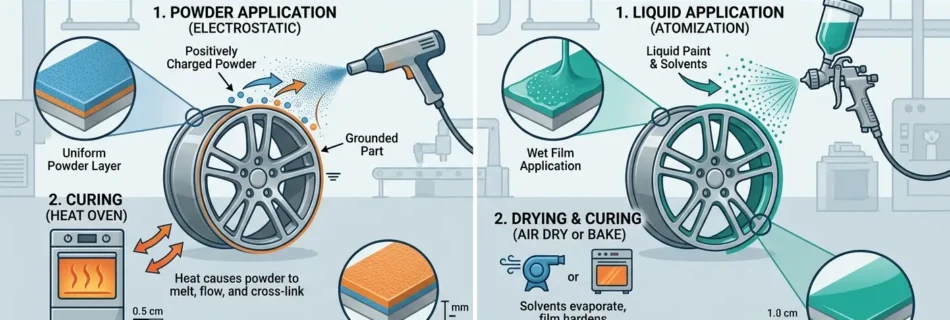
Choosing the Best Powder Coating System for Automotive Parts create a image

Choosing the Best Powder Coating System for Automotive Parts

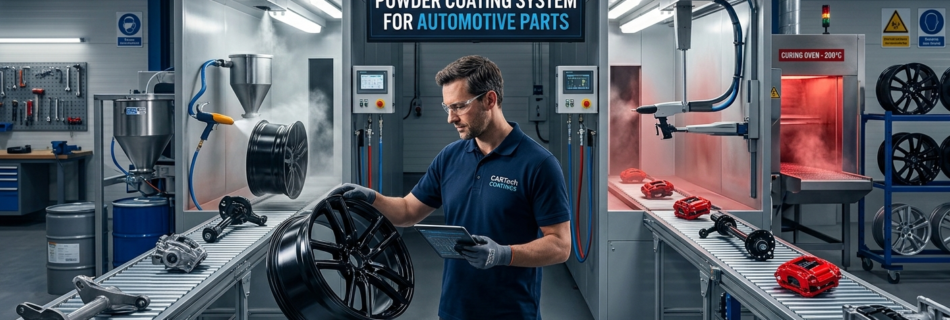
What Is a Powder Coating System for Automotive Parts? A powder coating system for automotive parts is an industrial finishing setup used to apply durable, corrosion-resistant, and high-quality coatings to vehicle components. These systems typically include pre-treatment units, powder coating booths, electrostatic spray guns, curing ovens, and conveyor systems designed for automotive-grade performance. Introduction The automotive industry demands high-performance surface finishing solutions that deliver durability, corrosion resistance, premium appearance, and long-term reliability. Traditional liquid painting systems are gradually being replaced by advanced powder coating systems because they provide better finish quality, lower environmental impact, and improved production efficiency. Today, automotive manufacturers, OEM suppliers, alloy wheel manufacturers, and component fabricators rely heavily on automotive powder coating systems to coat: Alloy wheels Chassis components Bumpers Engine parts Suspension systems Automotive frames Metal trims Battery enclosures EV components However, selecting the best powder coating system for automotive parts requires careful evaluation of production capacity, automation requirements, coating quality, curing performance, and long-term operational costs. This guide explains everything manufacturers need to know before investing in an automotive powder coating plant. Why Powder Coating Is Preferred in the Automotive Industry Powder coating has become the preferred finishing method because automotive components are exposed to: Heat Moisture Road chemicals UV radiation Abrasion Corrosion A properly designed automotive powder coating system provides superior protection while maintaining aesthetic appeal. Key Benefits of Powder Coating for Automotive Parts Excellent Corrosion Resistance Automotive powder coatings protect metal surfaces from rust and chemical exposure. High Durability Powder-coated automotive parts resist: Scratches Chipping Wear Impact damage Eco-Friendly Manufacturing Unlike liquid paint, powder coating produces: Low VOC emissions Minimal hazardous waste Better powder recovery Premium Surface Finish Manufacturers can achieve: Matte finish Gloss finish Metallic finish Textured coatings Lower Long-Term Cost Modern powder coating systems reduce: Rework Maintenance Powder wastage Production downtime Main Components of an Automotive Powder Coating System Choosing the right powder coating setup starts with understanding the core components. 1. Pre-Treatment System Surface preparation is critical for coating adhesion and durability. Common Automotive Pre-Treatment Processes Degreasing Phosphating Nano ceramic coating Rinsing Drying Best Systems for Automotive Parts System Type Best Application Spray Pre-Treatment Continuous production lines Dip Pre-Treatment Complex automotive parts Nano Ceramic Systems EV and modern lightweight components A poor pre-treatment process can lead to: Peeling Corrosion Blistering Poor adhesion 2. Powder Coating Booth The powder coating booth is where electrostatic application takes place. Types of Powder Coating Booths Manual Powder Coating Booth Ideal for: Small automotive workshops Custom parts Low-volume production Automatic Powder Coating Booth Best for: OEM suppliers Mass automotive manufacturing High-speed production lines Features to Look For Powder recovery system Cartridge filters Cyclone separators Quick color change capability PLC automation 3. Electrostatic Powder Coating Guns Electrostatic spray guns apply charged powder particles evenly across automotive components. Gun Types Type Use Case Manual Guns Small operations Automatic Guns High-volume production Robotic Guns Precision automotive coating Important Factors Transfer efficiency Spray consistency Powder savings Coating thickness control 4. Curing Oven The curing oven melts and chemically bonds powder coating onto automotive parts. Common Oven Types Gas-fired ovens Electric curing ovens Infrared ovens Conveyorized curing ovens Typical Curing Temperature Most automotive powder coatings cure between: 160°C to 220°C Key Selection Factors Temperature uniformity Energy efficiency Production speed Part size compatibility 5. Conveyor System Automotive manufacturers usually prefer conveyorized powder coating systems for consistent throughput. Conveyor Types Conveyor Type Best For Overhead Conveyor Continuous production Power & Free Conveyor Flexible movement Chain Conveyor Heavy-duty automotive components Manual vs Automatic Powder Coating Systems Choosing between manual and automatic systems depends on production scale. Manual Powder Coating System Best For Small automotive workshops Wheel refinishing businesses Custom fabrication Advantages Lower investment Flexible operation Easier maintenance Limitations Higher labor dependency Slower throughput Automatic Powder Coating System Best For Automotive OEM suppliers Large-scale manufacturing EV component production Advantages High productivity Consistent coating quality Reduced powder wastage Lower labor cost Limitations Higher initial investment Important Factors When Choosing the Best Powder Coating System Production Capacity Estimate: Daily production volume Future expansion plans Component sizes Large-scale automotive plants require fully automated conveyorized systems. Type of Automotive Parts Different parts require different coating configurations. Example Automotive Part Recommended System Alloy Wheels Automatic booth + robotic guns Chassis Parts Conveyorized heavy-duty line EV Battery Cases Nano ceramic pre-treatment Small Components Batch powder coating system Powder Recovery Efficiency A good recovery system minimizes powder loss and operational costs. Look for: Cyclone recovery Cartridge filtration High transfer efficiency Automation Level Modern automotive manufacturers prefer: PLC controls SCADA systems Robotic powder guns IoT monitoring Industry 4.0 integration improves: Production analytics Maintenance planning Energy optimization Energy Consumption Energy-efficient systems significantly reduce operational costs. Common Heating Sources LPG PNG Electric Infrared heating Gas-fired conveyorized ovens are often preferred for high-volume automotive production. Powder Coating for EV Automotive Components Electric vehicle manufacturing is driving major demand for advanced powder coating systems. Common EV Components Using Powder Coating Battery enclosures Aluminum housings Charging infrastructure EV chassis components Why Powder Coating Works Well for EVs Lightweight coating Excellent insulation Corrosion protection High durability Nano ceramic pre-treatment systems are especially popular in EV manufacturing. Common Problems in Automotive Powder Coating Orange Peel Finish Caused by: Improper curing Incorrect spray settings Poor Adhesion Usually linked to: Inadequate pre-treatment Uneven Coating Often caused by: Poor grounding Incorrect gun distance Excessive Powder Wastage Occurs due to: Low transfer efficiency Poor recovery systems Best Industries Using Automotive Powder Coating Systems Powder coating systems are widely used in: Automotive OEMs Alloy wheel manufacturers EV manufacturers Truck body manufacturers Motorcycle component suppliers Auto ancillary industries Future Trends in Automotive Powder Coating Robotic Automation Advanced robotics improve: Coating consistency Speed Precision Smart Powder Coating Systems IoT-enabled systems track: Oven temperature Conveyor speed Powder usage Eco-Friendly Coating Technology Manufacturers are shifting toward: Low-energy curing VOC-free systems Sustainable powder formulations Conclusion Choosing the best powder coating system for automotive parts requires balancing production capacity, coating quality, automation level, and long-term operational efficiency. For small workshops, manual powder coating systems may provide a cost-effective solution. …