
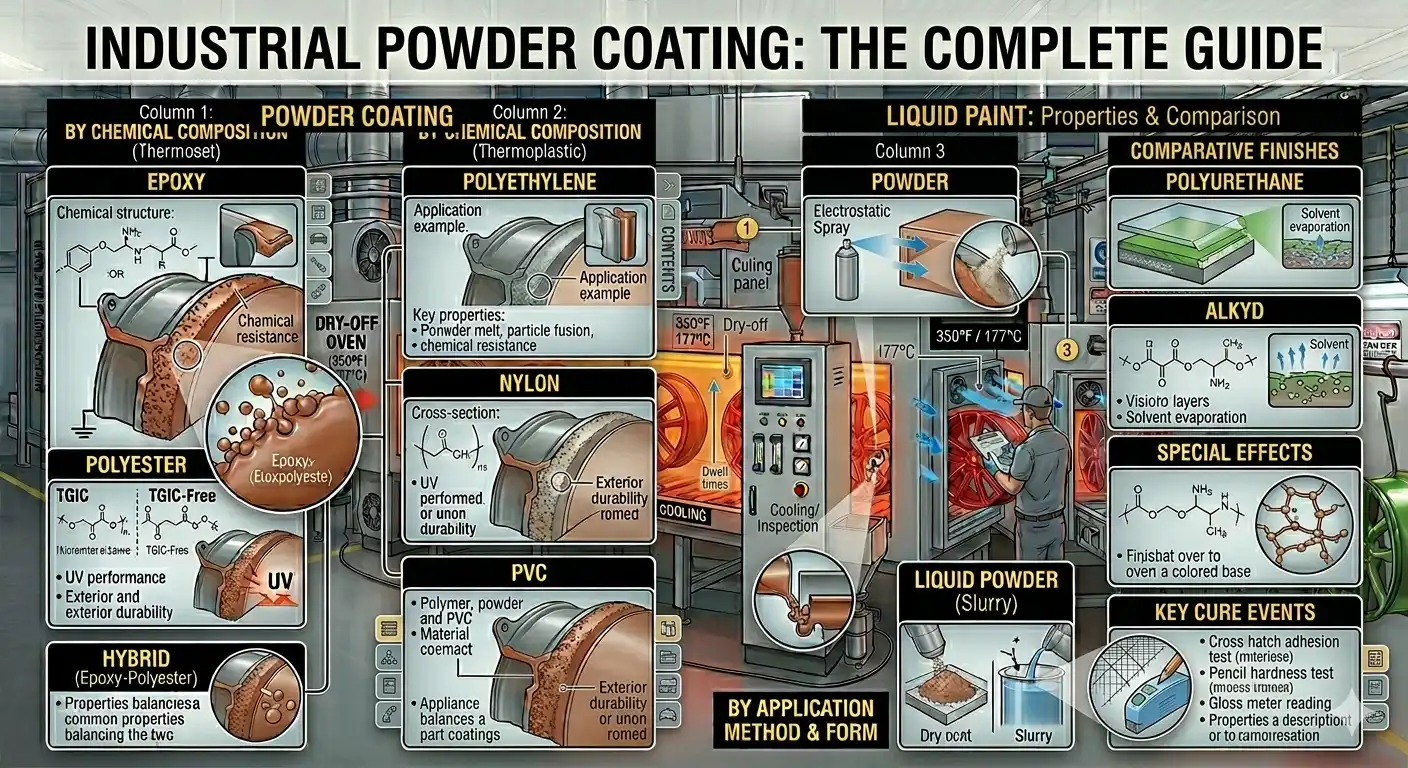
In today’s competitive manufacturing landscape, the quality of your surface finishing can make or break your product’s market acceptance. Industrial powder coating has emerged as the gold standard for durable, eco-friendly, and cost-effective metal finishing – trusted by industries ranging from automotive and aerospace to furniture and white goods.
Whether you are a factory owner evaluating your first automatic powder coating system, an OEM manufacturer upgrading from liquid paint, or an industrial engineer specifying a conveyorized powder coating plant for a new production line, this guide gives you everything you need to make the right decision.
Brahma Fabricon, headquartered in Vadodara, Gujarat, is one of India’s most trusted powder coating plant manufacturers. With over a decade of experience engineering turnkey industrial powder coating solutions, we have equipped more than 500 manufacturing units across India and beyond.
Request a Free Custom Powder Coating Plant Quote —-> Contact Us
What Is Industrial Powder Coating?
Industrial powder coating is a dry finishing process in which finely ground particles of pigment and resin are electrostatically charged and sprayed onto a metal or substrate surface. The coated component is then passed through a curing oven, where the powder melts, flows, and chemically cross-links to form a hard, uniform, and highly durable film.
Unlike liquid paint, powder coating contains no solvents, produces negligible VOC (Volatile Organic Compound) emissions, and allows overspray to be recovered and reused – making it the most environmentally responsible and economically efficient surface finishing technology available today.
Key Fact: Powder-coated surfaces typically achieve 2–4 times the durability of equivalent liquid-painted surfaces, with impact resistance values of up to 160 in-lb and film thicknesses ranging from 40 to 120 microns.
How Industrial Powder Coating Works
The powder coating process relies on the principle of electrostatic attraction. A corona or tribo gun imparts a high-voltage charge (typically 60–100 kV) to dry powder particles. The grounded workpiece attracts the charged particles, resulting in even deposition. Heat curing then transforms the powder into a smooth, cross-linked polymer film.
Step-by-Step Powder Coating Process
1. Surface Pre-Treatment – Degreasing, phosphating, or chromating to remove contaminants and improve adhesion.
2. Drying / Flash-Off – The pre-treated part passes through a dry-off oven (80–120°C) to eliminate moisture.
3. Powder Application – Electrostatic spray guns deposit powder in the spray booth. Automatic reciprocators ensure uniform coverage.
4. Powder Curing – The coated part enters a powder coating oven at 160–220°C for 10–20 minutes, triggering cross-linking.
5. Cooling – Parts are cooled on the conveyor line before unloading or further assembly.
6. Inspection & QC – Film thickness gauges, cross-cut adhesion tests, and impact tests validate product quality.
Types of Industrial Powder Coating Systems
1. Conveyorized (Automatic) Powder Coating Plant
A conveyorized powder coating plant uses an overhead chain conveyor to transport components through each stage – pre-treatment, drying, coating booth, and curing oven — in a continuous, automated loop. This system is ideal for high-volume production environments where consistent quality and throughput are paramount.
Conveyorized systems are widely used in automotive component manufacturing, aluminum extrusion coating, white goods (refrigerators, washing machines), steel furniture, and agricultural equipment.
2. Manual Batch Powder Coating System
Manual systems are suited for job shops, low-volume production, and custom fabrication units. Parts are loaded onto hanging racks, manually sprayed, and batch-cured in a walk-in oven. While less automated, manual systems offer flexibility for coating complex geometries or diverse product mixes.
3. Semi-Automatic Powder Coating Line
Semi-automatic systems combine manual loading/unloading with automated spray application via reciprocators or robotic guns. These systems bridge the gap between manual flexibility and conveyorized throughput, making them popular for medium-volume manufacturers.
| System Type | Best For | Production Volume | Investment Level |
| Conveyorized Plant | Mass production, Automotive, Appliances | High (500–5000+ parts/shift) | High |
| Semi-Automatic Line | Medium manufacturers, Furniture | Medium (200–800 parts/shift) | Medium |
| Manual Batch System | Job shops, Custom fabrication | Low (50–300 parts/shift) | Low to Medium |
Key Components of a Powder Coating Plant
Pre-Treatment System
Pre-treatment is the most critical stage of the powder coating process. A properly cleaned and phosphated surface determines the adhesion, corrosion resistance, and long-term durability of the coating. Brahma Fabricon designs multi-stage pre-treatment systems tailored to your substrate – steel, aluminum, galvanized, or zinc-alloy – including:
- Alkaline degreasing (hot or cold)
- Water rinse stages
- Iron phosphating or zinc phosphating
- Passivation / chrome-free sealing
- DM water rinse for superior finish quality
Powder Coating Booths
The powder coating booth is the enclosed application chamber where powder is sprayed onto components. Brahma Fabricon manufactures both open-face spray booths and fully enclosed recovery booths, featuring:
- Stainless steel interiors for easy cleaning
- Cartridge filter units for powder recovery (95–99% efficiency)
- Automatic colour-change systems
- Explosion-proof electrostatic equipment
- Integrated lighting for operator visibility
Our booths comply with IS:7138 and ATEX Zone 22 classification standards for powder coating environments.
Powder Coating Ovens
Curing ovens convert the applied powder into a cross-linked, hard film. Brahma Fabricon designs and manufactures box ovens, tunnel ovens, and conveyorized curing ovens with:
- Indirect gas-fired or electric heating systems
- Temperature uniformity of ±5°C across the oven chamber
- Programmable PLC controls with data logging
- Energy-efficient insulated panels (100–150 mm mineral wool)
- Operating temperature range: 150°C to 250°C
Powder Recovery Systems
Powder recovery is what makes industrial powder coating economically superior to liquid paint. Our cyclone + cartridge filter recovery systems achieve powder utilization rates of up to 98%, dramatically reducing material waste and operational costs.
Conveyor Systems
For conveyorized plants, the overhead monorail conveyor is the backbone of the production line. We engineer conveyors with:
- Load capacities from 10 kg to 500 kg per hanger
- Variable speed drives (0.5–3 m/min)
- Manual or automatic loading/unloading stations
- Anti-corrosion chain and trolley materials
Manual vs. Automatic Powder Coating Systems: A Detailed Comparison
| Feature | Manual System | Automatic System |
| Production Speed | 50–300 parts/shift | 500–5000+ parts/shift |
| Labour Requirement | 3–6 operators | 1–2 supervisors |
| Powder Efficiency | 60–75% | 85–98% |
| Colour Change Time | 15–30 minutes | 5–15 minutes (auto) |
| Consistency | Operator-dependent | Uniform, repeatable |
| Capital Investment | Lower | Higher |
| ROI Timeline | 1–2 years | 2–4 years |
| Best For | Custom/batch work | Mass production |
Applications of Industrial Powder Coating
Industries Using Industrial Powder Coating:
- Automotive & Two-Wheeler: Chassis, wheels, bumpers, engine components, and motorcycle frames
- Aluminum Extrusions: Architectural profiles, window frames, door frames, curtain walls
- White Goods & Appliances: Refrigerator cabinets, washing machine drums, microwave housings
- Steel Furniture: Office chairs, shelving racks, lockers, hospital furniture
- Agricultural Equipment: Tractor components, implements, sprayer parts
- Industrial Machinery: Motor housings, control panels, conveyor structures
- Construction Materials: Gates, grilles, railings, structural steel
- Electrical Enclosures: Switchboards, transformer bodies, junction boxes
- Lighting Fixtures: Street light poles, flood light housings, reflectors
- Sports & Outdoor: Gym equipment, playground equipment, outdoor furniture
Benefits of Industrial Powder Coating
Superior Durability and Protection
Powder-coated surfaces exhibit outstanding resistance to chipping, scratching, abrasion, and corrosion. Salt spray test results typically exceed 500–1000 hours per ASTM B117, compared to 200–400 hours for conventional liquid paint. This makes powder coating the preferred choice for outdoor, heavy-duty, and harsh-environment applications.
Eco-Friendly and Sustainable Advantages
Industrial powder coating is one of the greenest finishing technologies available:
- Zero or near-zero VOC emissions – no solvent-borne pollutants
- No hazardous waste streams – overspray is reclaimed and reused
- RoHS and REACH compliant formulations available
- Reduced energy consumption vs. solvent-based paint systems
- No wastewater treatment required for the coating stage
For manufacturers operating under ISO 14001 Environmental Management Systems or seeking green building certifications, powder coating is the natural choice.
Cost Efficiency and Long-Term ROI
While the upfront investment in a powder coating plant is higher than manual spray painting, the long-term economics are compelling:
- Material utilization: 95–98% vs. 60–70% for liquid paint
- Labour productivity: 3–5x higher throughput with automated systems
- Rework rates: typically under 1–2% with automated application
- Maintenance costs: significantly lower than solvent paint booths
- Regulatory compliance: eliminates costs associated with solvent permits, fire safety systems, and ETP plants
Why Powder Coating Is Better Than Liquid Painting
| Parameter | Powder Coating | Liquid Paint |
| VOC Emissions | Near zero | High (solvents required) |
| Material Waste | 2–5% (overspray reclaimed) | 30–40% (overspray lost) |
| Film Thickness | 40–120 microns (1 coat) | 15–25 microns (multi-coat) |
| Cure Time | 10–20 minutes | 2–24 hours |
| Durability (Salt Spray) | 500–1000+ hours | 200–400 hours |
| Capital Cost | Higher upfront | Lower upfront |
| Running Cost | Lower | Higher (solvents, ETP) |
| Colour Range | Unlimited RAL/custom | Unlimited |
| Fire Risk | Low | High (flammable solvents) |
How to Choose the Right Powder Coating Plant Manufacturer
Selecting the wrong equipment supplier can cost your business years of lost productivity, excessive maintenance, and substandard coating quality. Here is what to evaluate when choosing an industrial powder coating plant manufacturer in India:
1. Engineering Capability & Customization
Every production environment is unique. Look for a manufacturer who conducts a detailed site assessment and engineers a system optimized for your component geometry, production volume, substrate type, and floor space. Off-the-shelf systems rarely deliver optimal results.
2. Pre-Treatment Expertise
Poor pre-treatment is responsible for over 80% of powder coating failures. Your equipment supplier must have deep expertise in chemical pre-treatment process design — not just mechanical fabrication. Ask for references from clients in your specific industry.
3. After-Sales Support & Spare Parts
A powder coating line operates 16–20 hours per day. Any unplanned downtime directly hits your production output. Evaluate the supplier’s service network, guaranteed response times, and local spare parts availability before committing.
4. Compliance & Safety Standards
Insist on equipment that complies with IS, CE, and relevant Indian and international standards. This is not optional – non-compliant equipment creates safety risks, insurance liabilities, and difficulties with export certifications.
5. Total Cost of Ownership
Do not evaluate suppliers on capital cost alone. Calculate the 5-year total cost of ownership including energy consumption, consumables, labour, maintenance, and downtime costs. A higher-quality plant often delivers 30–50% lower TCO.
Why Choose Brahma Fabricon for Your Powder Coating Plant
Brahma Fabricon is a leading industrial powder coating plant manufacturer based in Vadodara, Gujarat, India. We design, manufacture, supply, install, and commission complete turnkey powder coating systems for manufacturers across all industries.
Our Capabilities
- Turnkey powder coating plant projects from concept to commissioning
- In-house design and engineering team with 10+ years experience
- Manufacturing facility in Vadodara with 15,000+ sq ft production area
- 500+ installations across India — automotive, furniture, appliances, agriculture
- Pre-treatment chemical process design and integration
- PLC-based automation and Industry 4.0 ready control systems
- Dedicated after-sales service team and 24/7 technical support
- Competitive pricing with flexible financing options
- Certifications & Standards
- ISO 9001:2015 Quality Management System
- Equipment manufactured to IS / BIS standards
- ATEX-compliant spray booths for powder coating zones
- Energy efficiency compliant with BEE guidelines
Our Service Areas in India
Brahma Fabricon serves manufacturers across all major industrial regions of India, with primary focus on:
- Gujarat: Vadodara, Ahmedabad, Surat, Rajkot, Anand, Bharuch, Gandhinagar
- Maharashtra: Pune, Mumbai, Nashik, Aurangabad, Kolhapur
- Rajasthan: Jaipur, Jodhpur, Alwar, Neemrana
- Haryana / Delhi NCR: Gurgaon, Faridabad, Manesar, Noida
- Tamil Nadu / Andhra: Chennai, Coimbatore, Hyderabad, Pune
- Pan-India project execution capability
Get a Custom Powder Coating Plant Design – Talk to Our Engineers Today
Frequently Asked Questions
Q1: What is industrial powder coating and how is it different from paint?
Industrial powder coating is a dry finishing process using electrostatically charged powder particles cured in an oven to form a hard polymer film. Unlike liquid paint, it uses no solvents, produces near-zero VOC emissions, and achieves 2–4x the durability in a single coat application.
Q2: What metals can be powder coated?
Powder coating works on any electrically conductive metal. The most commonly coated substrates include mild steel, stainless steel, aluminum, galvanized steel, zinc alloys, brass, and copper. Non-metallic substrates (MDF, plastic) can also be powder coated using conductive primers or special low-temperature cure powders.
Q3: What is the minimum and maximum film thickness achievable with powder coating?
Standard industrial powder coating achieves film thicknesses of 40 to 120 microns in a single coat. Functional coatings for corrosion protection or electrical insulation can be applied at 200–400 microns. Thin-film powders designed for automotive body applications can achieve 40–60 microns.
Q4: How long does a powder coating plant last?
A well-maintained industrial powder coating plant from a quality manufacturer typically operates for 15–25 years. Key components such as conveyor chains, oven heating elements, and spray gun components require periodic replacement, but the core plant structure — booths, ovens, pre-treatment tanks — has a very long service life.
Q5: What is the cost of a powder coating plant in India?
The cost of a powder coating plant in India ranges from approximately Rs. 25 lakhs for a basic manual batch system to Rs. 2 crore or more for a fully automated conveyorized line. The investment depends on production volume requirements, level of automation, pre-treatment chemistry, oven size, and plant capacity. Brahma Fabricon provides free detailed quotations based on your specific requirements.
Q6: How much space is required for a conveyorized powder coating plant?
A typical conveyorized powder coating line requires a minimum floor area of 3,000–5,000 sq ft, depending on component size and conveyor loop layout. Brahma Fabricon’s engineering team conducts detailed plant layout studies and can optimize systems for constrained factory spaces. Ceiling height of minimum 5–6 metres is generally required for the conveyor and oven infrastructure.
Q7: What pre-treatment process is suitable for aluminum powder coating?
For aluminum powder coating, a chromate or chrome-free conversion coating process is recommended, preceded by alkaline or acid degreasing and etching. Chrome-free alternatives such as titanium-zirconium or silane pre-treatments are increasingly popular for RoHS compliance. Brahma Fabricon designs complete aluminum-specific pre-treatment systems tailored to your alloy and end-use requirements.
Q8: What powder types are used in industrial powder coating?
The most widely used powder types in industrial powder coating are Epoxy (excellent chemical resistance, indoor use), Polyester (excellent UV and weathering resistance, outdoor use), Epoxy-Polyester hybrid (balanced properties, cost-effective), Polyurethane (high-gloss, automotive), and Fluoropolymer (PVDF — extreme UV and chemical resistance for architectural applications).
Q9: What is the throughput of a conveyorized powder coating plant?
Throughput depends on component size, conveyor speed, and plant layout. A typical conveyorized plant processes 500 to 5,000 individual components per shift. For large components such as agricultural implements or automotive body panels, throughput may be 50–200 units per shift. Brahma Fabricon engineers each system to achieve your specific production targets.
Q10: Does Brahma Fabricon provide installation and commissioning services?
Yes. Brahma Fabricon provides complete turnkey project execution including plant layout design, civil and structural works coordination, equipment supply, installation, process commissioning, operator training, and ongoing after-sales support. Our project teams operate across all major industrial locations in India.
Q11: Is powder coating suitable for outdoor applications?
Yes. Polyester-based powder coatings offer excellent UV resistance, colour retention, and weathering performance for outdoor applications. Superdurable polyester and PVDF formulations are specified for architectural aluminum, street furniture, and other demanding exterior applications. Salt spray resistance of 1,000+ hours is routinely achieved.
Q12: What environmental permits are needed for a powder coating plant in India?
Powder coating plants generally fall into the Green or Orange category under India’s pollution control board classification due to their minimal solvent emissions. Requirements vary by state and plant capacity, but typically include Consent to Establish (CTE) and Consent to Operate (CTO) from the SPCB. Brahma Fabricon advises clients on regulatory compliance during project planning.
Ready to Transform Your Production Line? Let’s Talk.
Brahma Fabricon has engineered turnkey powder coating plants for manufacturers across Gujarat, Maharashtra, Rajasthan, and beyond. Whether you are setting up a new factory or upgrading an existing line, our engineering team will design a system optimized for your production volumes, substrates, and budget.
WHY MANUFACTURERS CHOOSE BRAHMA FABRICON
- Free site survey and plant layout design
- Detailed techno-commercial proposal within 5 working days
- Flexible project execution: supply-only or full turnkey
- Proven track record: 500+ installations across India
- Comprehensive warranty and annual maintenance contracts
- Financing assistance for MSME manufacturers
Contact us today to discuss your powder coating plant requirements. Our technical sales team is available 6 days a week to answer your questions, arrange factory visits, and provide references from existing clients in your industry.