
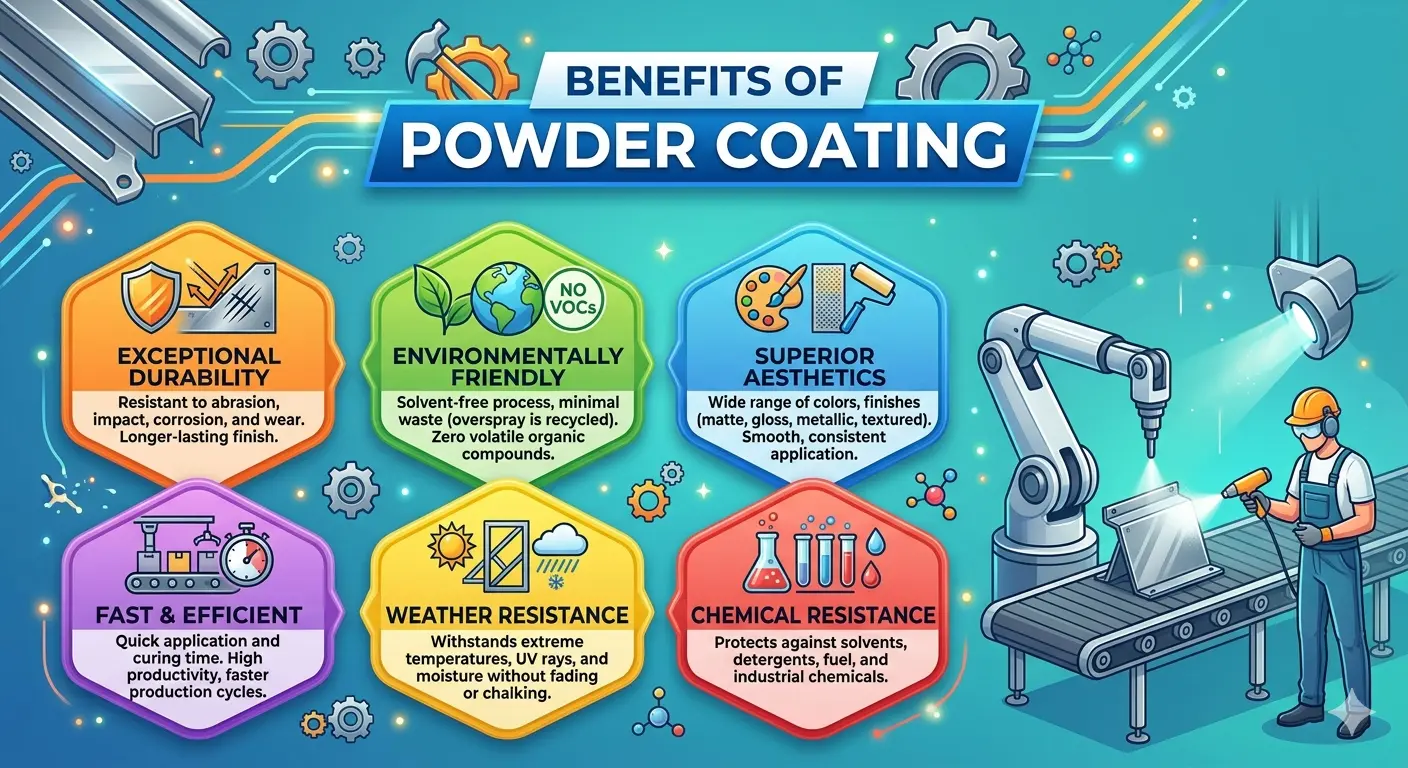
Powder coating is a modern finishing process where a dry powder is electrostatically applied to a metal surface and then cured with heat to create a durable, protective layer. The benefits of powder coating include exceptional durability, corrosion resistance, cost efficiency, and a smoother finish compared to traditional liquid paint.
Because of these advantages, powder coating is widely used in automotive wheels, industrial equipment, appliances, and architectural components.
What Is Powder Coating and How Does It Work?
Powder coating is a dry finishing technique used mainly on metal surfaces. Instead of liquid paint, manufacturers apply electrostatically charged powder particles to a grounded object.
The process typically involves three main steps:
- Surface Preparation – Cleaning, degreasing, and sometimes sandblasting the metal.
- Powder Application – Electrostatic spray guns apply powder evenly.
- Curing Process – The coated object is heated in an oven (usually 180–200°C) so the powder melts and forms a smooth protective layer.
This process creates a strong, uniform coating that bonds better than traditional paint.
Top Benefits of Powder Coating
1. Exceptional Durability
One of the biggest advantages of powder coating over painting is durability.
Powder-coated surfaces are resistant to:
- Scratches
- Chips
- Cracking
- Peeling
- Fading
The curing process creates a thick, uniform coating that protects metal surfaces for years.
Example:
Powder coating is commonly used on automotive wheels, industrial machinery, and outdoor furniture because these components face constant wear and environmental exposure.
2. Superior Corrosion Resistance
Another major benefit is powder coating corrosion resistance.
The coating acts as a protective barrier against moisture, chemicals, and oxidation, which prevents rust formation.
This makes powder coating ideal for:
- Automotive parts
- Marine equipment
- Steel railings and gates
- Industrial machinery
Benefits of Powder Coating Stainless Steel
Even though stainless steel is corrosion resistant, powder coating adds:
- Additional weather protection
- Better scratch resistance
- Improved aesthetics
- Longer product lifespan
Many architectural projects powder coat stainless steel for both protection and design flexibility.
3. Powder Coating Wheels vs Painting
When comparing powder coating wheels vs painting, powder coating generally performs better in terms of durability and appearance.
| Feature | Powder Coating | Traditional Paint |
|---|---|---|
| Durability | Very high | Moderate |
| Scratch Resistance | Excellent | Low |
| Finish Uniformity | Smooth and even | May show brush marks |
| Lifespan | 10–20 years | 3–7 years |
| Maintenance | Low | Medium |
Because of these benefits, many car enthusiasts choose powder coating automotive wheels instead of repainting them.
4. Powder Coated Wheels Benefits
For automotive enthusiasts and repair shops, powder coated wheels benefits are significant.
Key advantages include:
- Long-lasting finish
- Strong resistance to road debris
- Protection against brake dust corrosion
- Improved visual appearance
- Easy cleaning and maintenance
Powder coating also allows custom colors, matte finishes, metallic coatings, and textured effects.
5. Environmentally Friendly Process
Unlike liquid paints, powder coating contains no solvents or VOCs (Volatile Organic Compounds).
Environmental benefits include:
- Reduced air pollution
- Minimal waste
- Reusable overspray powder
- Lower environmental impact
According to industry studies, powder coating can achieve up to 95–98% material utilization, significantly reducing waste.
6. Better Finish Quality
Powder coating produces a thicker and more uniform finish compared to traditional paint.
Advantages include:
- No paint drips or sagging
- Even color distribution
- Smooth or textured finishes
- Higher impact resistance
Manufacturers often choose powder coating for consumer appliances, automotive parts, and industrial equipment because the finish looks more professional and consistent.
7. Cost Efficiency Over Time
Another important benefit is powder coating cost efficiency.
Although the initial cost may sometimes be slightly higher than paint, powder coating often becomes cheaper in the long run due to:
- Longer lifespan
- Reduced maintenance
- Lower repainting frequency
- Minimal material waste
For industries and repair businesses, this makes powder coating a high ROI surface finishing solution.
Real-World Applications of Powder Coating
Powder coating is widely used across multiple industries.
Automotive Industry
- Wheels and rims
- Suspension components
- Engine parts
- Bike frames
Industrial Manufacturing
- Machinery components
- Metal furniture
- Tool cabinets
- Storage racks
Architecture & Construction
- Railings
- Gates
- Window frames
- Aluminum panels
Consumer Products
- Home appliances
- Fitness equipment
- Electronics housings
This versatility is one reason powder coating continues to grow globally.
When Should You Choose Powder Coating?
Powder coating is ideal when you need:
- Long-term durability
- Weather and corrosion resistance
- Professional aesthetic finish
- Low maintenance surfaces
It is especially recommended for:
- Automotive wheels
- Outdoor metal products
- Industrial equipment
- Stainless steel components
Choosing the Right Powder Coating Equipment
The quality and durability of a powder-coated finish also depend heavily on the equipment and production system used. Modern Powder Coating Plants are designed to provide consistent coating thickness, efficient powder usage, and high productivity for industrial applications.
Manufacturers can choose from different plant configurations depending on production scale, automation level, and product type. Small workshops may prefer manual systems for flexibility, while large-scale manufacturers often rely on fully automated conveyor systems for continuous production.
If you’re trying to decide between automation and manual setups, this detailed guide explains the differences between both systems:
Conveyorized vs Manual Powder Coating Plants: Which One Is Right for You?
Understanding these systems helps businesses choose the right equipment that ensures optimal coating quality, cost efficiency, and long-term operational performance. Common Myths About Powder Coating
Myth 1: Powder Coating Is Only for Industrial Use
Reality: It is widely used for car wheels, bicycles, furniture, and home products.
Myth 2: Powder Coating Is Too Expensive
Reality: While the upfront cost may be slightly higher, the long lifespan makes it more cost-efficient.
Myth 3: Powder Coating Has Limited Colors
Reality: Thousands of colors, textures, and finishes are available today.
FAQ: Benefits of Powder Coating
1. What are the main benefits of powder coating?
The main benefits of powder coating include high durability, corrosion resistance, smooth finish, environmental safety, and long-term cost efficiency compared to traditional paint.
2. Is powder coating better than painting?
Yes. Powder coating generally provides better durability, stronger adhesion, improved corrosion protection, and longer lifespan than liquid paint.
3. How long does powder coating last?
Powder coating can last 10–20 years or more depending on environmental conditions and surface preparation.
4. Is powder coating good for wheels?
Yes. Powder coating is widely used for automotive wheels because it offers excellent resistance to scratches, brake dust, road debris, and corrosion.
5. Does powder coating prevent rust?
Yes. Powder coating forms a protective barrier that prevents moisture and oxygen from reaching the metal, significantly reducing rust and corrosion.