
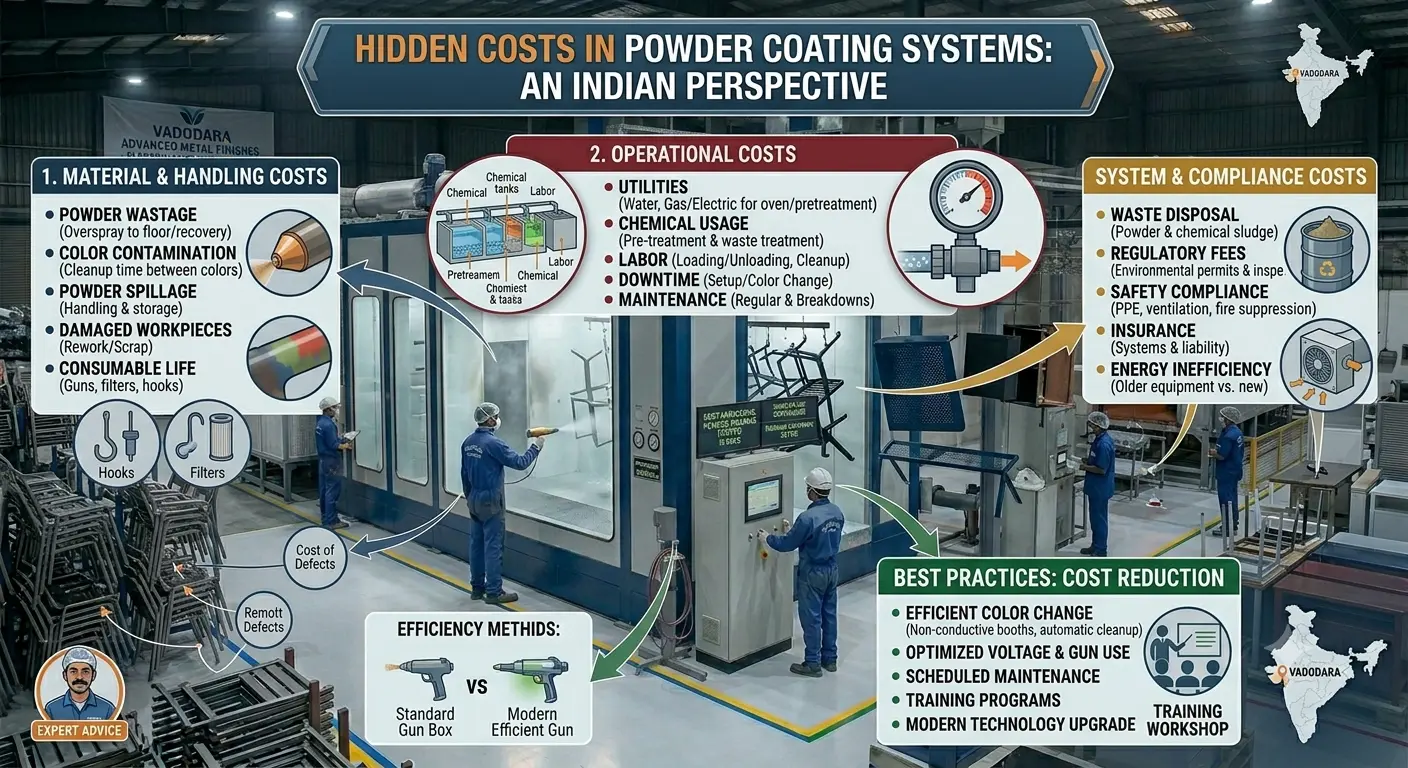
The true cost of a powder coating system extends far beyond the initial purchase price. Operating costs, maintenance, energy consumption, powder loss, spare parts, labor, and consumable expenses significantly impact the total cost of ownership (TCO). Understanding these hidden expenses helps manufacturers select efficient powder coating systems that deliver better long-term profitability.
When investing in a powder coating plant, many buyers focus primarily on the equipment price. While the upfront investment is important, it represents only a portion of the overall expense.
Over the lifespan of a powder coating system, operating costs, maintenance, consumables, utilities, and production efficiency often have a much greater impact on profitability. A system with a lower purchase price may end up costing significantly more over five to ten years if it consumes excessive energy, wastes powder, or requires frequent maintenance.
This guide explains the hidden costs associated with powder coating systems and provides practical strategies to reduce your total cost of ownership.
Why Purchase Price Doesn’t Tell the Whole Story
A powder coating plant is a long-term investment. The initial purchase price may account for only a fraction of the total expenditure during its operational life.
Manufacturers should evaluate costs such as:
- Electricity consumption
- Fuel usage
- Powder losses
- Conveyor maintenance
- Filter replacement
- Spare parts
- Preventive servicing
- Equipment downtime
- Labor requirements
- Production efficiency
Selecting equipment based only on the lowest quotation can lead to higher operational expenses year after year.
What Is Total Cost of Ownership (TCO)?
Total Cost of Ownership (TCO) is the complete cost of purchasing, operating, maintaining, and supporting a powder coating system throughout its lifecycle.
Typical TCO Components
| Cost Category | Description |
|---|---|
| Initial Investment | Equipment purchase and installation |
| Operating Costs | Daily production expenses |
| Maintenance Costs | Scheduled and unscheduled servicing |
| Consumables | Filters, nozzles, hoses, seals, powder |
| Energy Costs | Electricity, LPG, PNG, diesel or gas |
| Labor Costs | Operators, supervisors and maintenance staff |
| Downtime | Lost production during breakdowns |
| Replacement Parts | Motors, bearings, sensors, pumps and controls |
Evaluating TCO provides a clearer picture of long-term profitability than comparing purchase prices alone.
Hidden Operating Costs of Powder Coating Systems
Energy Consumption
Curing ovens, pretreatment systems, compressors, and conveyor drives consume significant amounts of energy.
Older or poorly insulated systems often have:
- Higher electricity usage
- Increased fuel consumption
- Longer heating times
- Greater heat losses
Energy-efficient ovens and optimized burner systems can substantially reduce utility bills.
Powder Loss
Powder that is not recovered represents a direct financial loss.
Without an efficient recovery system:
- More fresh powder is required
- Material costs increase
- Waste disposal expenses rise
High-efficiency recovery systems help improve transfer efficiency and reduce operating costs.
Air Compressor Costs
Electrostatic spray equipment depends on compressed air.
Leaks, poor maintenance, or undersized compressors increase electricity consumption and reduce coating performance.
Maintenance Costs You Should Budget For
Preventive maintenance is essential to ensure consistent performance and avoid expensive breakdowns.
Routine Maintenance Includes
- Cleaning powder booths
- Inspecting spray guns
- Lubricating conveyor components
- Calibrating control systems
- Servicing burners
- Checking electrical connections
Skipping routine maintenance often leads to costly repairs and unexpected downtime.
Typical Maintenance Cost Drivers
- Conveyor wear
- Burner servicing
- Motor replacement
- PLC diagnostics
- Powder pump servicing
- Sensor replacement
Investing in preventive maintenance reduces lifecycle costs and extends equipment life.
Consumable Expenses Explained
Consumables are recurring items that require periodic replacement.
Common Consumables
- Cartridge filters
- Powder hoses
- Spray gun nozzles
- Venturi pumps
- Seals and gaskets
- Air filters
- Bearings
- Conveyor chain lubricants
While individual items may seem inexpensive, their cumulative cost over several years can be substantial.
Selecting durable, high-quality components often lowers long-term expenses.
Energy Consumption and Utility Costs
Energy is one of the largest contributors to powder coating operating costs.
Major Energy Consumers:
Curing Oven
Typically the highest energy-consuming component.
Drying Oven
Consumes additional fuel and electricity after pretreatment.
Pretreatment System
Heating tanks and water circulation increase utility expenses.
Air Compressors
Compressed air systems often account for a significant share of electricity usage.
Conveyor Drives
Continuous operation contributes to daily power consumption.
Ways to Reduce Energy Costs:
- Improve oven insulation
- Install variable frequency drives (VFDs)
- Optimize curing cycles
- Recover waste heat
- Schedule preventive burner maintenance
Labor Costs and Productivity
Labor expenses are another hidden cost that affects profitability.
Manual systems require:
- More operators
- Increased supervision
- Higher handling effort
- Additional quality inspections
Automatic powder coating systems reduce manual intervention while improving consistency and throughput.
Higher automation often results in lower cost per coated part over time.
Powder Recovery and Material Waste
Powder utilization has a direct impact on production cost.
Recovery Rate Comparison
| Recovery System | Approximate Recovery Rate |
| No Recovery | 50–60% |
| Basic Filter Booth | 70–80% |
| Cartridge Recovery System | 85–92% |
| Cyclone Recovery System | 95–98% |
Even small improvements in recovery efficiency can translate into significant annual savings for high-volume manufacturers.
Downtime and Production Losses
Unexpected equipment failures create hidden expenses that are often overlooked.
Downtime affects:
- Delivery schedules
- Labor utilization
- Customer satisfaction
- Production planning
- Revenue
Common causes include:
- Conveyor breakdowns
- Burner failures
- Spray gun issues
- PLC faults
- Filter blockages
Reliable equipment combined with preventive maintenance minimizes these risks.
Low-Cost System vs High-Efficiency System
| Factor | Low-Cost System | High-Efficiency System |
| Initial Investment | Lower | Higher |
| Energy Consumption | Higher | Lower |
| Powder Recovery | Moderate | Excellent |
| Maintenance Frequency | Higher | Lower |
| Downtime | More Frequent | Less Frequent |
| Productivity | Moderate | High |
| Operating Cost | Higher | Lower |
| Long-Term ROI | Moderate | Excellent |
Although premium systems require a larger initial investment, they frequently deliver lower operating costs and faster payback over their service life.
How to Reduce Powder Coating Operating Costs
Manufacturers can significantly improve profitability by focusing on operational efficiency.
Improve Powder Transfer Efficiency
Optimize spray settings and maintain equipment regularly.
Invest in Better Recovery Systems
Cyclone and cartridge recovery systems reduce powder waste.
Schedule Preventive Maintenance
Prevent small issues from becoming costly failures.
Upgrade to Energy-Efficient Equipment
Modern ovens and burners reduce fuel consumption.
Train Operators
Well-trained operators minimize rework and material waste.
Monitor Production Data
Track powder usage, energy consumption, and downtime to identify opportunities for improvement.
Why Manufacturers Choose Brahma Fabricon
Brahma Fabricon designs powder coating systems with long-term operating efficiency in mind.
Our solutions focus on reducing the total cost of ownership through:
- Energy-efficient curing ovens
- High-recovery powder coating booths
- Reliable conveyor systems
- Durable components
- Easy maintenance access
- Customized automation solutions
By considering lifecycle performance rather than just purchase price, we help manufacturers achieve better productivity, lower operating costs, and improved return on investment.
Calculate Your Total Cost of Ownership
Before purchasing a powder coating system, evaluate more than the equipment price.
Consider:
- Annual production volume
- Powder consumption
- Energy costs
- Labor expenses
- Maintenance budgets
- Spare parts requirements
- Downtime risks
- Equipment lifespan
A detailed TCO analysis can reveal substantial long-term savings and support better investment decisions.
Frequently Asked Questions
1. What are powder coating operating costs?
They include energy, labor, powder consumption, maintenance, consumables, and production-related expenses.
2. What is the biggest hidden cost in a powder coating plant?
For many manufacturers, energy consumption and powder wastage represent the largest ongoing expenses.
3. What are consumable expenses in powder coating?
Consumables include filters, spray gun nozzles, hoses, seals, pumps, and other regularly replaced components.
4. How can maintenance costs be reduced?
Implement preventive maintenance schedules, use quality spare parts, and perform regular inspections.
5. Why is powder recovery important?
Higher recovery rates reduce powder waste, lower material costs, and improve profitability.
6. Does automation reduce operating costs?
Yes. Automated systems improve productivity, reduce labor requirements, and provide more consistent coating quality.
7. What is Total Cost of Ownership (TCO)?
TCO is the complete lifecycle cost of purchasing, operating, maintaining, and supporting a powder coating system.
8. How does downtime affect profitability?
Downtime reduces production output, delays deliveries, increases labor costs, and may impact customer satisfaction.
9. Should I choose the lowest-priced powder coating system?
Not necessarily. Lower-priced systems can have higher operating and maintenance costs over time.
10. How can Brahma Fabricon help reduce lifecycle costs?
By designing energy-efficient, reliable, and low-maintenance powder coating systems tailored to your production requirements.
Conclusion
The purchase price is only one part of the investment when selecting a powder coating system. Operating costs, maintenance, energy consumption, consumable expenses, powder recovery, and equipment reliability all influence the total cost of ownership. Manufacturers that evaluate lifecycle costs instead of focusing solely on upfront pricing are better positioned to improve productivity, reduce waste, and maximize profitability. Choosing a well-engineered system from an experienced manufacturer can deliver substantial savings throughout the equipment’s operational life.