
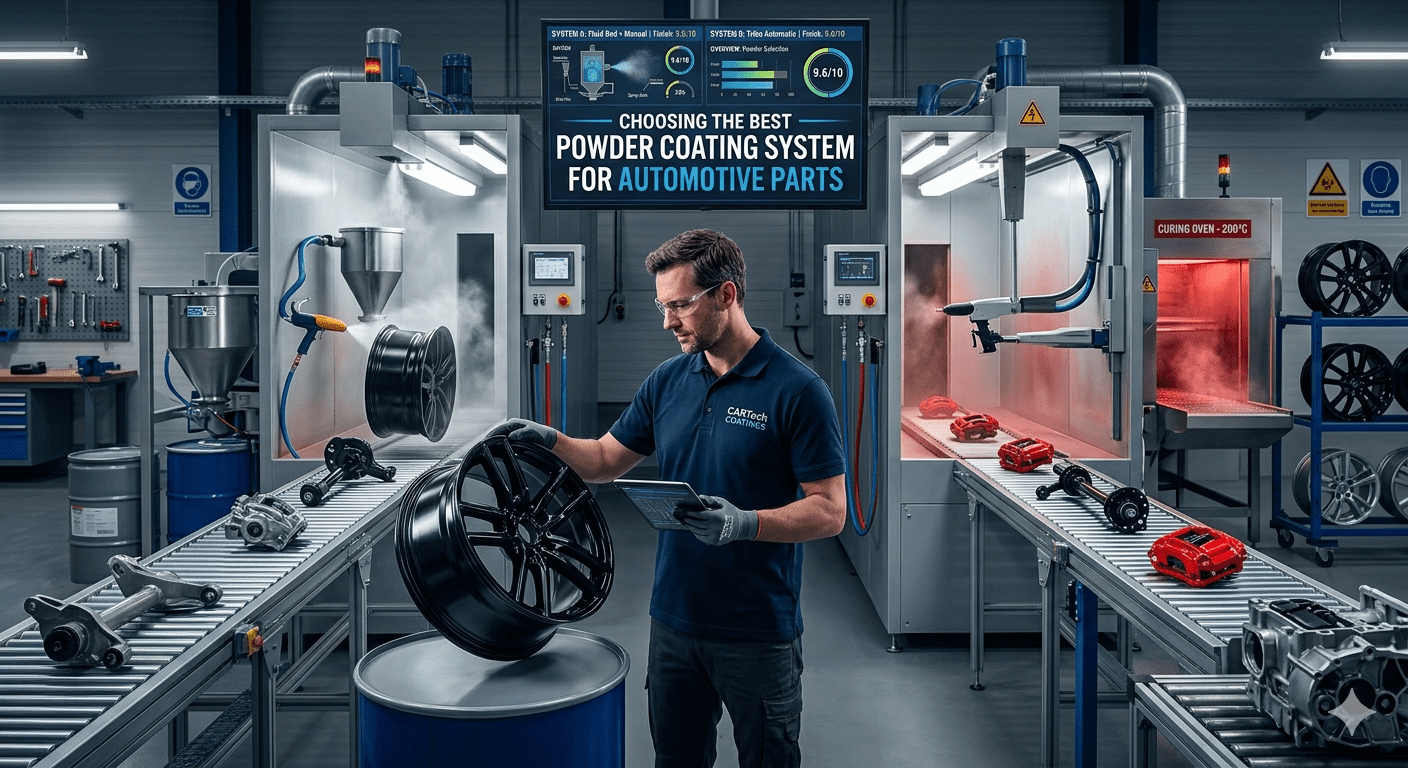
What Is a Powder Coating System for Automotive Parts?
A powder coating system for automotive parts is an industrial finishing setup used to apply durable, corrosion-resistant, and high-quality coatings to vehicle components. These systems typically include pre-treatment units, powder coating booths, electrostatic spray guns, curing ovens, and conveyor systems designed for automotive-grade performance.
Introduction
The automotive industry demands high-performance surface finishing solutions that deliver durability, corrosion resistance, premium appearance, and long-term reliability. Traditional liquid painting systems are gradually being replaced by advanced powder coating systems because they provide better finish quality, lower environmental impact, and improved production efficiency.
Today, automotive manufacturers, OEM suppliers, alloy wheel manufacturers, and component fabricators rely heavily on automotive powder coating systems to coat:
- Alloy wheels
- Chassis components
- Bumpers
- Engine parts
- Suspension systems
- Automotive frames
- Metal trims
- Battery enclosures
- EV components
However, selecting the best powder coating system for automotive parts requires careful evaluation of production capacity, automation requirements, coating quality, curing performance, and long-term operational costs.
This guide explains everything manufacturers need to know before investing in an automotive powder coating plant.
Why Powder Coating Is Preferred in the Automotive Industry
Powder coating has become the preferred finishing method because automotive components are exposed to:
- Heat
- Moisture
- Road chemicals
- UV radiation
- Abrasion
- Corrosion
A properly designed automotive powder coating system provides superior protection while maintaining aesthetic appeal.
Key Benefits of Powder Coating for Automotive Parts
Excellent Corrosion Resistance
Automotive powder coatings protect metal surfaces from rust and chemical exposure.
High Durability
Powder-coated automotive parts resist:
- Scratches
- Chipping
- Wear
- Impact damage
Eco-Friendly Manufacturing
Unlike liquid paint, powder coating produces:
- Low VOC emissions
- Minimal hazardous waste
- Better powder recovery
Premium Surface Finish
Manufacturers can achieve:
- Matte finish
- Gloss finish
- Metallic finish
- Textured coatings
Lower Long-Term Cost
Modern powder coating systems reduce:
- Rework
- Maintenance
- Powder wastage
- Production downtime
Main Components of an Automotive Powder Coating System
Choosing the right powder coating setup starts with understanding the core components.
1. Pre-Treatment System
Surface preparation is critical for coating adhesion and durability.
Common Automotive Pre-Treatment Processes
- Degreasing
- Phosphating
- Nano ceramic coating
- Rinsing
- Drying
Best Systems for Automotive Parts
| System Type | Best Application |
|---|---|
| Spray Pre-Treatment | Continuous production lines |
| Dip Pre-Treatment | Complex automotive parts |
| Nano Ceramic Systems | EV and modern lightweight components |
A poor pre-treatment process can lead to:
- Peeling
- Corrosion
- Blistering
- Poor adhesion
2. Powder Coating Booth
The powder coating booth is where electrostatic application takes place.
Types of Powder Coating Booths
Manual Powder Coating Booth
Ideal for:
- Small automotive workshops
- Custom parts
- Low-volume production
Automatic Powder Coating Booth
Best for:
- OEM suppliers
- Mass automotive manufacturing
- High-speed production lines
Features to Look For
- Powder recovery system
- Cartridge filters
- Cyclone separators
- Quick color change capability
- PLC automation
3. Electrostatic Powder Coating Guns
Electrostatic spray guns apply charged powder particles evenly across automotive components.
Gun Types
| Type | Use Case |
|---|---|
| Manual Guns | Small operations |
| Automatic Guns | High-volume production |
| Robotic Guns | Precision automotive coating |
Important Factors
- Transfer efficiency
- Spray consistency
- Powder savings
- Coating thickness control
4. Curing Oven
The curing oven melts and chemically bonds powder coating onto automotive parts.
Common Oven Types
- Gas-fired ovens
- Electric curing ovens
- Infrared ovens
- Conveyorized curing ovens
Typical Curing Temperature
Most automotive powder coatings cure between:
- 160°C to 220°C
Key Selection Factors
- Temperature uniformity
- Energy efficiency
- Production speed
- Part size compatibility
5. Conveyor System
Automotive manufacturers usually prefer conveyorized powder coating systems for consistent throughput.
Conveyor Types
| Conveyor Type | Best For |
|---|---|
| Overhead Conveyor | Continuous production |
| Power & Free Conveyor | Flexible movement |
| Chain Conveyor | Heavy-duty automotive components |
Manual vs Automatic Powder Coating Systems
Choosing between manual and automatic systems depends on production scale.
Manual Powder Coating System
Best For
- Small automotive workshops
- Wheel refinishing businesses
- Custom fabrication
Advantages
- Lower investment
- Flexible operation
- Easier maintenance
Limitations
- Higher labor dependency
- Slower throughput
Automatic Powder Coating System
Best For
- Automotive OEM suppliers
- Large-scale manufacturing
- EV component production
Advantages
- High productivity
- Consistent coating quality
- Reduced powder wastage
- Lower labor cost
Limitations
- Higher initial investment
Important Factors When Choosing the Best Powder Coating System
Production Capacity
Estimate:
- Daily production volume
- Future expansion plans
- Component sizes
Large-scale automotive plants require fully automated conveyorized systems.
Type of Automotive Parts
Different parts require different coating configurations.
Example
| Automotive Part | Recommended System |
|---|---|
| Alloy Wheels | Automatic booth + robotic guns |
| Chassis Parts | Conveyorized heavy-duty line |
| EV Battery Cases | Nano ceramic pre-treatment |
| Small Components | Batch powder coating system |
Powder Recovery Efficiency
A good recovery system minimizes powder loss and operational costs.
Look for:
- Cyclone recovery
- Cartridge filtration
- High transfer efficiency
Automation Level
Modern automotive manufacturers prefer:
- PLC controls
- SCADA systems
- Robotic powder guns
- IoT monitoring
Industry 4.0 integration improves:
- Production analytics
- Maintenance planning
- Energy optimization
Energy Consumption
Energy-efficient systems significantly reduce operational costs.
Common Heating Sources
- LPG
- PNG
- Electric
- Infrared heating
Gas-fired conveyorized ovens are often preferred for high-volume automotive production.
Powder Coating for EV Automotive Components
Electric vehicle manufacturing is driving major demand for advanced powder coating systems.
Common EV Components Using Powder Coating
- Battery enclosures
- Aluminum housings
- Charging infrastructure
- EV chassis components
Why Powder Coating Works Well for EVs
- Lightweight coating
- Excellent insulation
- Corrosion protection
- High durability
Nano ceramic pre-treatment systems are especially popular in EV manufacturing.
Common Problems in Automotive Powder Coating
Orange Peel Finish
Caused by:
- Improper curing
- Incorrect spray settings
Poor Adhesion
Usually linked to:
- Inadequate pre-treatment
Uneven Coating
Often caused by:
- Poor grounding
- Incorrect gun distance
Excessive Powder Wastage
Occurs due to:
- Low transfer efficiency
- Poor recovery systems
Best Industries Using Automotive Powder Coating Systems
Powder coating systems are widely used in:
- Automotive OEMs
- Alloy wheel manufacturers
- EV manufacturers
- Truck body manufacturers
- Motorcycle component suppliers
- Auto ancillary industries
Future Trends in Automotive Powder Coating
Robotic Automation
Advanced robotics improve:
- Coating consistency
- Speed
- Precision
Smart Powder Coating Systems
IoT-enabled systems track:
- Oven temperature
- Conveyor speed
- Powder usage
Eco-Friendly Coating Technology
Manufacturers are shifting toward:
- Low-energy curing
- VOC-free systems
- Sustainable powder formulations
Conclusion
Choosing the best powder coating system for automotive parts requires balancing production capacity, coating quality, automation level, and long-term operational efficiency.
For small workshops, manual powder coating systems may provide a cost-effective solution. However, automotive OEMs and high-volume manufacturers benefit significantly from automatic conveyorized powder coating plants with advanced recovery and automation systems.
The right powder coating setup improves:
- Product durability
- Corrosion resistance
- Surface finish quality
- Production efficiency
- Manufacturing profitability
As the automotive and EV industries continue evolving, investing in modern, scalable, and energy-efficient powder coating systems will become increasingly important for competitive manufacturing.
FAQs
What is the best powder coating system for automotive parts?
Automatic conveyorized powder coating systems are generally considered the best for high-volume automotive manufacturing because they provide consistent finish quality and higher production efficiency.
Why is powder coating used in automotive manufacturing?
Powder coating offers excellent corrosion resistance, durability, eco-friendly processing, and premium surface finish for automotive components.
What temperature is used for automotive powder coating?
Most automotive powder coatings cure between 160°C and 220°C depending on the powder type and component material.
Which powder coating booth is best for alloy wheels?
Automatic powder coating booths with robotic spray guns and powder recovery systems are ideal for alloy wheel coating.
Is powder coating better than liquid paint for automotive parts?
Yes, powder coating generally provides better durability, corrosion resistance, and environmental performance compared to traditional liquid paint systems.